TheCEOVerse • Digital Edition
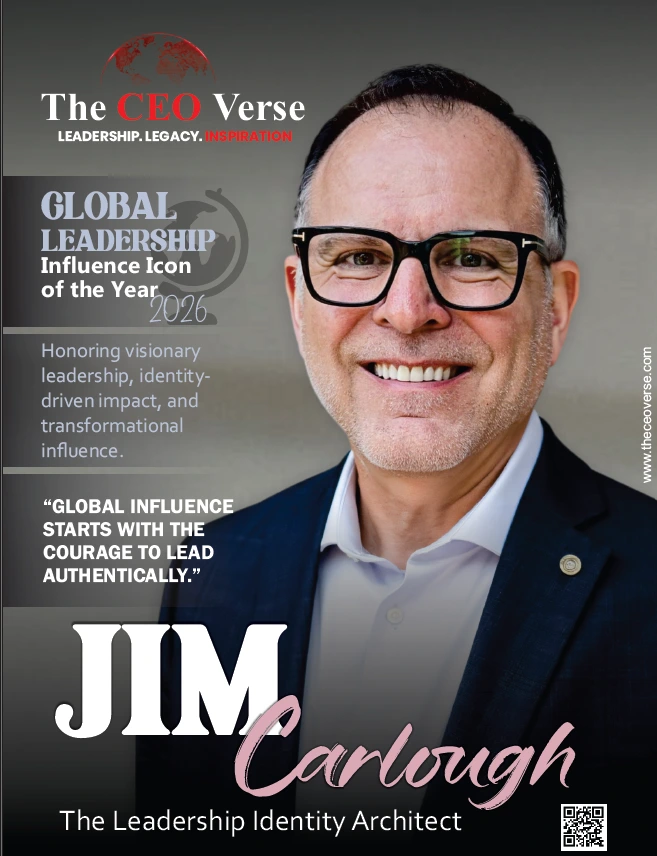
“Global Leadership Influence Icon of the Year 2026”
Cover story
Jim Carlough
Featured Profile - Jim Carlough
Most leaders spend their careers building skills. Jim Carlough spent thirty years figuring out why that isn’t enough.
A Proving Ground, Not a Career Path
Jim Carlough’s path into leadership wasn’t planned. It was pressure-tested.
He started in healthcare sales in his twenties with a hunger that had nothing to do with commissions. He wanted to prove something — that ordinary people, handed the right framework, could do extraordinary things. That conviction got tested early. It held.
The experience that shaped everything else came midway through his career, when he joined Perot Systems. Ross Perot had built that company on a culture that didn’t soften its expectations: grit, discipline, decisive action, and no tolerance for excuses. Jim absorbed it. “Those lessons became the foundation of how I lead,” he says, “and how I coach others to lead today.”
Over the next three decades he moved through C-suite roles across healthcare — private equity-backed startups, Fortune 500 companies, everything between. At mPulse/HealthTrio, where he serves as President and Chief Sales Officer, the results showed up in the numbers: qualified pipeline grown from $18 million to over $100 million, sales close rate rebuilt from 15% to 72%, company revenue tripled in three years.
But the number that stayed with him wasn’t on any dashboard. It was a question he kept circling back to through every role, every team, every hire. Why do some leaders thrive while others — equally talented, equally experienced — quietly stall? After thirty years, he had his answer. It’s not a skills problem. It’s an identity problem.
That answer became a book, The Six Pillars of Effective Leadership: A Roadmap to Success — an Amazon bestseller and International Impact Book Award winner. It became a framework. And it became the work he now does full-time, under a title he chose deliberately: The Leadership Identity Architect.
What Doesn’t Move
Ask Jim about guiding principles and he doesn’t reach for a slide deck. He reaches for the same three things he’s returned to across every role he’s held.
Lead with identity, not just intention. Most leaders know what they should do. What stops them is that they don’t fully believe they are the person to do it. That gap between knowing and believing is where performance collapses. Closing it changes everything.
Integrity is a hard floor, not a negotiating position. Compromise your values once for a short-term win and you begin eroding the trust that took years to build. It never comes back the same way.
Feedback is fuel. Every great leader Jim has encountered shares this: they actively seek out hard truths about themselves, and they act on them. Comfort, he’ll say without softening it, is the enemy of growth.
Running through all of it is his ANCHOR Decision Framework — Assess, Name, Consider, Hold, Own, Review. It is the structure he turns to when the pressure is highest, because leadership, in his framing, isn’t tested in good times. It is revealed in the hard ones.
The Milestones That Actually Mattered
Several stand out across thirty years. Being mentored early by leaders who built genuine cultures of accountability gave Jim a blueprint before he had the title to use it. Scaling a healthcare technology platform that now reaches one in three Americans through health plan and health system clients is, he says, professionally humbling. Watching The Six Pillars of Effective Leadership become part of the curriculum at the University of North Texas Business School’s Sales and Marketing Leadership program — that one he calls legacy.
Being named IAOTP Chief Sales Officer of the Year for 2025 and earning a seat in the Forbes Business Development Council validated the work in front of the industry. But neither is the milestone he returns to most.
“Every email I receive from a leader who tells me my book or keynote changed the way they see themselves. That’s the whole reason.”
How He Leads
Jim leads from conviction — he doesn’t let urgency replace clarity. But he has learned that conviction without structure doesn’t build things that last. Alongside the belief sits discipline: knowing your values before the pressure arrives, measuring outcomes honestly, and making hard calls that protect long-term results even when the short-term optics push the other way.
Resilience has been just as necessary. Thirty years across high-stakes sales environments doesn’t run short of setbacks — deals lost, strategies that failed, moments when the path forward wasn’t clear. He stayed moving through all of it by refusing to let circumstance define his identity. What kept him anchored wasn’t a result. It was a belief — that the gap between ordinary and extraordinary leadership is closeable, but only if you’re willing to work on who you are, not just what you do.
What the Work Actually Is
Jim’s practice runs on one belief: leadership development fails when it treats people as skill sets to be upgraded rather than identities to be built. That conviction runs through everything he offers.
The flagship program is the Six Pillars Executive Leadership Accelerator — available as a three-day corporate workshop or an 8–12 week intensive coaching program, built around six pillars: Integrity, Focus, Compassion, Stability, Empathy, and Humor. It runs in corporate, group cohort, and one-on-one formats for mid-level managers and C-suite leaders alike. His keynote work brings the same framework to conferences and events — built on story and practical tools that don’t require a follow-up manual to apply. The book gives organizations a way to put foundational leadership development directly into their people’s hands, at scale.
The question underneath all of it is the same one he’s been asking since the Perot Systems years. Who do you believe yourself to be when the pressure arrives? That answer, he has found, determines nearly everything else.
What’s Being Built Now
2026 is, in Jim’s own words, full-throttle. Confirmed keynote engagements in Dallas, Boston, and Nashville are on the calendar. Thought leadership through Forbes is ongoing, focused on leadership identity and organizational transformation. His national media presence is expanding beyond DFW into television and broader press markets.
A second book is in early conversation with a literary agency. Curriculum expansions for the Six Pillars framework are in development, moving into education and government — verticals where the identity gap in leadership is just as real, and far less discussed.
A Vision Measured by Reach
Jim’s five-year goal isn’t measured in revenue. It’s measured in how far one idea travels.
He wants the Leadership Identity Gap to carry the same recognition as emotional intelligence — a concept that every HR leader, CHRO, and L&D director reaches for when their pipeline is underperforming. Not because they hired the wrong people. Because they’ve been solving an identity problem with a skills solution.
By then, he wants the Six Pillars framework licensed into corporate training systems across multiple industries, the University of North Texas partnership expanded, and a second book in readers’ hands. Scale is the goal. Diluting the impact is not.
What the Hard Part Taught Him
The most difficult challenge Jim Carlough has faced is one most leaders encounter and almost none will admit to: the transition from doing to leading.
Early on, he was good at the work. Genuinely good. That was the problem. Becoming someone who leads others through the work required stopping the habit of measuring his own value by individual output and starting to measure it by the growth he created in others. That shift didn’t happen in a quarter. It came through mentorship, through failure, and through the deliberate practice of every principle he now teaches.
The lesson it left him with runs through everything: when the pressure is highest, what holds you isn’t your skills. It’s your identity.
What He Tells People Starting Out
Stop waiting for someone to hand you a title and call you a leader. Leadership is a decision you make about who you are — before the room agrees with you.
Build your identity first. Know your values clearly enough that pressure can’t shake them. Find mentors who tell you the truth, not the ones who manage your comfort. And understand this before it costs you: the people who rise to lasting leadership positions aren’t the loudest or the most polished. They’re the ones with the strongest anchors.
The Six Pillars and the Architect
ANCHOR. Six Pillars. The Leadership Identity Architect. The language Jim Carlough has built his practice around isn’t accidental — every word carries weight.
The ANCHOR framework isn’t a mnemonic he created for a workshop. It’s the structure that kept him grounded through three decades of high-pressure decisions, and the structure he now puts in the hands of every leader he works with. The Six Pillars aren’t a competency list — Integrity, Focus, Compassion, Stability, Empathy, Humor. They are the qualities Jim watched hold leaders together when everything else was under pressure, and fall apart when they were missing.
And the title — The Leadership Identity Architect — says exactly what he believes the work is. Not coaching. Not training. Architecture. You are building something that has to hold weight.
The story begins with a question Jim couldn’t stop asking: why do some leaders thrive while others, with every advantage, quietly plateau? The answer he found after thirty years is the same one he gives to every leader who walks into a room with him. The gap isn’t in what you know. It’s in who you believe you are.
That’s what the work is for: building the identity that holds — so that when the pressure comes, and it always does, you already know who you are.
Lead Boldly. Inspire Boundlessly.