
Legionnaires' Disease Sickens Residents on New York's Upper East Side
A growing public health concern has emerged in one of New York City’s most prominent neighborhoods, as a cluster of Legionnaires’ disease cases has prompted an urgent response from health officials. The outbreak on Manhattan’s Upper East Side has led to hospitalizations, triggered an extensive investigation into local cooling towers, and renewed attention on the importance of monitoring urban water systems to protect public health.
Read Time : 7 minutes
Social Share :
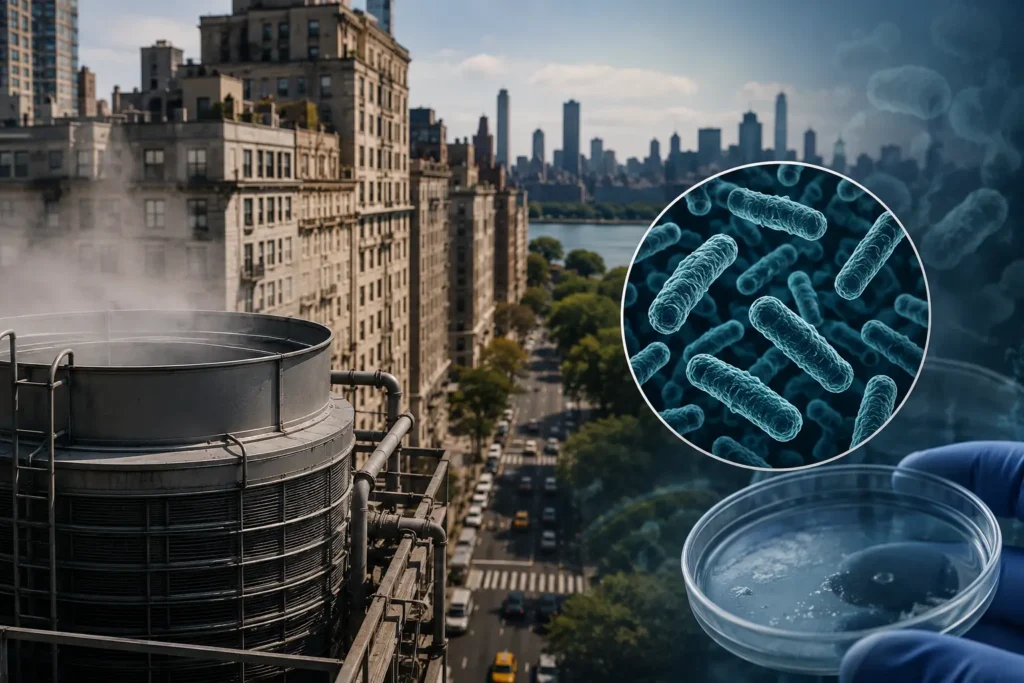
Health Officials Respond to Growing Outbreak
Health officials in New York City are investigating a growing cluster of Legionnaires’ disease cases on Manhattan’s Upper East Side. So far, 23 people have been infected, with 17 requiring hospitalization.
The affected neighborhoods include Carnegie Hill and Yorkville, where contaminated cooling towers are believed to be the most likely source of the outbreak.
Authorities have confirmed that there have been no reported deaths. Officials also emphasized that the city’s drinking water supply and household air-conditioning systems remain safe for residents.
Understanding the Disease and Who Is Most at Risk
Legionnaires’ disease is a severe form of pneumonia caused by Legionella bacteria. The infection spreads through inhaling contaminated water droplets rather than through person-to-person contact.
Common symptoms include fever, cough, muscle aches, and shortness of breath. Older adults, smokers, and individuals with weakened immune systems are considered the most vulnerable to serious complications.
Health officials are urging anyone who has lived, worked, or visited the affected area since late June and develops these symptoms to seek immediate medical attention.
Investigation Focuses on Cooling Towers
The New York City Department of Health has launched inspections and testing of cooling towers across the impacted neighborhoods to identify the source of contamination.
If Legionella bacteria are detected, building owners will be required to carry out immediate disinfection and remediation measures to prevent further spread.
The investigation reflects the city’s continued efforts to strengthen oversight of commercial water systems following previous outbreaks, with stricter inspection and maintenance regulations aimed at reducing future public health risks.