TheCEOVerse • Digital Edition
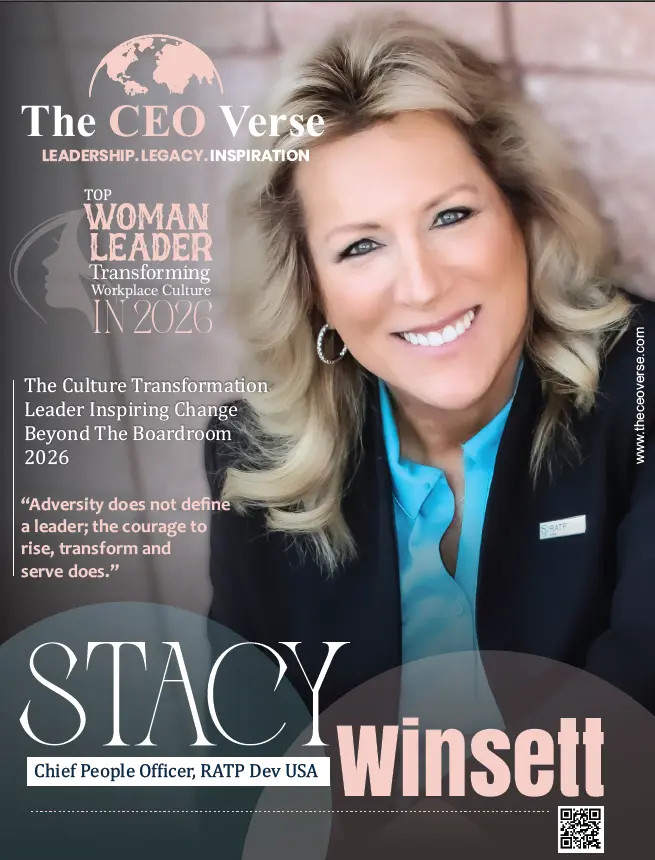
“Top Woman Leader Transforming Workplace Culture in 2026”
Cover story
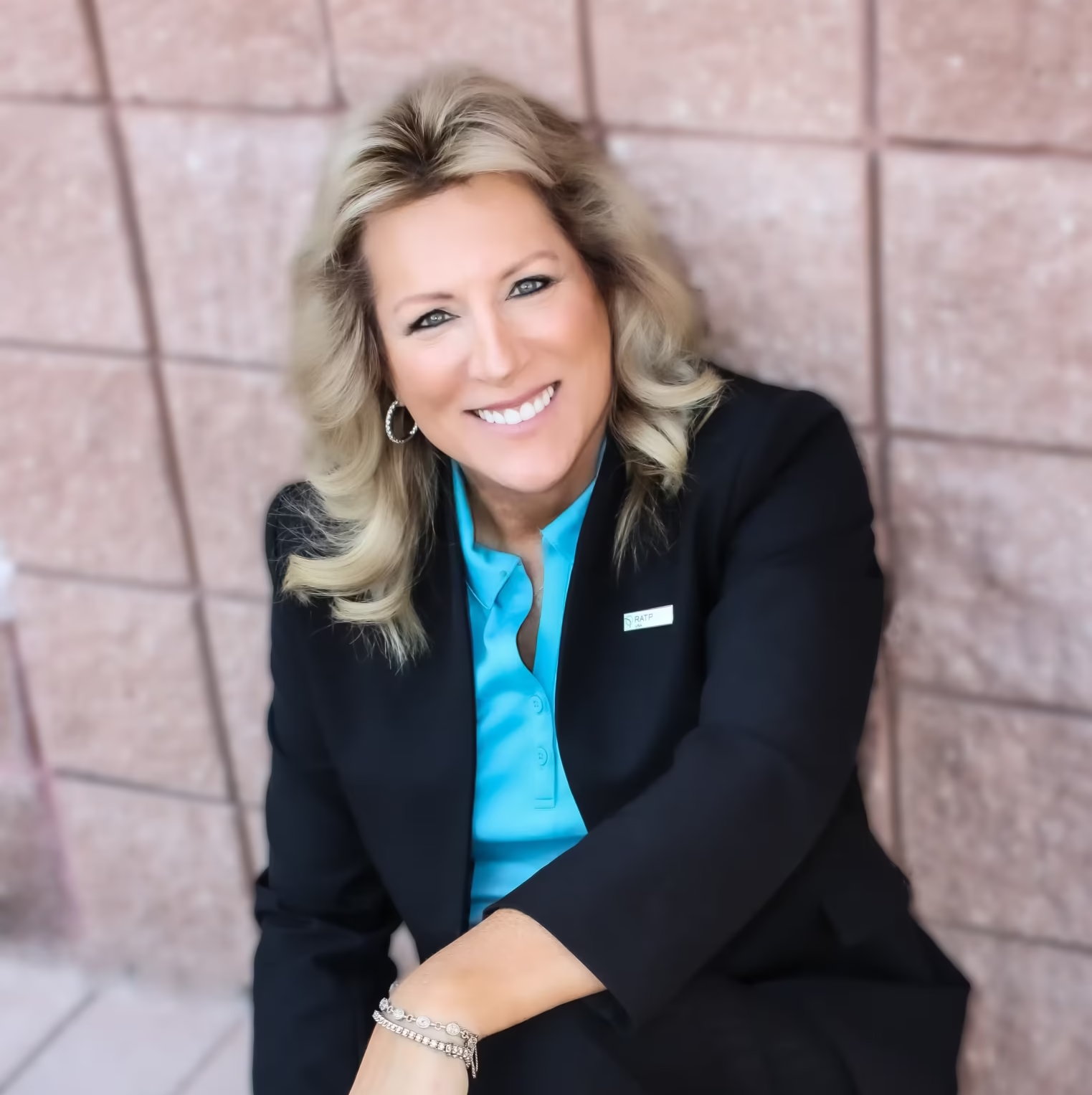
Stacy Winsett
Featured Profile - Stacy Winsett
From Childhood Hardship To Industry Leadership Roles
Stacy Winsett’s professional journey did not begin in a corporate office. It began in childhood adversity. Her early years carried real trauma and instability, the kind that forces a person to grow up faster than they should have to. By the time she reached the workforce, she had already learned how to read a room under pressure and keep moving when nothing around her was stable.
That early training found a home in HR and Labor Relations, fields built almost entirely on conflict and negotiation. Aviation, manufacturing, oil & gas, mining services and transit leadership roles followed, each demanding the same thing over and over: solve the hard problem, advocate for the people in the room with less power, hold the line in negotiations where both sides were tired and unhappy and look for win-win solutions.
Labor negotiations. Organizational transformations. Compliance work. Internal investigations. Culture overhauls that took years, not quarters. The motive behind the work shifted over time. What began as a desire to survive evolved into a passion for helping organizations and individuals thrive.
That arc still shows up in how she leads at RATP Dev USA today. The instinct to protect people who cannot protect themselves never left.
Leadership Is Responsibility, Not Power, She Believes
Ask Winsett what makes a leader effective and she will not give a polished list. She names courage first, because most of leadership’s hardest moments are not strategic, they are personal. Difficult conversations. Ethical lines that someone has to hold even when holding them is inconvenient. She has had to stand in those moments more than once, and she says courage is what got her through, not confidence.
Resilience comes next, earned the same way the rest of her career was earned, through adversity that taught her to adapt rather than break. The word gets used carefully, not as a buzzword but as a description of something specific: the ability to keep functioning, keep showing up, when the easier option would have been to quit.
The third trait reframes the other two. Stewardship, as she defines it, has nothing to do with authority. “Leadership is not about power,” she says, “it’s about responsibility.” It means the resources, the people, and the opportunities placed in her care are not hers to use for personal gain. They are hers to protect and pass forward. Courage and resilience get a leader through hard days. Stewardship is the reason those days mattered at all.
Five Values That Define How She Leads
Integrity, courage, stewardship, compassion, accountability. Winsett names all five without hesitation, and she is clear they are not aspirational language hung on a wall somewhere. They are the filter every decision passes through. Leadership, in her view, begins with character, not with what is profitable or expedient in the moment. A decision can be legal and still be wrong. She tries not to make those.
Underneath the five values sits a set of beliefs she returns to often: psychological safety, servant leadership, personal responsibility, lifelong learning. None of these are new ideas in corporate culture writing. Winsett treats them less as theory and more as daily maintenance. Trust is built or lost in every single interaction, not in the big speeches.
What stands out is not the five values themselves. It is how closely they map onto RATP Dev USA’s own corporate values: Caring, Daring, United, Effective, Safe.
Beyond the Boardroom, Where Influence Gets Built
Outside her role as Chief People Officer, Winsett also impacts others through Keynote speaking, training, and retreat. Trauma-Informed Leadership keynotes, Faith-based leadership retreats. HR and Labor Relations training sessions, psychological safety workshops, and programs focused on women’s leadership development all fall under that work.
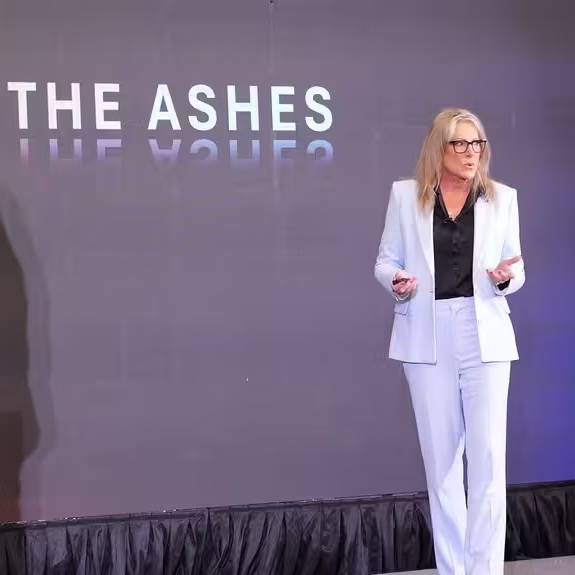
Her book, From Ashes to Influence, sits at the center of that work. It has become closer to a working resource than a memoir, used in leadership cohorts, book clubs, and executive development programs across organizations.
The keynotes, the workshops, and the book all return to the same handful of ideas: psychological safety, trust, and what it actually takes to lead people who have been through hard things themselves. It is one philosophy moving through different rooms.
The Strength That Built Her Career Also Broke It
The hardest stretch of Winsett’s career was not a layoff or a failed negotiation. It was slower than that, and harder to see coming. For years she was the person who carried more than her share, the one who worked harder, absorbed the difficult problems, stepped into situations other people avoided. Those instincts moved her up. They also, eventually, cost her.
Constant over-functioning looks like dedication right up until it becomes burnout. Winsett describes it plainly: the same strengths that built her reputation were quietly running her down. The realization came late, after something had already started to break, not before.
What followed was slower, less visible work. Setting boundaries. Delegating without guilt. Prioritizing her own wellbeing as seriously as she had always prioritized everyone else’s. She calls it a shift from surviving to stewardship. Coaching helped, and so did faith, reflection, and the uncomfortable process of unlearning patterns that had outlived their use.
Hard work has not stopped. What stopped is mistaking exhaustion for proof of value.
From Certified Expert to Published Industry Voice
Winsett’s formal credentials read like a checklist most HR professionals spend a career chasing: SPHR, GPHR, SHRM-SCP, plus certifications in Mediation, Executive Coaching, and DiSC. Each one represents a different competency: strategic HR, global HR, mediation under pressure, coaching that changes behavior rather than just naming it.
Her leadership work across HR, Labor Relations, and Organizational Development has touched thousands of employees through negotiations, transformations, and culture initiatives that took real time to land.
From Ashes to Influence added a different layer of recognition, tied to ideas rather than execution. It positioned her inside ongoing conversations about trauma-informed leadership, resilience, and ethical stewardship that extend well past her own organization.
The Fire Refines, It Doesn’t Destroy Her
“The fire doesn’t destroy us, it refines us.” Winsett returns to that line often enough that it functions as something close to a personal operating principle. Adversity, in her framing, is not inherently good or bad. It is material. What a person does with it determines whether it hardens them into something brittle or strengthens them into something durable.
That idea carries into how she thinks about setbacks more broadly. Every challenge, in her view, holds a lesson somewhere inside it, even the ones that do not feel instructive at the time. Easy to say. Harder to practice. It shapes how she coaches other leaders through their own difficult seasons regardless.
The second half of her philosophy circles back to stewardship. Influence is not about what a person gains from having it. It is about what they choose to contribute with it.
Faith Carries Her, Service Defines Who She Follows
Faith has been the constant through the harder seasons of Winsett’s life, and she is direct about it. When circumstances felt unmanageable, faith gave her something to hold onto when the path forward was not visible.
The people she admires most share one trait: they use whatever influence they have in service of others rather than themselves. Integrity over convenience. Courage over comfort. Service over status. These are not abstract preferences. They describe the people she has actually tried to model her own leadership after.
It lands on one line she repeats with some conviction. True leadership is measured not by position but by impact. Faith gave her the resilience to keep going. Watching other people lead with service rather than self-interest gave her a standard worth aiming for.
Building Resources So More Leaders Can Thrive
Winsett is not chasing a different role. What comes next is an extension of what she is already doing. More speaking events, more retreats, more coaching, aimed at helping organizations build healthier, more effective leadership cultures. Real opportunity exists in advancing trauma-informed leadership, psychological safety, and stewardship-based practices across industries that have not fully adopted them yet.
Part of that work involves building things that outlast a single keynote or workshop: training programs, leadership communities, resources that keep doing the work after she has left the room. The goal is for people to convert adversity into something usable, rather than simply surviving it and moving on.
Her stated goal is simple, even if the execution rarely is. She wants to help leaders build environments where people can thrive instead of merely getting by. It is the same idea that has run through her entire career, aimed now at more people than she could reach alone.
Her Advice to Anyone Still Finding Their Way
Winsett’s advice to leaders earlier in their journey starts somewhere most people avoid: do not underestimate your own story. The experiences a person is tempted to hide are often the exact experiences that later equip them to lead well. Hiding the hard parts of a resume rarely makes someone a better leader. It just makes them a more guarded one.
The second piece is sharper. Survival is not leadership. The skills that get a person through a difficult season, over-functioning, carrying too much alone, powering through, are not the same skills that sustain a leader over the long run. Growth asks for something different: self-awareness, real boundaries, and a willingness to keep learning past the point where most people stop.
The last piece is the simplest, and she treats it as the most important. Lead with integrity. Titles change. Promotions happen and then get forgotten. What stays with people is how they were treated, not which decision technically got made. That is the standard Winsett says she tries to meet.