
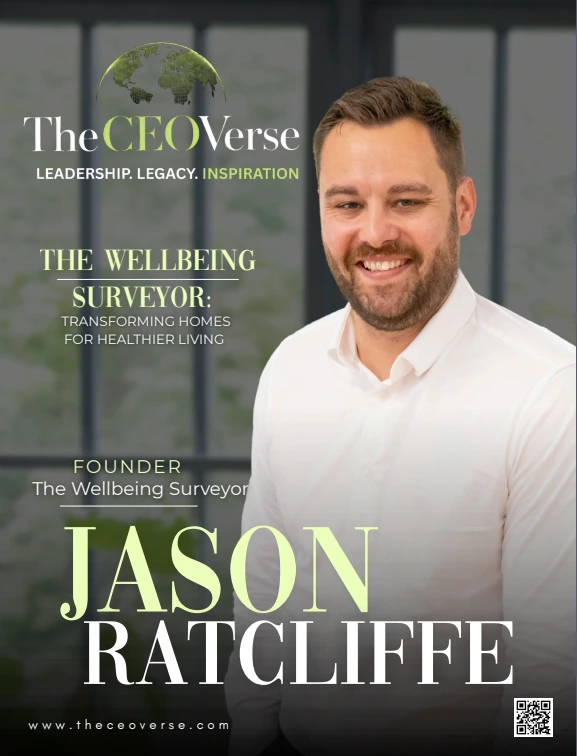
TheCEOVerse • Digital Edition
“THE WELLBEING SURVEYOR: Transforming Homes For Healthier Living”
Cover story
Jason Ratcliffe
Featured Profile - Jason Ratcliffe
Jason Ratcliffe: The Beginning Of A Movement, Not The End Of A Career
Buildings are inspected for defects every day. Rarely are they inspected for what they do to the people inside them.
The Wellbeing Surveyor began with that exact observation. Jason Ratcliffe, Founder and Wellbeing Surveyor, built the practice around a gap most of the industry had stopped noticing.
The Gap Between Structural Health And Human Health
Long before The Wellbeing Surveyor became a recognised brand, Ratcliffe was asking questions conventional surveying rarely considered. Most inspections ended with conclusions about roofs, walls, damp or maintenance.
He found himself thinking about the people living inside those buildings instead. Families kept describing poor sleep, recurring respiratory problems, headaches, fatigue and discomfort. These experiences highlighted a gap between building performance and human wellbeing.
His background in surveying gave him an understanding of buildings. Further study in public health, sustainability and research opened a much wider perspective. Buildings, he realised, should not be judged on structural condition or energy performance alone.
They should be evaluated by how they support the health and quality of life of the people inside them. That philosophy became The Wellbeing Surveyor, a practice that today extends beyond consultancy into research, education and innovation.
“Buildings should not simply stand for longer; they should help people live better,” Ratcliffe says, summing up the mission in one line.
Recovery Taught What Textbooks Never Could
A brain haemorrhage changed Ratcliffe’s outlook fundamentally. Recovery taught him patience and resilience in a way no textbook could.
It also made him appreciate how profoundly environments influence recovery, concentration and stress. Rather than letting adversity define him, he let it refine his purpose.
The experience strengthened his commitment to evidence-led work. Work built, deliberately, to improve people’s lives rather than simply describe buildings.

An Ecosystem Approach To Building Assessment
The work at The Wellbeing Surveyor is built around a multidisciplinary philosophy. Surveying, public health, environmental science and sustainability are not treated as separate fields.
They are combined to understand the complete environmental ecosystem of a building, rather than isolated parts of it. “We measure more than buildings, we seek to understand how buildings influence people,” as Ratcliffe puts it.
Alongside consultancy, the practice invests in pioneering research, independent product evaluation and healthy building evidence. Many of these initiatives remain confidential until publication or launch.
They share one objective regardless. Making healthy buildings measurable, practical and accessible.
The Question That Replaced Saying Yes To Everything
Early in his career, Ratcliffe equated success with saying yes to every opportunity. Over time he realised purpose was a far better guide than busyness.
Today he asks a single question of every project. Does this genuinely improve people’s lives, or advance knowledge.
That one question transformed his decision making. It has kept the long-term vision clear in a way constant activity never did.
Thousands Of Conversations, One Confirmed Truth
His wife Sophie has supported every stage of the journey. Mentors across surveying, medicine, academia and environmental science have continually challenged him to think more deeply.
Equally influential were the thousands of conversations with homeowners. Their lived experiences confirmed that healthy buildings are not an abstract idea, they are a real human need.
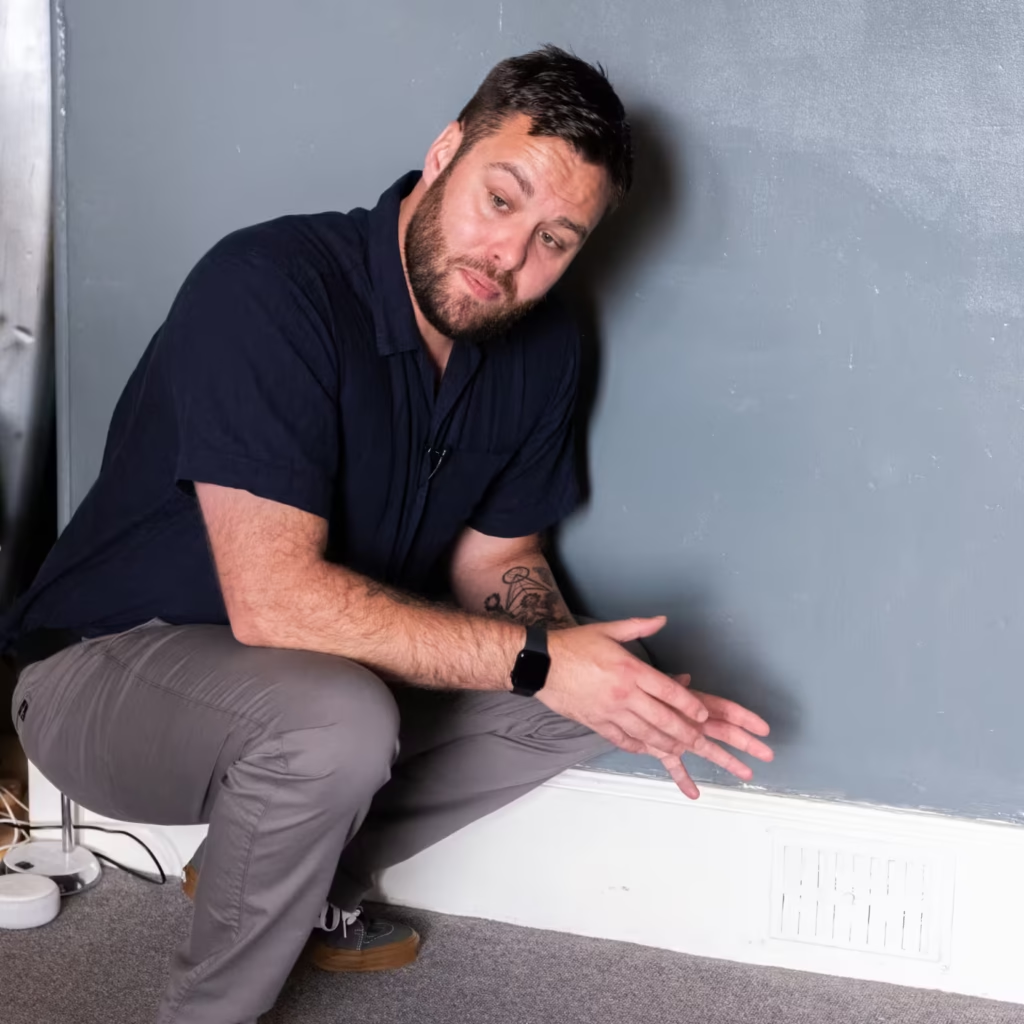
Connecting Fields That Rarely Speak To Each Other
The future of healthy buildings depends on collaboration. Researchers, clinicians, engineers, architects, surveyors and technology innovators each contribute a different piece of the puzzle.
Through partnerships, Ratcliffe is building a broader movement. One that connects these disciplines and accelerates evidence-based change across the industry.
Chasing Problems Instead Of Chasing Titles
His advice to others entering the field is direct. Stay curious. Do not chase titles or awards, chase meaningful problems instead.
Read widely, question assumptions and never stop learning. These are not abstract instructions for Ratcliffe, they describe how he built the practice itself.
Real innovation, he says, comes from asking better questions rather than repeating familiar answers.
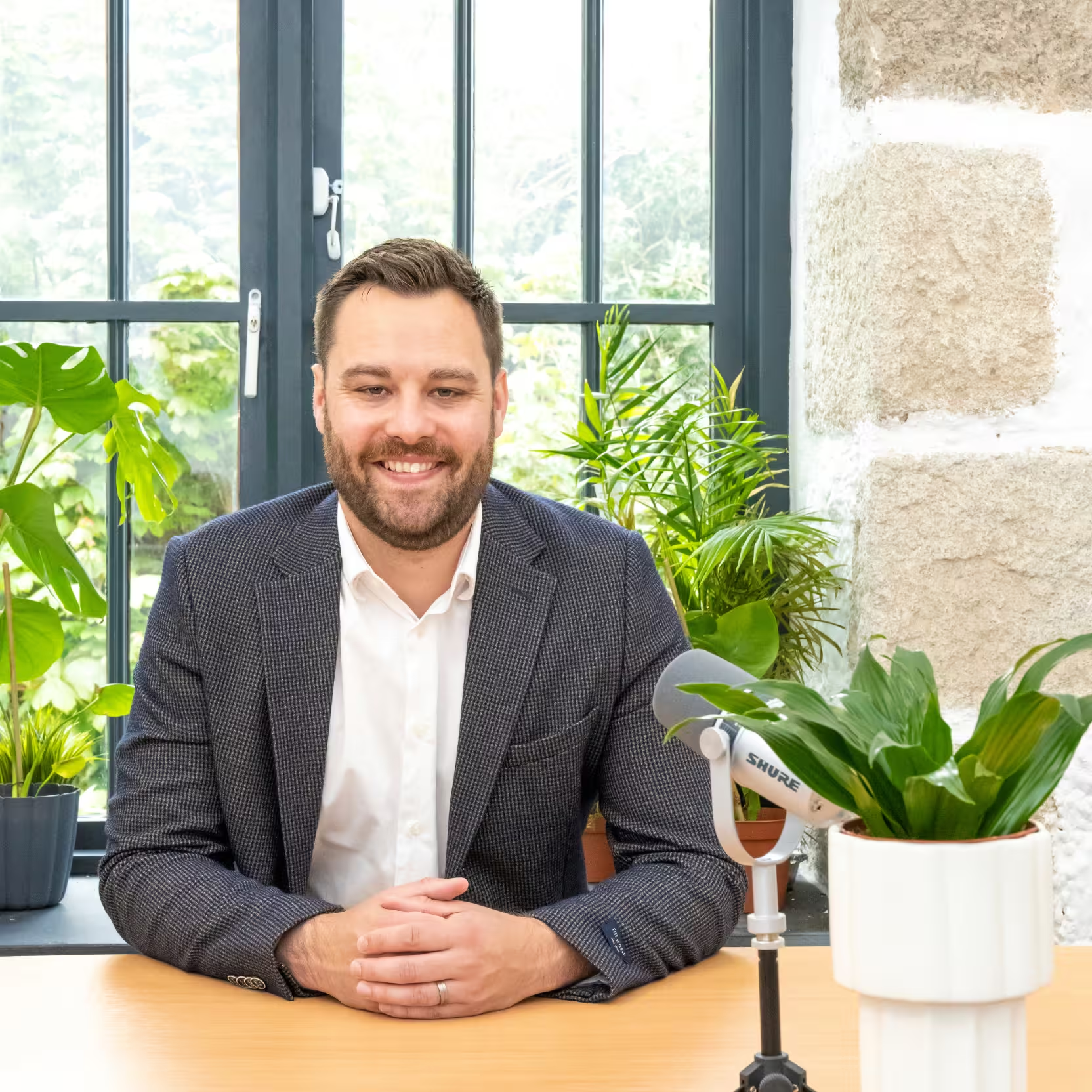
Recognition As A Tool, Not A Trophy
Recognition matters to Ratcliffe, but not for its own sake. It matters because it creates conversations.
Every article, keynote and interview helps more people recognise that healthier buildings can improve lives. That is what he considers the actual return on visibility.
Looking ahead, his ambition is to keep expanding research, education and international collaboration. The goal is establishing The Wellbeing Surveyor as a recognised voice for healthy buildings, not simply a recognised name.
Safe And Sustainable Is No Longer Enough
We spend around ninety per cent of our lives indoors, yet often know remarkably little about how those environments influence our health. “Healthy buildings should become as normal as seatbelts and smoke alarms,” Ratcliffe argues.
The buildings of tomorrow should not simply be safe and sustainable. They should actively support human wellbeing.
That is the future he is working towards.
The Beginning Of A Movement, Not The End Of A Career
Ratcliffe does not see The Wellbeing Surveyor as the end of a career journey. He sees it as the beginning of a wider movement.
If future generations naturally expect homes, schools, workplaces and healthcare buildings to be designed and assessed around the wellbeing of the people inside them, the mission will have achieved its purpose.
It is not a milestone he is chasing. It is a default he wants the next generation to inherit without having to fight for it.