
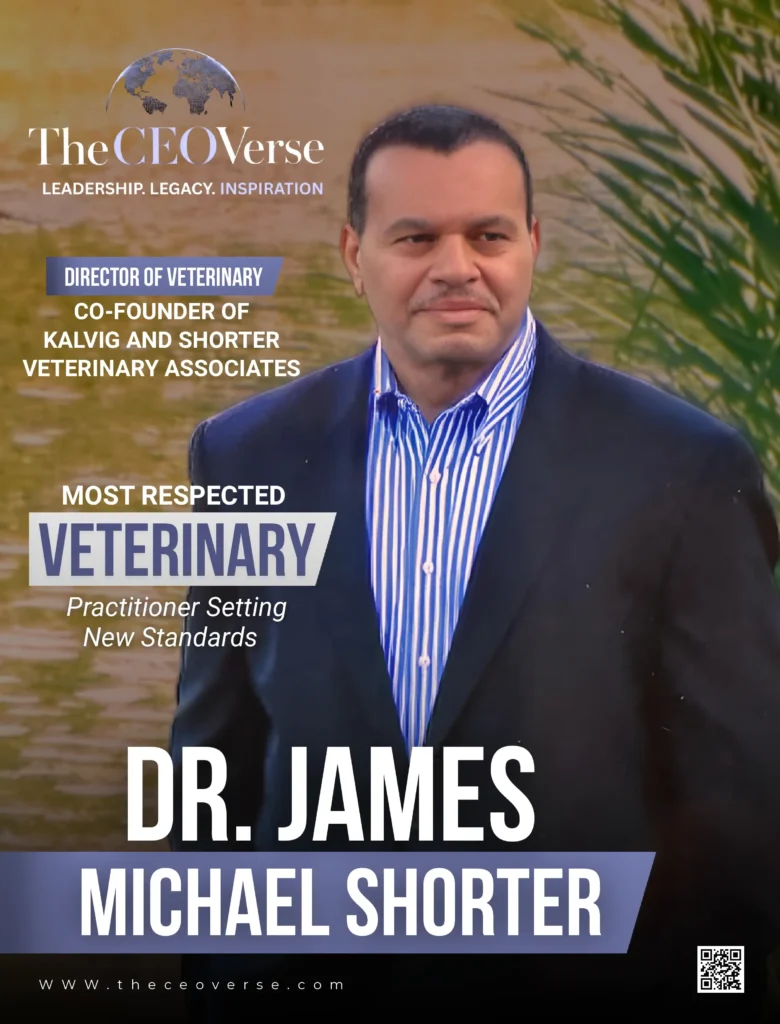
TheCEOVerse • Digital Edition
“Most Respected Veterinary Surgeon Setting New Standards”
Cover story
Dr. James Michael Shorter
Featured Profile - Dr. James Michael Shorter
The Healer of Murray Hill: How Dr. James M. Shorter Built an Empire of Trust, One Patient at a Time
On East 39th Street, between Third and Lexington Avenues of Murry Hills, a brownstone with a front courtyard and a standalone marquis sign stands like a relic of a gentler era, sandwiched between the glass and steel ambitions of city of Manhattan that rarely slows down. The flowers in that courtyard get watered every morning, the walkway gets swept, and somewhere inside, a man who has spent 48 years with his hands comforting and healing the state of ailing creatures is already reviewing yesterday’s progress report before his first cup of coffee.
That man is Dr. James M. Shorter, the veterinary surgeon, disaster responder, mentor, and co founder of Kalvig and Shorter Veterinary Associates, one of the last privately owned concierge veterinary practices standing in a Manhattan increasingly dominated by corporate hospital chains. Dr. Shorter’s story is one of a relentless service both to animals and the people who love them, to the city that adopted him, and to a profession he has spent nearly five decades trying to elevate.
This is the story of how a boy raised in the political turbulence of 1960s and 70s Washington, D.C., the son of a pioneering pediatrician and a postal supervisor, became one of the most respected private veterinary practitioners in New York.
A Legacy Written in Ink Before He Was Born
Dr. Shorter’s mother was a pediatrician who broke barrier after barrier as a woman, as an African American professional, in an era when neither was easy. She was the daughter of a Negro League Baseball owner, Ed Bolden, owner of the Philadelphia Stars, raised in Darby, Pennsylvania, in a household where lawyers, doctors, musicians, and educators were simply the people who came around for dinner. His father, a postal supervisor and musician, ran the house on discipline and work ethic. Adopted at four years old into this world of achievement without apology, Dr. Shorter absorbed a lesson early that hard work and perseverance were not aspirations but honest expectations.
He assumed, as many young people do, that a love of animals and a discomfort with people were prerequisites for veterinary medicine. He would later discover through decades of Manhattan clientele ranging from housewives to UN diplomats that nothing could be further from the truth. Veterinarians, he learned, spend as much time managing the anxieties, grief, and expectations of pet owners as they do treating the animals themselves. It is, in many ways, a people business wearing a white coat.
That realization would define everything that came after.
From Tuskegee to Teaneck: Building the Foundation
Dr. Shorter’s academic path ran through Tuskegee University in Alabama, one of the nation’s storied historically Black colleges and, notably, home to the country’s only HBCU affiliated veterinary school. He earned his Bachelor of Animal Science in 1974 and his Doctor of Veterinary Medicine in 1978, a credential that placed him among a strikingly small fraternity. Even today, by his own estimate, African Americans own roughly 1.5 percent of private veterinary practices in the United States. Being trained at an institution built specifically to open doors that were otherwise shut gave him, in his words, a firsthand understanding of disparities in training, incentive, and outreach that persist in the profession to this day.
After a rotating internship at the Animal Medical Center in New York in 1981, Dr. Shorter went to work under Dr. Robert Shomer at Bergen Animal Hospital in Teaneck, New Jersey which was an affluent suburb that would become his proving ground. He spent four years as Shomer’s principal associate before negotiating to buy the practice outright, and for the next 23 years, he ran it as owner and director. It was in Teaneck that he sharpened the skills that would define his career, including surgery, client management, and the unglamorous but essential mechanics of running a small business be it payroll, accounts receivable, staff discipline, marketing.
By 2000, after more than two decades building Bergen Animal Hospital into a thriving AAHA-accredited practice, Dr. Shorter made a decision that surprised even those closest to him. He sold the practice and moved into New York City, taking a position as Chief Surgeon and Associate Veterinarian at New York Veterinary Hospital on 74th Street and Lexington Avenue, being a boutique style, corporate owned practice on the Upper East Side known for thorough diagnostics, sophisticated treatment protocols, and appointments scheduled every 30 to 45 minutes rather than the rushed ten minute slots common elsewhere. It was there that his path crossed with the woman who would become his business partner for the next quarter century, Dr. Barbara Kalvig, who had become the hospital’s medical director after its previous owner passed away.
Neither of them could have predicted that within a year, their partnership would be tested not by a difficult surgery or a demanding client, but by the worst terrorist attack in American history.
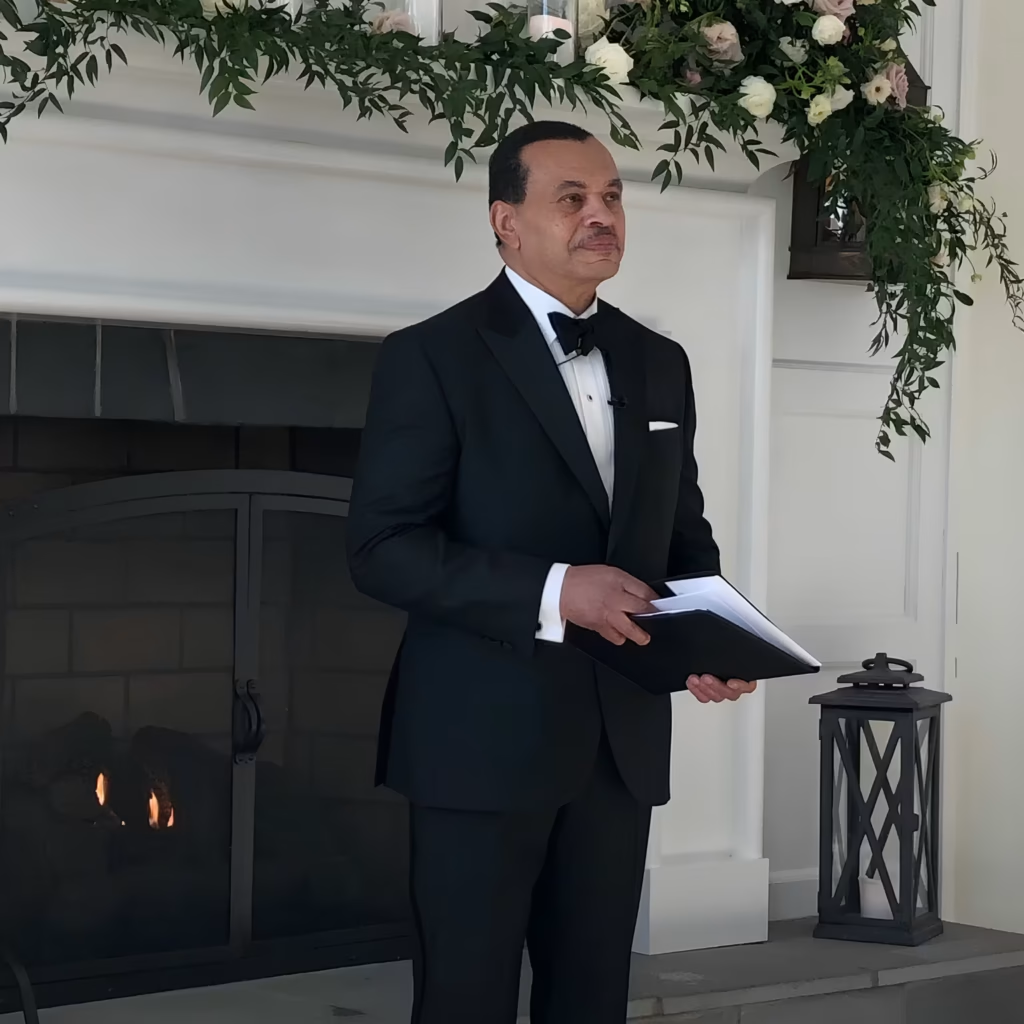
September 11th: When the Veterinarian Became the First Responder
On the morning of September 11, 2001, Dr. Shorter did not stop to consider whether responding to the collapse of the World Trade Center was within his job description. “Responding and going down to Ground Zero was never really an option for me,” he would later reflect. “I guess the legacy in my family, especially my mother responding to crisis, was somehow ingrained in me.”
He and Dr. Kalvig made their way first to Federal Plaza in Lower Manhattan, joining a chaotic assembly of volunteers, doctors, nurses, and citizens who had shown up with whatever they could carry, such as shower curtains, medical supplies, a willingness to help. When it became clear there would be no survivors emerging from the wreckage of the towers, buses carried the volunteers uptown to Ground Zero, where triage tables were being assembled inside the gymnasium of Stuyvesant School.
It was there, amid the dust and confusion, that Dr. Shorter and Dr. Kalvig encountered a search and rescue handler and his exhausted Golden Retriever, one of what would eventually become more than 300 dogs working “the pile.” The handler pointed them toward a truck parked on the West Side Highway near Chambers Street, a mobile spay and neuter clinic, purchased by the Suffolk County SPCA just days earlier, now repurposed as the seed of something far larger. Dr. Shorter and Dr. Kalvig went back to their hospital on 74th and Lexington, gathered every piece of medical equipment they could carry, and returned to equip what would become a full scale MASH unit for the search and rescue dogs of Ground Zero.
For six weeks, that unit ran around the clock. Nearly 200 volunteer veterinarians and technicians rotated through, treating roughly 350 working dogs for burns, smoke inhalation, cut paws, and exhaustion, while their handlers, often as traumatized as the animals they led, received rest and quiet support. FEMA, arriving later, effectively deferred to the systems Dr. Shorter and his veterinary colleagues had already put in place. When the official Veterinary Medical Assistance Teams finally arrived, they found protocols for triage, decontamination, and coordination already firmly in place, grown not from a manual but from instinct, urgency, and 23 years of surgical experience meeting a moment nobody could have trained for.
“It opened up so many opportunities I’m still involved with today,” Dr. Shorter says of that period, truly an understatement for a chapter of his life that would go on to reshape disaster response for working animals across the country.
Building an Institution From the Ashes
Out of the ad hoc MASH unit at Ground Zero came something permanent, the New York City Veterinary Emergency Response Team, or NYCVERT, which Dr. Shorter co founded in 2003 and has led ever since. What began as a grassroots effort by a handful of committed private veterinarians evolved into a 501(c)(3) organization formally recognized by New York City’s Office of Emergency Management, earning a seat on the city’s Animal Planning Task Force, the body responsible for contingency planning for animal welfare across all five boroughs in the event of disaster.
NYCVERT would prove its worth again and again in the years that followed, like coordinating veterinary response during Hurricane Irene in 2011, mobilizing once more during Superstorm Sandy in 2012, and perhaps most remarkably sending Dr. Shorter to Haiti in early 2010, just two months after the catastrophic earthquake that devastated Port au Prince. He, Dr. Kalvig, and a small team drove supplies across the country to hospital clinics and orphanages still reeling from the disaster, confronting a landscape where leptospirosis, a disease transmitted through rodent contaminated water in the tent cities that had sprung up amid the rubble, posed a serious threat to both animals and the humans living alongside them.
That instinct for disaster preparedness has never left him. Dr. Shorter went on to design a prototype mobile veterinary hospital, which was a 53 foot tractor trailer outfitted with a full surgical suite, laboratory, ultrasound, and decontamination capabilities, purpose built for treating working dogs in the field. He has since become a sought after subject matter expert on canine decontamination, consulting with the NYC Office of Emergency Management, the nonprofit Tails of Hope, and specialists from the military, police, and first responder community on protocols for handling search and rescue dogs exposed to bioterrorism agents, fentanyl contamination, and explosive devices. It is a niche so underserved, he notes, that veterinarians remain the de facto leaders in a field where formal training pipelines barely exist.
“SAR dogs and handlers are the first line of defense for our country,” he says simply, “but not many are trained to treat potential injuries and threats to their K9 partners.”
A Homecoming in Murray Hill
By the early 2000s, Dr. Shorter and Dr. Kalvig had grown restless within the corporate structure of their Upper East Side hospital. The parent company was tightening the screws, ending overnight care, cutting what the two doctors considered non negotiable elements of patient service. So they did what independent, minded entrepreneurs have always done, they chose to part ways.
The transition was not instantaneous. The pair operated out of a series of shared spaces before finally finding an empty, previously operated veterinary space on East 39th Street in Murray Hill, a historic Manhattan neighbourhood wedged between Bryant Park, Grand Central Terminal, and the Empire State and Chrysler buildings, and bound by a strict “ten block non compete” clause that made the move a genuine gamble. They gutted and renovated the space, and on April 1, 2013, Kalvig and Shorter Veterinary Associates officially opened its doors.
It was, by any conventional business logic, a risky bet. An independent, full service concierge practice competing in a neighborhood, and an era increasingly defined by corporate consolidation and specialty referral hospitals. But their loyal Upper East Side client base followed them “in droves,” Dr. Shorter recalls, drawn by a formula the two doctors had spent years perfecting, mainly unhurried, 45 minute appointments, deep diagnostic thoroughness, genuine continuity of care, and the kind of old fashioned customer service that treats a UN diplomat, a housewife, and a Broadway performer with the exact same attentiveness. The practice’s Brownstone home, complete with its own front courtyard and back garden, became more than aesthetic charm. During the COVID-19 pandemic, that outdoor space allowed the practice to conduct intake and triage outdoors, drawing directly on the disaster response instincts Dr. Shorter had honed at Ground Zero nearly two decades earlier to keep staff and clients safe through the crisis.
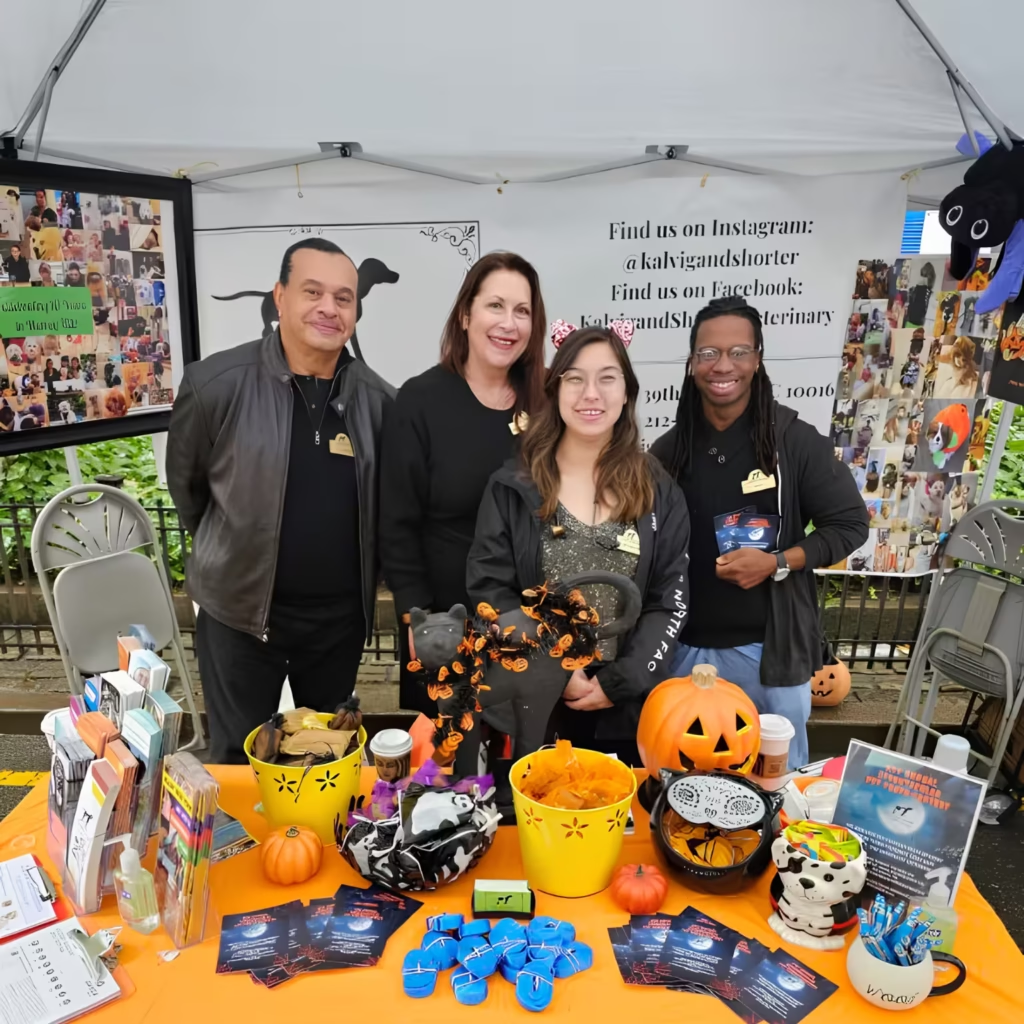
The Business of Trust
Ask Dr. Shorter what has sustained Kalvig and Shorter for over a decade in one of the most expensive and competitive veterinary markets in the country, and he won’t point to a marketing campaign or a slick brand refresh. He points to trust, the slow and compounding kind of faith that gets built appointment by appointment, phone call by phone call, over years.
“My bond with my clients goes much deeper than the care of their animal,” he explains. “You experience real life, marriage, death, illness, children being born, travel, economic challenges, holidays with your loyal clients. All with the pet being the medium through which you form the bond of trust.” It is a philosophy he actively instills in the students and young associates he mentors, many of whom arrive expecting veterinary medicine to be a quiet, animal only pursuit, only to discover that the emotional labor of managing anxious, grieving, or overjoyed pet owners is every bit as demanding as the surgery and treatment itself.
That philosophy also informs his sharpest professional concerns. Dr. Shorter has watched, with visible unease, as large corporate groups have absorbed private veterinary practices across the country, prioritizing shareholder returns over patient care, and pricing routine procedures, and even the privilege of an initial consultation, beyond the reach of many pet owners. He worries, too, about a generation of new veterinary graduates trained to refer complex cases to specialists rather than methodically working them up, a habit he attributes partly to veterinary schools that lack teaching hospitals offering genuine hands on surgical experience. It’s a tension he navigates carefully: specialty practices in oncology, dermatology, and emergency medicine are, in his view, valuable additions to a city like New York, but they should be a second opinion, not the first call.
Running an independent practice in Manhattan in 2026 means treating patients from two to 120 pounds, managing HR and payroll, negotiating with collection vendors to keep accounts receivable under a 30 day threshold, keeping the courtyard flowers watered, and still finding time to scrub in for surgery, often all before lunch. It is not a business for the faint of heart, but it is one Dr. Shorter has run, in one form or another, since 1982, when he first became owner and director of Bergen Animal Hospital at just 30 years old.
Diversity, Representation, and a Door Left Open
Dr. Shorter speaks about representation in his field with the specific weight of someone who has lived it rather than studied it. As one of a small number of African American sole practice owners without corporate affiliation, he sees himself carrying a particular responsibility toward young graduates and students of color navigating a profession where they remain a significant minority. New York’s diversity, its dizzying mix of ethnicities, cultures, religions, and worldviews, has made cross cultural fluency not a soft skill but a core competency in his practice, he says, one that lets his team relate to virtually anyone who walks through the door, whether it’s a first time pet owner from Queens or a career diplomat stationed a few blocks from the United Nations.
He is candid, too, about disappointment, the students who show interest in shadowing at the practice but ultimately don’t follow through, a pattern he attributes partly to cultural factors and partly to the sobering realities of a profession that looks far more glamorous from the outside than it feels from the operating table at 11 p.m. Still, his door, quite literally, the front courtyard door of the East 39th Street brownstone, remains open to the next generation. “Hopefully we will have some interested candidates who we can guide and work with,” he says. It is a small, patient hope, delivered with the same steadiness he brings to a difficult surgical case.
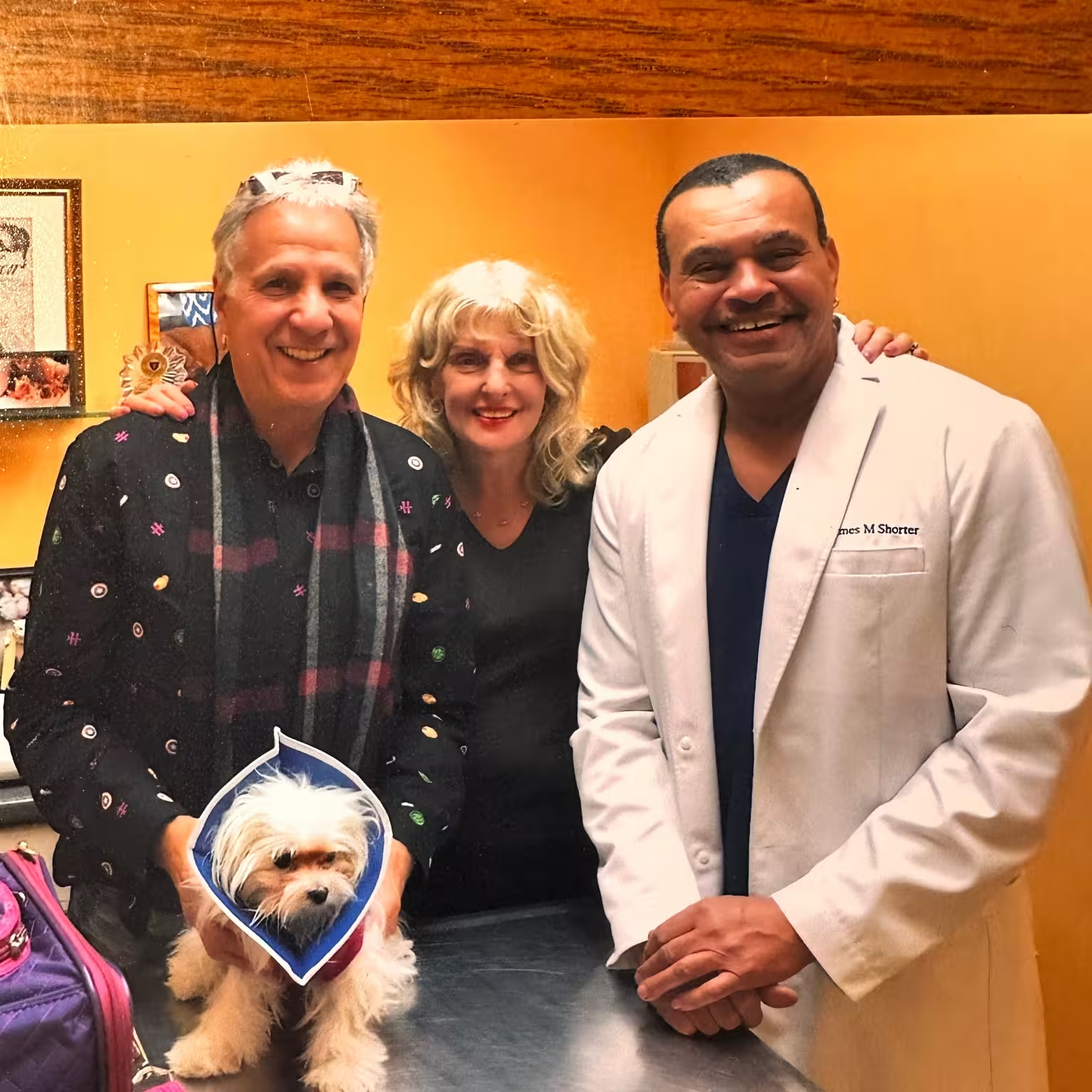
A Day in the Life of a Leader Who Never Really Clocks Out
There is no typical day for Dr. Shorter, but there is a rhythm. Mornings begin before the practice technically opens. Checking which doctor is on duty, which staff members have called out, what surgeries are scheduled, whether the courtyard has been swept and the flowers watered. From there, it’s a continuous current of patient exams, treatment planning, surgical procedures, and client conferences, punctuated by the paperwork of running a small enterprise, blood panels from the previous day, prioritized client questions, discharge instructions delivered one on one so that every pet owner leaves with genuine understanding rather than a hastily explained prescription.
Midday might bring a surgery still in progress, staff concerns needing attention, or callbacks piling up. Evenings mean discharges, closing figures, late emergencies, and planning the following day’s surgical and appointment schedule. Nights are for repairs, staff management, and when there’s time, reading before sleep. It is, by his own description, less a job than a continuous operating system, one he has been running, essentially without pause, for 48 years.
Even now, in certifications he earned in 1998 through the National Strength and Conditioning Association and the American College of Sports Medicine, Dr. Shorter finds an echo of his surgical philosophy, helping bodies, be it human or canine, recover strength and function after trauma or surgery. “Dynamics are different,” he notes of applying human rehabilitation science to post-surgical dogs, “but the principles are the same.” It’s a small but telling detail about a man for whom medicine, in every form, seems to circle back to a single unifying idea: the body, given the right care and patience, wants to heal.
What Comes Next
At an age when many of his peers have long since retired to golf courses or consulting gigs, Dr. Shorter shows no signs of slowing his pace. He remains deeply engaged in disaster preparedness work, continues mentoring associates and veterinary students, and still finds “Show Time”, his term for the moment a surgical patient reunites with its overjoyed owner, as rewarding today as he did decades ago. “It is this experience that molds you,” he reflects, “and I think every situation becomes a part of your makeup, so that the next decision is inadvertently affected by these past experiences.”
His guiding principles, distilled over nearly five decades of practice, sound less like a corporate mission statement and more like hard won wisdom passed down at a kitchen table, keep learning, stay humble, trust your instincts through difficult decisions, share what you know without fear of losing status, and remember that the biggest measure of success is what you give away, not what you keep.
In an industry increasingly defined by private equity roll ups, algorithmic scheduling, and shareholder pressure, Dr. James M. Shorter represents something almost countercultural, a business built entirely on the currency of trust, patience, and hands on expertise, run out of a brownstone with a swept courtyard and watered flowers, by a man who first walked into a burning city on September 11, 2001, and simply never stopped showing up.
For the clients of Kalvig and Shorter Veterinary Associates, the housewives, the diplomats, the entertainers, the everyday New Yorkers whose pets are, as Dr. Shorter puts it, often “the closest entity in that person’s life”, and that steadiness is not a business strategy. It’s a promise, kept for over four decades and counting.