
TheCEOVerse • Digital Edition
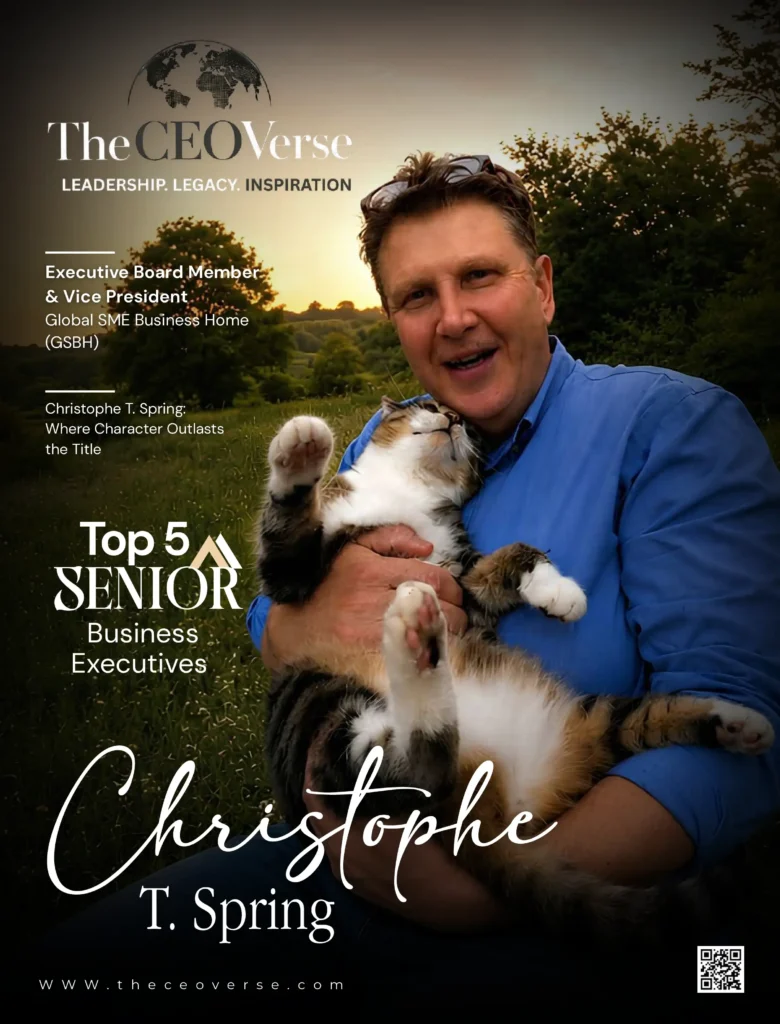
“Top 5 Senior Business Executives”
Cover story
Christophe T. Spring
Featured Profile - Christophe T. Spring
Christophe T. Spring: Where Character Outlasts the Title
A Career Shaped by One Uncomfortable Truth
Christophe T. Spring has spent more than four decades working across Europe, North America, the GCC and Asia. Across industries, markets and cultures, his responsibilities have changed, but one conviction has remained remarkably consistent: truth may come with a price, but integrity carries a value that lasts.
For Spring, this is not simply a statement about leadership. It has been tested through experience.
There have been moments when speaking openly cost him professional opportunities and even positions. Yet he does not look back on those decisions with regret. Faced with the same circumstances again, he says he would make the same choice.
The reason is straightforward: a reputation can take decades to establish, while a single decision can change how people remember you.
One of the clearest examples came only weeks after a particularly difficult period in his career. A new opportunity appeared, not because of another line on his CV, but because people remembered how he had behaved when circumstances became difficult.
The experience reinforced a principle that has followed him throughout his career: professional credentials may open doors, but character determines which relationships remain after those doors close.
When Integrity Carries a Professional Cost
Choosing truth over convenience has not always been the easier route.
Spring recalls occasions when he stood behind loyal employees, challenged decisions that almost everyone else appeared willing to accept and defended principles that would have been easier to quietly put aside.
Those decisions came with consequences. They also shaped his understanding of character.
Jobs change. Positions disappear. Companies reorganise. Careers move forward. Character remains.
That distinction became especially clear when another professional opportunity emerged only weeks after one of the more difficult chapters of his career. The significance was not simply that another door appeared, but what had remained intact after the previous one closed.
People remembered his conduct, his loyalty and the way he had handled difficult circumstances.
It is why Spring does not judge decisions solely by their immediate consequences. He asks a different question: Will I still be comfortable standing behind this decision years from now?
For him, the long-term value of an honest decision can outweigh its short-term cost.
Leadership Begins Where Easy Answers End
Spring’s approach to leadership was shaped across international sales teams, business activities spanning more than 36 countries and conversations conducted across four languages.
Those experiences produced a leadership philosophy that places responsibility ahead of popularity.
Effective leaders, he believes, must be prepared to address conversations others would prefer to avoid. Not because confrontation is the objective, but because ignoring an uncomfortable issue today can create a considerably larger problem tomorrow.
Yet directness comes with another responsibility: preserving dignity.
A decision can be firm without becoming disrespectful. A conversation can be uncomfortable without becoming personal. Leadership requires the ability to say what needs to be said while never forgetting the human being sitting on the other side of the table.
For Spring, respect is not the softer side of leadership. It is one of its foundations.

The Measure of a Career Is Often Found in Its Relationships
As his career progressed across different markets and professional environments, Spring became increasingly convinced that titles and positions are temporary.
Industries change. Roles evolve. Markets transform. Relationships can last considerably longer.
People may eventually forget a business card, a designation or even the details of a particular role. What they are far more likely to remember is how they were treated.
That belief has become one of the strongest constants across Spring’s international career.
Professional relationships can become friendships. Friendships can develop into partnerships. Individual connections can eventually create bridges between companies, industries and even countries.
For Spring, those relationships represent something more enduring than professional status. Titles belong to a period in your career. Trust can follow you for a lifetime.
An International Career Built on Listening
Spring’s international network has become one of the defining elements of his professional journey.
Over the years, he has developed relationships with ambassadors and diplomatic representatives from around the world, as well as ministers, entrepreneurs and international business leaders. Among the encounters he particularly values are meetings with His Holiness Pope Leo XIV and members of the diplomatic community, including the Apostolic Nuncio.
Those experiences reinforced his belief that genuine relationships are built through humility, trust and mutual respect rather than titles alone.
Today, that philosophy is reflected in two international roles.
As Executive Board Member and Vice President of Global SME Business Home, Spring works to connect entrepreneurs, companies and markets across borders.
More recently, he joined Mackwoods Group Pvt. Ltd. as Senior Executive Advisor, adding another dimension to his work between Europe and Asia through a group with roots and activities in the United Kingdom and Sri Lanka.
For Spring, these roles are less about adding titles to a career than about putting decades of international experience, relationships and market knowledge to work.
His perspective is simple: Business creates prosperity. Diplomacy creates understanding.
When the two come together, they can help build bridges between nations, cultures and people.
At the centre of both is something remarkably basic: the ability to listen.
From Business Connections to Wider Collaboration
Building bridges has increasingly become part of Spring’s wider professional mission.
His focus extends beyond growing individual businesses toward creating meaningful connections between cultures, industries and people.
He sees collaboration as increasingly important in a world where companies and countries are deeply interconnected but do not always understand one another.
Different industries bring different knowledge. Different cultures offer different perspectives. Different generations bring different experiences.
Bringing those perspectives around the same table can create possibilities that would never emerge if everyone remained inside their own environment.
For Spring, progress is therefore not only about competing more effectively. Sometimes it begins by connecting more intelligently.
The Boardroom Was Never His Only Classroom
Some of Spring’s most memorable lessons have come from places far removed from traditional business environments.
Animals have played an unexpected role.
Dogs remind him of unconditional loyalty. Elephants fascinate him through their intelligence, memory and extraordinary sense of family.
Horses may have provided the clearest lesson of all.
They respond to trust, humility and consistency. They have remarkably little interest in titles, status or ego.
A horse does not care what is printed on your business card.
For Spring, that makes them surprisingly good teachers of leadership.
They reinforce something that decades in business have also taught him: trust cannot simply be demanded. It has to be earned.
And learning does not always happen in a boardroom, business school or conference hall. Sometimes the most valuable lessons arrive through observation, relationships and experiences that have nothing to do with business at all.
Curiosity Comes Before Innovation
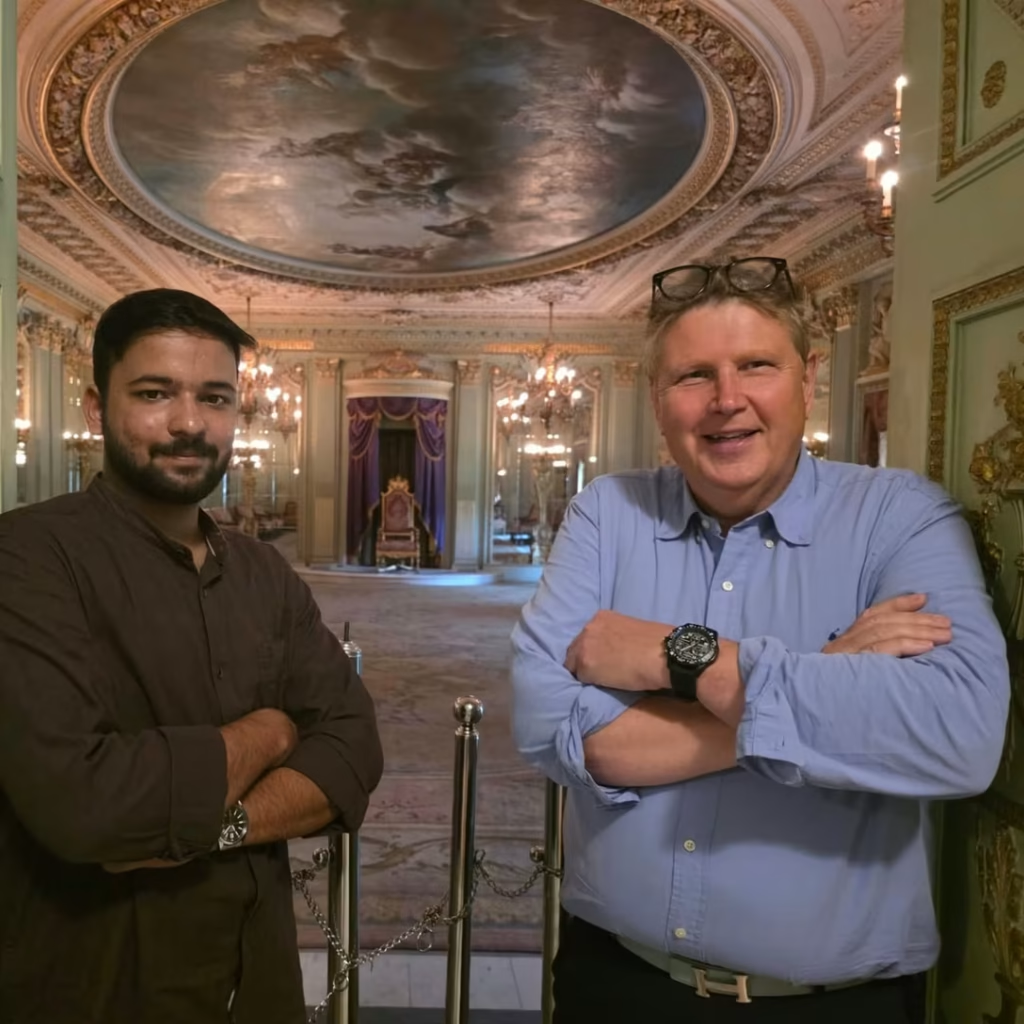
Art, architecture and culture have also influenced the way Spring approaches ideas.
They encourage him to look at familiar subjects from unfamiliar perspectives and to question solutions that appear obvious simply because they have always been done that way.
That curiosity feeds directly into his understanding of innovation.
For Spring, innovation does not begin with technology. It begins with curiosity.
Technology, systems and strategies come later.
The starting point is the willingness to ask questions, explore possibilities and occasionally challenge the answer everyone else has already accepted.
Across different markets, cultures and professional environments, that willingness to look at a problem differently has remained an important part of his approach.

Resilience Is Part of the Principle
Spring’s understanding of character is closely connected to resilience.
When circumstances become difficult, he believes leaders have a responsibility to protect their people, challenge the status quo when necessary and remain committed to their principles even when doing so carries a personal or professional cost.
His view of resilience is not about avoiding failure. It is about getting back up.
A serious hip injury later in life gave that principle a very physical meaning. Recovery required patience, discipline and rebuilding step by step — adding another dimension to something he had already experienced repeatedly throughout his professional life.
Difficulty can change circumstances. It does not have to determine the response.
For Spring, character becomes most visible precisely when pressure is highest.
What Remains After the Title Is Gone
When Spring considers legacy, he does not begin with positions, titles or awards. He begins with people.
He measures his career through those he helped, the bridges he built and the trust he earned along the way.
He places particular value on people who still call years later, professional relationships that became friendships, friendships that developed into partnerships, and individual connections that eventually helped bring companies, cultures and countries closer together.
He also measures success through teams that achieved more collectively than any one person could have achieved alone.
It offers a different way of looking at a professional life.
Success is not simply what one person achieves. It is also what that person enables others to achieve.
Across more than four decades, dozens of countries, different cultures and countless professional encounters, one idea continues to surface.
Leadership is not about being the most powerful person in the room. It is about being the person others trust when the room becomes difficult.
Positions change. Titles eventually disappear from the business card. Awards gather dust.
Character remains.