
Sustainability is not marketing. It’s long-term survival
Read Time : 5 minutes
Social Share :
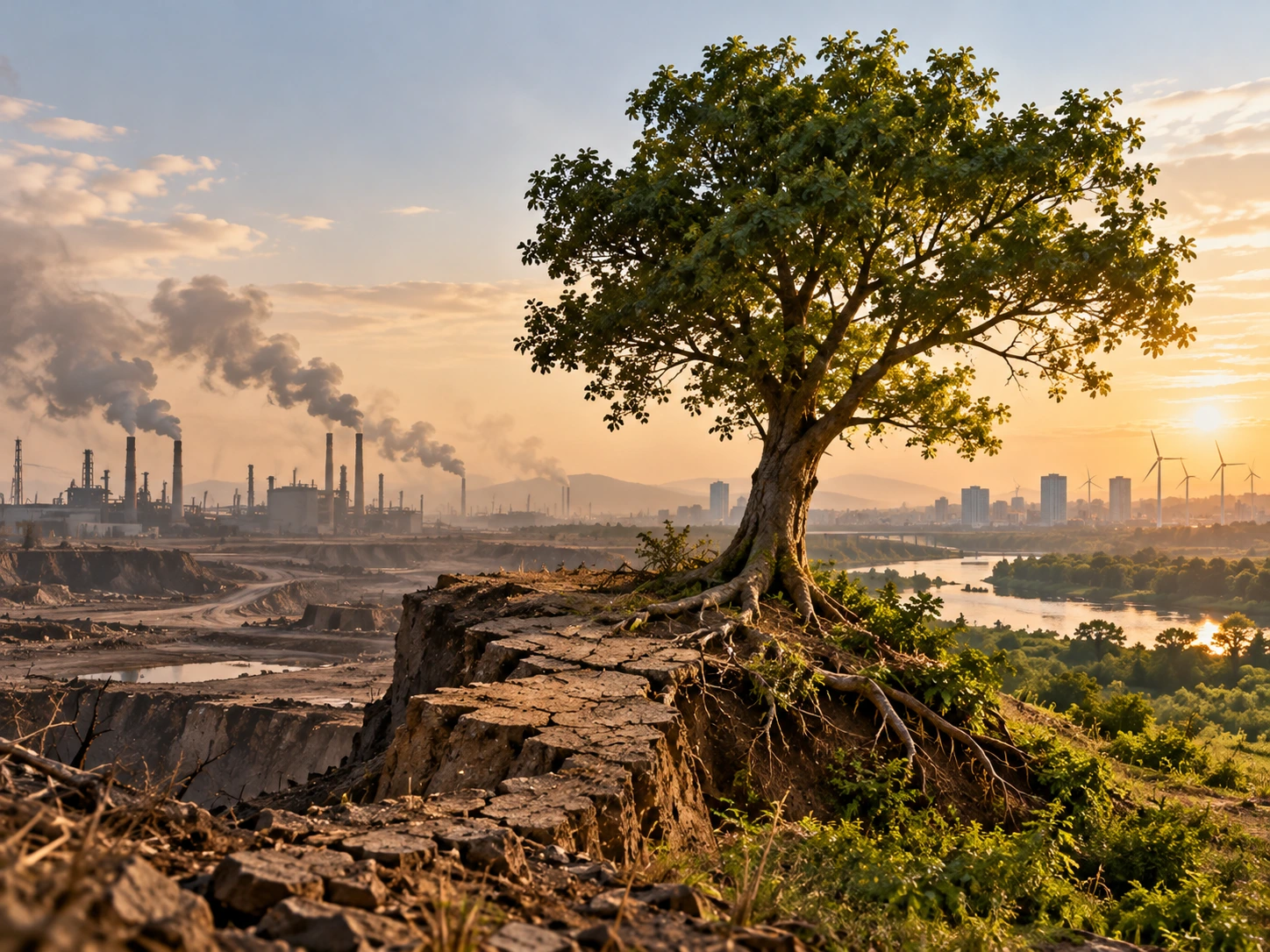
Greenwashing fades. Real resilience remains. Building with future generations in mind isn’t charity, it’s long-term strategy. The businesses that endure are those that respect the soil they stand on.
What is unsustainable cannot last
The word itself tells the truth: if something cannot be sustained, it will eventually stop. You cannot build a permanent enterprise on temporary resources. You cannot expect to take from the world faster than it can renew itself and imagine the equation will balance.
This is not about being kind. It is about being realistic. Any model that consumes more than it creates is mathematically guaranteed to fail, the only question is when. Sustainability is not an ethical choice, it is an arithmetic necessity.
Image burns. Substance endures
It is easy to sound responsible. It is much harder to build responsibly. Greenwashing works until the market matures. It works until customers see through it. It works until the supply chain breaks, the resource runs dry, or the cost of damage becomes impossible to ignore.
Real sustainability is not what you say. It is what you do when no one is watching. It is designing waste out of the system before it is created. It is choosing longevity over quick profit. It is building something that does not require the world to get poorer so you can get richer.
It is not charity. It is intelligent planning
Thinking seven generations ahead may feel like generosity, but it is actually self-preservation. The company that ignores the health of its environment, its community, and its resources is eating its own future.
If you deplete your land, your supply chain dies. If you exhaust your people, your culture collapses. If you poison the trust of your customers, your market vanishes. Respecting the foundation you stand on is not philanthropy. It is the most practical form of risk management there is.
The soil sustains the tree
A tree does not say “I am important and the earth is there to serve me.” It sends roots deep, feeds the soil, and grows in balance. That is why it stands for centuries.
Your business is the tree. The economy, the community, and the natural world are the soil. If the soil dies, the tree falls no matter how tall it grew. To protect what sustains you is not an extra cost, it is the only way to ensure you have somewhere to stand tomorrow.
A business that destroys its own foundation may grow fast. But it will never grow old.
Six ways to build resilience that actually lasts
Design waste out, not away. If your product creates damage, you have not finished designing yet. The solution belongs in the blueprint, not the cleanup.
Measure full cost, not just price. The cheapest option today is often the most expensive one tomorrow. Include the long-term impact in every decision.
Build for circularity. Ask: “what happens when this is used up?” If the answer is “it becomes trash,” keep working. Nothing should leave your system that cannot return to it.
Respect all your resources. People, capital, nature, and trust, all are finite. Consume them with the same care you would want your successors to use.
Choose durability over disposability. Something that lasts ten years is cheaper than something that lasts one, even if the price tag is higher. That is true economy.
Lead before you are forced to. Do not wait for regulation or public pressure. The businesses that define the future are the ones who already built it before everyone else saw the need.