
TheCEOVerse • Digital Edition
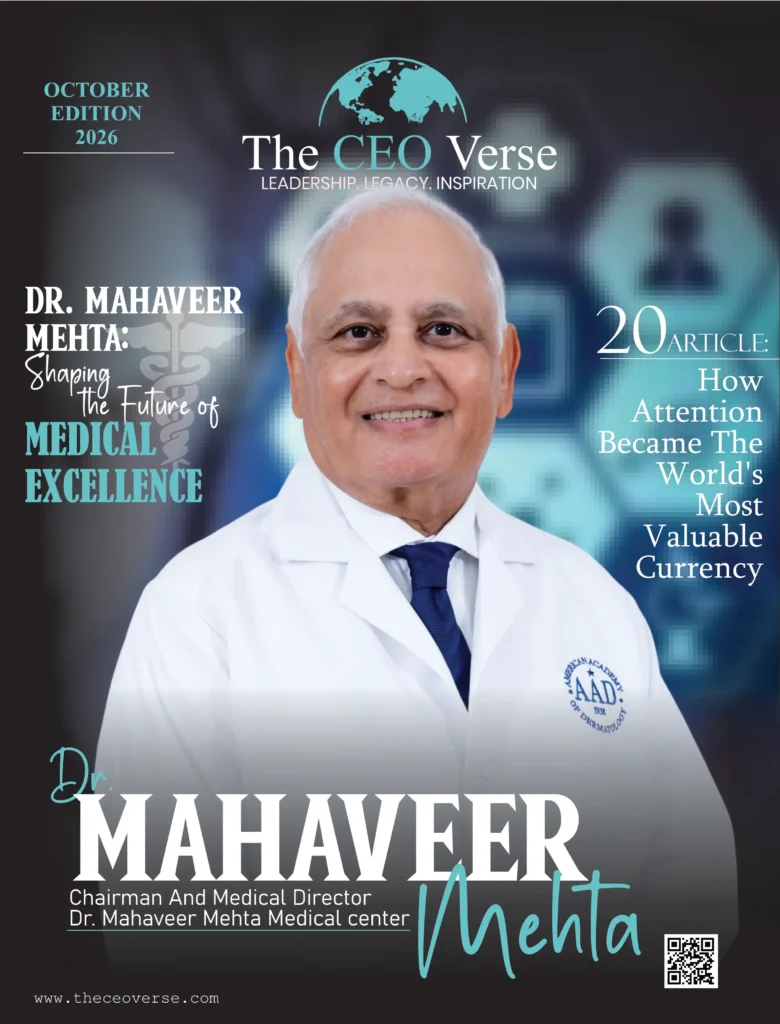
“Dr. Mahaveer Mehta: Shaping the Future of Medical Excellence”
Cover story
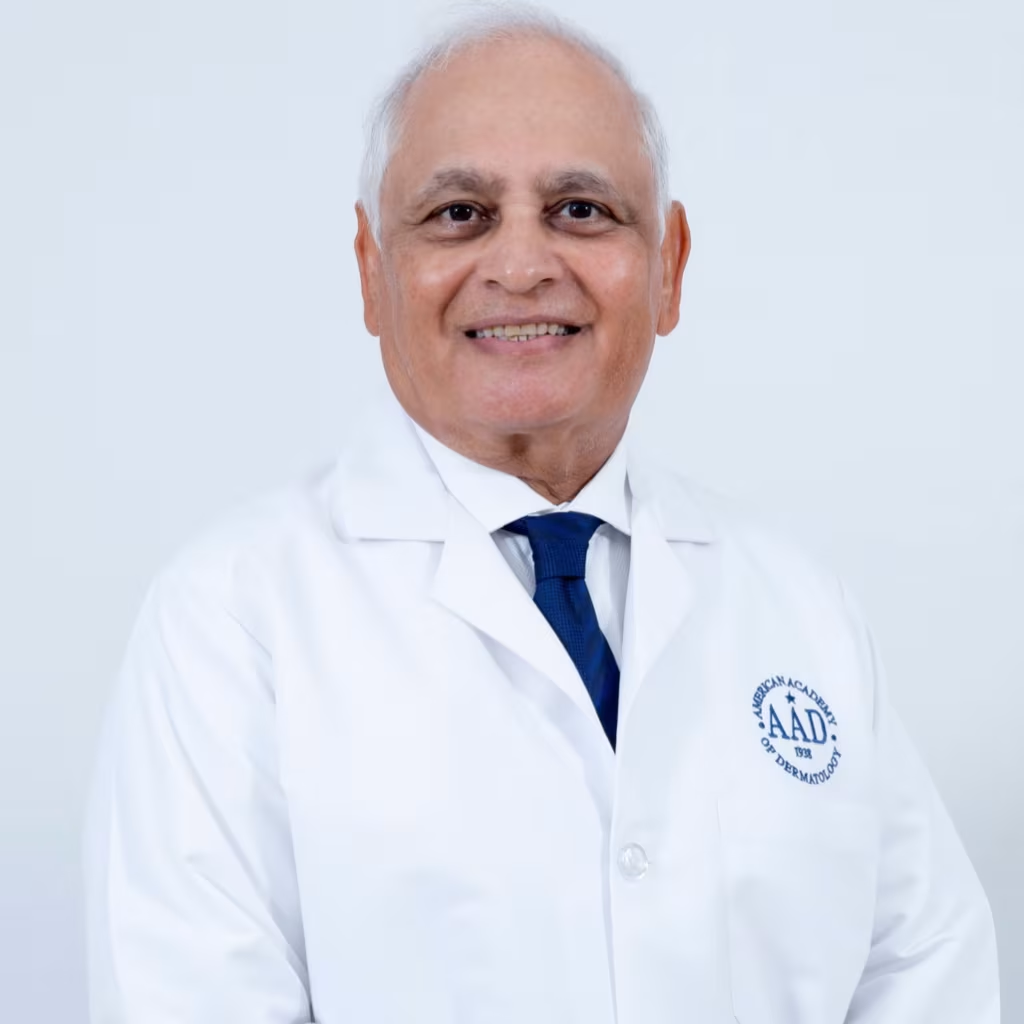
Dr. Mahaveer Mehta
Featured Profile - Dr. Mahaveer Mehta
The Physiology of a Fascination
Most people think of skin as a covering. Dr. Mahaveer Mehta saw it as a record. It shows how the body is coping, what it is fighting and what it has been through. As a young medical student in India, he was drawn to this quiet, visible layer of the human body.
He took his MBBS from RNT Medical College in Udaipur in 1971. Dermatology appealed to him because it asks a physician to be several things at once. It requires the diagnostic instinct of a detective and the steady hands of a surgeon. It also draws on a growing body of science and, increasingly, on aesthetic art. Few specialties pull so many disciplines together.
“My journey in medicine began with a genuine fascination for the complexity of the human body and, in particular, the skin,” he says. That fascination has outlasted every trend, every machine and every border he has crossed since.
From the Pink City to the Mediterranean: Teaching Years
Before Dr. Mehta became a name in clinical practice, he was a teacher. His early career was academic. He served as a faculty member at SMS Medical College in Jaipur, one of Rajasthan’s best known medical institutions, and later at Al Fateh University in Tripoli, Libya.
Teaching shaped his thinking in ways that stayed with him. A classroom exposes sloppy reasoning quickly. Students ask why, and an honest teacher has to know the answer or admit he does not. This habit of explaining, justifying and returning to fundamentals became the backbone of his later practice.
Libya also gave him his first lasting lesson in perspective. Practising far from home taught him that medicine looks different in each culture, and that patients bring different expectations, fears and beliefs into the same consulting room. He had left familiar ground, and he did not go back.
Across the Gulf: Steering Growth in Bahrain and Qatar
The next chapter took him deeper into the Arabian Gulf, a region that was then building its modern healthcare systems. Dr. Mehta rose to lead. He became Chairman of Dermatology at the International Hospital in Bahrain, and later headed the Department of Dermatology at the Qatar Armed Forces Medical Unit in Doha.
These were demanding posts. A department head has to treat patients and also build systems, mentor younger doctors and carry responsibility for outcomes he cannot personally oversee. In a military medical setting the standards are exacting, and the patients and the work both demand discipline.
Each country, he reflects, gave him a different perspective on medicine, patients and healthcare leadership. By the time he left Qatar he was no longer simply a skilled dermatologist. He knew how medical institutions run and what it takes to earn the trust of colleagues and patients from many backgrounds. India, Libya, Bahrain, Qatar and the United Arab Emirates together formed a long apprenticeship.
May 1990: The Bet on a City That Was Still Becoming
In May 1990, Dr. Mehta opened his own medical center in Dubai.
At that time Dubai was a very different city. The skyline that now defines it was mostly still to come. The idea of the emirate as a global destination for medical tourism and international congresses was a distant ambition, not an accomplished fact. Setting up an independent practice meant committing his reputation, his savings and his future to a place whose best years were still ahead.
The bet paid off, and the doctor and the city grew together. “Over the decades, Dubai itself has undergone an extraordinary transformation into a global healthcare and business destination,” he observes. “It has been particularly rewarding to grow professionally alongside the city and contribute, in my own way, to its healthcare development and international reputation.”
Today the center operates from the Al Ghurair Centre in Deira. It has served generations of patients, and some of them have been coming for decades. One longtime patient says she has been visiting for twenty five years. Another, a doctor herself, describes recommending him without hesitation. Over thirty five years, that kind of loyalty cannot be bought. It accumulates one consultation at a time.
Light as an Instrument: Bringing Lasers to the Middle East
If one innovation defines Dr. Mehta’s professional identity, it is the laser. He was among the first physicians to introduce laser dermatology to the Middle East, a distinction that has followed his name through conference programmes and professional biographies.
The early days were not easy. Laser technology was new to the region, and new technology brings doubt. Patients wondered whether it was safe, and colleagues wondered whether it was proven. Procedures that are routine today needed explaining, training and patience.
“Innovation is not simply about acquiring the newest machine,” he explains. “It is about understanding the science, knowing its limitations, selecting the right patient and using the technology responsibly.” That sentence sums up a philosophy that has served him through many generations of equipment.
Over the years the center’s repertoire grew to include skin laser surgery, acne scar treatment, non surgical skin tightening, photofacials, IPL, cellulite treatment and pico laser technology, which patients have praised for tattoo removal and skin rejuvenation. The equipment has changed several times over. His principle about how it should be used has not.
Three Questions Before Every Treatment
At the heart of his practice is a short routine of questions, which he asks before any intervention. Is the treatment scientifically appropriate? Is it safe for this particular patient? And is it genuinely necessary?
The third question sets him apart in a field where the temptation to do more is constant. Aesthetic medicine can tempt a practitioner to chase every visible imperfection. Dr. Mehta resists that. “A laser is a tool, it is not a diagnosis,” he says. The same device can produce a beautiful result in one patient and a poor one in another, depending on diagnosis, skin type, settings and expectations.
So he insists on individualised care built on five things. A correct diagnosis, appropriate technology, proper technique, realistic expectations and careful follow up. It is a gentler virtue than the advertising of the beauty industry suggests, and it has kept his patients returning for decades.
Beyond the Crucible
A long career is never a straight line, and Dr. Mehta is candid about the difficulty of staying excellent while his field transformed around him. Dermatology moved from largely clinical diagnosis and conventional treatment to dermatologic surgery, energy based devices and advanced aesthetics. Keeping pace meant more than buying equipment. It meant continuously retraining himself, often while building a business and caring for patients at the same time.
The most important lesson, he says, took years to sink in. Doing more is not necessarily doing better. Experience taught him that sometimes the best medical decision is to wait, to observe, to treat conservatively, or even to tell a patient that a procedure is not needed. Turning away revenue in favour of honesty is a hard discipline, and it is the one he is proudest of.
The second lesson concerns complacency. “A physician who stops learning eventually becomes outdated,” he warns, “regardless of how many years he or she has practiced.” He regards resilience and patience as products of these struggles, but he is more insistent about the habit of study.
The Lifelong Scholar
Dr. Mehta has lived by that last warning. Alongside his clinical work, he has attended and spoken at international dermatology and laser conferences, taught colleagues, mentored younger physicians and published his research. His published work includes more than fifteen articles in scientific journals.
His recognition from the profession reflects this commitment. He has received the Physician Recognition Award from the American Medical Association and the Continuing Medical Education Award from the American Academy of Dermatology, honours that acknowledge sustained engagement with education rather than a single achievement. He has served on the editorial boards of the Journal of Procedural Dermatology and the Journal of Clinical and Cosmetic Dermatology, and previously on the editorial board of the Gulf Medical College health journal.
His international ventures include invitations as chair, speaker and faculty to congresses far from Dubai, among them a gender aesthetic congress in Singapore in 2014 and a dermatology and laser congress in Cannes, France, in 2015. He has been a visible presence wherever dermatologists meet to compare notes, and he regards that exchange as part of the job.

The Voices Behind the Journey
“No physician builds a meaningful career entirely alone,” he says, and he is generous in naming those who shaped him. Senior professors and colleagues guided him from his student years in India through his appointments in Libya, Bahrain, Qatar and Dubai. Professional bodies such as the American Academy of Dermatology, the American Society for Dermatologic Surgery and the Dermatologic & Aesthetic Surgery International League gave him access to leading specialists from around the world.
His final group of teachers may be the most important, which are his patients. “Every patient reminds us that medicine is ultimately about a person,” he says, “not simply a disease, photograph or procedure.” In an industry that increasingly turns skin into content, that reminder carries weight.
He is equally clear that his medical center is a team effort. Over more than three decades he has tried to build a culture in which patient care is a responsibility, not merely a service. A practice that outlives trends depends on the people who staff it every day.
Bringing the World’s Dermatologists to Dubai
If Dr. Mehta introduced lasers to the region, his second great contribution was introducing the region to the world’s dermatological community.
He served on the Board of Directors of the Dermatologic & Aesthetic Surgery International League, a USA based non profit, from 2013 through 2016. His boldest move came when he asked the board to bring the annual conference to Dubai. The board agreed, and he was appointed Congress President for the October 2016 meeting, which was held with the support of Dubai Tourism and the Government of Dubai.
Organising a major international medical congress is a complex undertaking. It involves scientific programming, speakers, logistics, sponsors and hundreds of delegates from different countries, each with different expectations. He also chaired the scientific committee of the International Congress in Aesthetic and Anti Ageing Medicine, known as ICAAM, across several years from 2013.
The recognition followed. At the 2016 conference, the American Society for Dermatologic Surgery honoured him with an Outstanding Contribution Medal. Dubai Tourism and the Government of Dubai presented him with the Congress Ambassador Award for his efforts in attracting and hosting international conferences, recognition he received again in 2020. For a doctor who began his career teaching in a medical college in Jaipur, it was a remarkable arc.
These were not just professional honours. They helped establish Dubai as a serious venue for medical knowledge exchange, and they connect directly to his reputation as one of the emirate’s strongest advocates for health tourism. “Medicine progresses,” he says, “when professionals share knowledge rather than keep it within borders.”
Service Beyond the Clinic
Dr. Mehta’s commitment to others extends beyond the consulting room. He is a former Board Director of the Rotary Club of Dubai, and he has long taken an active interest in humanitarian and philanthropic work.
He has also campaigned for public health awareness, particularly around skin cancer. His approach is practical. Prevention, early diagnosis and prompt treatment. His message to the public is consistent. A mole that changes, a lesion that persists, or a patch of unexplained pigmentation should never be dismissed simply because it is painless or looks merely cosmetic. Early assessment can change an outcome.
For him, this is where dermatology’s seriousness shows. “Healthy skin is not simply about appearance,” he says. “It is an important part of overall health and wellbeing.” Behind the glamour of aesthetic medicine sits a branch of medicine that can detect serious disease at an early and treatable stage.
Advice for the Next Generation
Asked what he would tell a young doctor starting out, Dr. Mehta does not talk about technology or business. “Do not chase recognition, chase excellence,” he says.
His advice is a compact curriculum. Learn the fundamentals properly. Diagnose before you treat. Understand the science behind every procedure you perform. Do not let marketing trends dictate medical decisions. He expects artificial intelligence and faster, smarter machines to reshape the field, but he insists that the physician’s core responsibilities will not change. Knowledge, judgment, ethics, communication and patient safety.
He adds a warning that comes from long observation. “A good reputation takes years to build and can be lost in one careless decision.” Few leaders in any industry would disagree.
The Road Ahead
More than four decades into his career, Dr. Mehta does not talk about retirement. He talks about transmission. His priorities now centre on sharing knowledge, educating patients and helping younger dermatologists understand that good medicine rests on evidence, experience and ethical practice.
He plans to keep contributing through education, international academic collaboration, scientific exchange and the responsible adoption of new technologies. Recognition, he says, is more a responsibility than an endpoint. And there is still, in his words, much to learn, and that is what makes medicine such a fascinating profession.
The Arc of a Life’s Work
On paper, the résumé is formidable. Department chairmanships in two countries, a medical center in operation since 1990, a pioneering role in regional laser dermatology, a world congress hosted in Dubai, honours from American medical bodies and the Government of Dubai.
Ask Dr. Mehta what matters most, and he looks past all of it. “After all these years, I still believe the most meaningful recognition is the trust of a patient,” he says. Titles, awards and technology will change. The doctor’s responsibility will not. To listen carefully, diagnose correctly, treat responsibly and always put the patient’s well being first.
His final counsel to the public is as unglamorous as it is sound. Do not choose a treatment because it is fashionable or advertised as the latest technology. Choose a qualified, experienced professional who can tell you whether you need it at all. The goal, he says, should never be to change someone’s identity. It should be to achieve safe, natural and medically appropriate results.
In Dubai’s fast moving world of aesthetics and ambition, Dr. Mahaveer Mehta has built his career on being the person who tells patients what they actually need, and who has been proven right for thirty five years.