
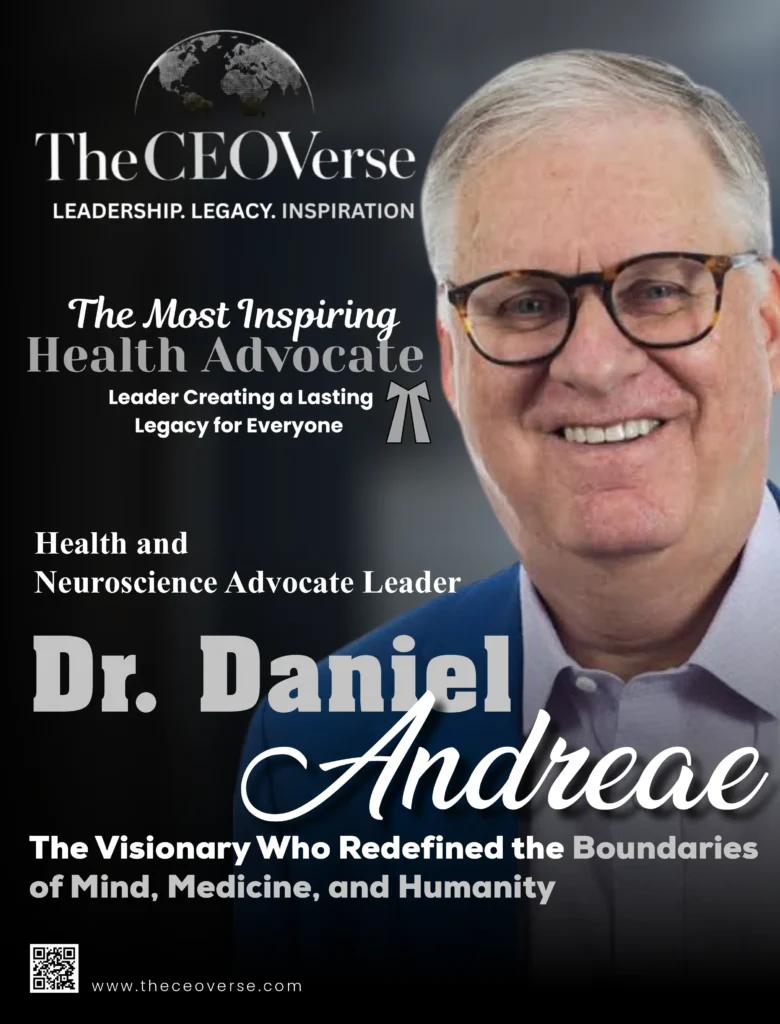
TheCEOVerse • Digital Edition
“The Most Inspiring Health Advocate Leader Creating a Lasting Legacy for Everyone”
Cover story
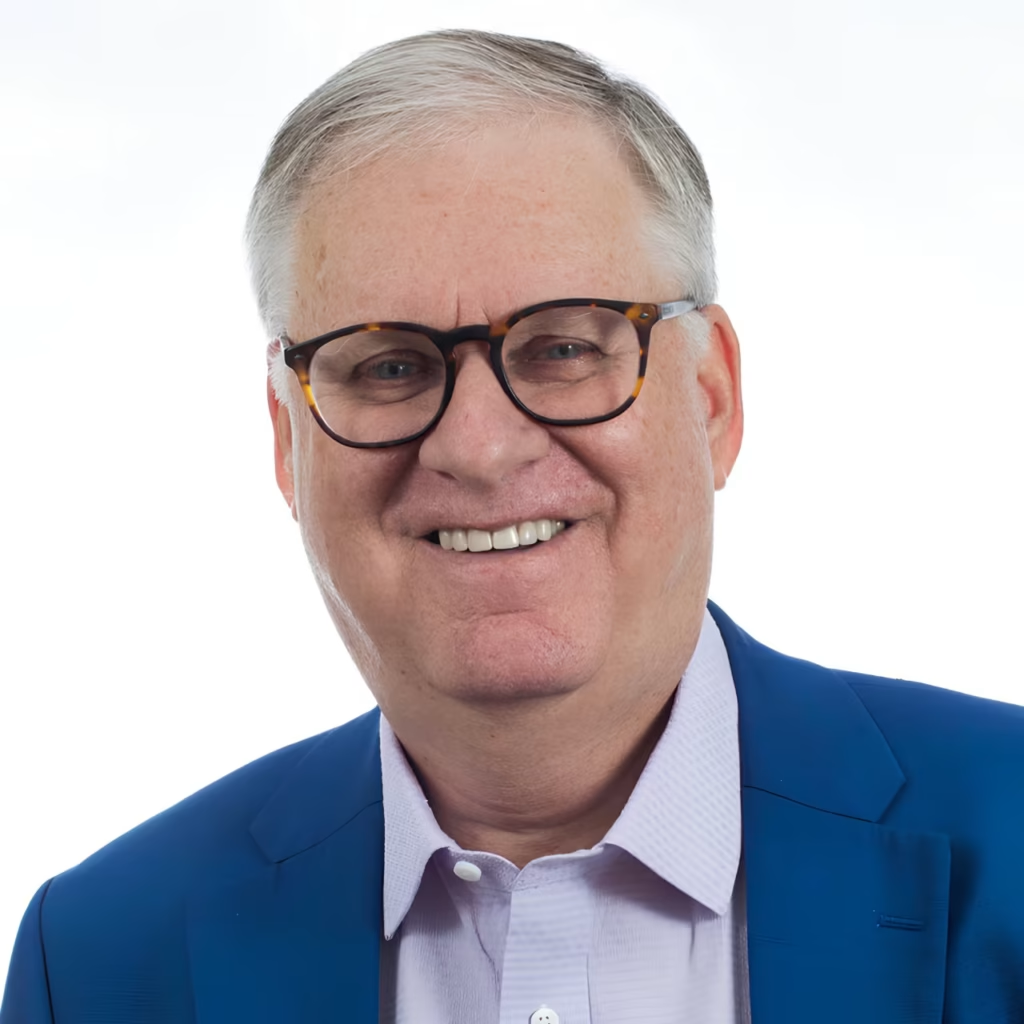
Daniel Andreae
Featured Profile - Daniel Andreae
The Curiosity That Shaped a Lifetime
Long before the honorary doctorates, the hospital boardrooms and the lecture halls filled with students, Daniel Andreae was captivated by a single, stubborn question. Why do people think, feel and behave the way they do? It was not a career plan. It was a compass. Every decision he would make over the following decades, from the subjects he studied to the institutions he built, pointed back to that early fascination with the human mind.
He began his formal journey at York University in Toronto, where he earned a bachelor’s degree in psychology. He then moved to Wilfrid Laurier University for a master’s degree in clinical social work, a pairing that would prove prophetic. Psychology gave him a lens for understanding the individual. Social work taught him to see that individual inside a family, a community and a system that could either lift a person up or leave them to fall through the cracks.
What set him apart early was a refusal to treat knowledge as a trophy. Where many professionals narrow their focus as they advance, Andreae kept widening his. He pursued a certificate in neuropsychophysiology, an advanced diploma in stress management, and certification as a health coach. He completed a diploma at the Functional Institute of Nutrition and studied at the Benson Henry Mind Body Institute, affiliated with Harvard University, which led to membership in the Harvard Medical School Graduate Association for Continuing Education. He became a Founding Fellow of the Institute of Coaching at McLean Hospital in Boston, and later earned a PhD in Health Biology.
To Andreae, each field was another window onto the same room. Emotional, physical, psychological and social forces, he came to believe, can never be understood in isolation. That conviction would become the intellectual spine of everything that followed.
Lessons That Shaped a Leader
No journey like this happens alone, and Andreae is quick to say so. He speaks with deep gratitude about the teachers and mentors who shaped him, singling out Dr. Eva Philipp, his graduate school supervisor. She gave him more than academic guidance. She instilled a philosophy of service, the idea that expertise carries an obligation to the people who need it. Their professional relationship deepened over the years into a lifelong friendship.
That early mentorship left a mark visible in how he works today. He does not describe his career as a ladder of positions. He describes it as a series of opportunities to learn and to serve, each one made possible by someone who believed in him first. It is a humility that sits comfortably beside an extraordinary record of accomplishment, and it explains why he has spent so much of his life passing the same favour forward.
Redrawing the Boundaries of Education
For nearly twenty five years, Andreae stood in front of university and college classrooms, and the range of what he taught is remarkable. Over that time he taught forty five different subjects, spanning psychology, social work, optimal health, the humanities and bioethics. Few academics cover that much ground, and fewer still do it well enough to be repeatedly honoured by their students and institutions.
Those honours tell the story. He received Distinguished Teaching Awards at the University of Waterloo and was named a Fellow of Renison University College there. At the University of Guelph Humber, students and colleagues twice selected him as Faculty of the Year, and graduating students chose him as Mentor of the Year. Guelph Humber later presented him with a Lifetime Achievement Award, and the Humber Institute of Technology and Advanced Learning awarded him an honorary degree. Independent organizations added their own recognition, naming him Professor of the Decade and Intellectual of the Year.
Yet the trophies miss what made his teaching distinctive. When students walked into his classroom, he did not see an audience. He saw people carrying aspirations, doubts and fears, along with potential they had not yet discovered. His goal was to build a room where it felt safe to speak, to question and to be wrong. He understood that no single approach reaches every student, but he watched one pattern repeat. Confidence grows where people feel respected, listened to and valued. Seeing a hesitant student slowly become self assured, he says, was among the most rewarding experiences of his academic life.
His own summary of this philosophy is short enough to fit on a poster. Education is where the head meets the heart. Knowledge without compassion is incomplete, and compassion without understanding lacks direction. In his classrooms, he tried to hold both. He cast himself not as the expert with every answer but as a fellow explorer whose job was to help people ask better questions.
That belief still guides his generosity. He funds annual scholarships at Humber, taking particular pride in recognizing students who have overcome serious adversity. He supported public lectures at Laurentian University and lectures on health and the future of the professions at the Michener Institute. For a man who has lived inside lifelong learning, education is not a stage of life. In an age of rapid technological and social change, he argues, it is a permanent obligation, especially in health and medicine.
Where Compassion Took Institutional Form
If teaching was the thread that connected his career, institution building was the loom. Dr. Dan Andreae has a habit of noticing where society’s support systems are missing and then building what is needed, brick by patient brick.
His first great venture was the National Eating Disorder Information Centre, known as NEDIC, which he co-founded at Toronto General Hospital as part of the University Health Network. At the time, eating disorders drew little public attention and families had few places to turn. NEDIC became a trusted source of education, telephone counselling and technology enabled support for patients, families, caregivers and professionals alike. The aim was simple and profound. No one facing these illnesses should feel alone, and hope should stay at the centre of recovery. Decades later, he still serves as Chair of the centre’s advisory committee, a sign of how deeply the mission remains his own.
His next challenge took him into territory even less charted. As the first Executive Director of the Alzheimer Society of Toronto, an organization described as the first of its kind in the world, Dr. Dan Andreae helped bring a frightening and poorly understood disease into public conversation. He built public education programs, established support groups and counselling services, lobbied governments to act, and forged partnerships with healthcare professionals and nursing homes. He also helped create a wandering patient registry in cooperation with the police, an idea practical enough that it later spread across the country.
What drove him, he explains, was the recognition that a diagnosis never belongs to one person alone. It reshapes an entire family. His team’s responsibility was to make sure no family felt it faced that road alone. He would go on to receive the Society’s Lifetime Achievement Award, its Outstanding Service Award for Leadership, presented by the chair of the international Alzheimer movement, Princess Yasmin Aga Khan, and later its Pioneer Award. He also chaired its Patrons Council.
Looking back across these ventures, a pattern emerges. Dr. Dan Andreae was never satisfied with merely understanding a problem. He wanted to leave behind structures that would keep solving it long after he stepped away.
The Ten Year Campaign
Not every battle was won quickly. Perhaps the most demanding chapter of his career unfolded through professional advocacy. As President of the Ontario Association of Social Workers, Andreae became the longest serving president in the association’s history, and the reason his term stretched so long was a cause that refused to be rushed.
At the time, Ontario was the only jurisdiction in North America without statutory regulation of the social work profession. Without it, the public had limited protection and the profession lacked formal standing. Changing that took roughly a decade, three governments, seven ministers of the Crown, and an almost endless series of negotiations. It meant building coalitions, drafting policy, speaking to editorial boards, courting civil servants and winning over allied health professions.
He drew on lessons learned at NEDIC and the Alzheimer Society, learning to sustain momentum through setbacks and to celebrate small progress without mistaking it for victory. When the legislation finally passed, it marked a milestone not only for social workers but for public protection and professional standards across the province. The profession honoured him with a Lifetime Achievement Award and named him both Ontario and Canadian Social.
The experience also gave him a durable view of resistance. He does not treat opposition as a sign of failure. In his telling, setbacks are chances to refine strategy while staying loyal to a larger purpose. Citing a remark by SR. Robert F. Kennedy, he notes that some portion of people will oppose almost anything almost all of the time. Lasting change, therefore, depends less on avoiding resistance than on keeping focus, building consensus and continuing to move forward.
One Body, One Mind: The Philosophy of Integrated Health
Ask Andreae what healthcare gets right and wrong, and he answers with an image. Imagine an airplane. One wing is the medical and technological side. Surgery, medication, vaccines, diagnostics. The other wing is the human side. Fears, hopes, relationships and life experience. A plane with only one wing cannot fly.
He is generous about modern medicine’s triumphs. It has transformed outcomes for fractures, appendicitis, diabetes, heart disease and cancer. But he observes that it remains largely reactive and organ focused, stepping in after something breaks. He argues for a far greater emphasis on promoting health and preventing disease, and for treating the brain, mind and body as one continuous system.
That system is, in his description, constantly in conversation with itself. The cardiovascular, neurological, gut, hormonal and immune systems signal one another all the time. He likes to recall that Hippocrates, more than 2,500 years ago, suggested that disease begins in the gut, an old insight that modern science keeps rediscovering. His recipe for maximizing healthy years is refreshingly practical. Regular exercise, balanced nutrition, adequate sleep, stress management, avoiding smoking and excess alcohol, and, perhaps most of all, meaningful social connection.
That last item receives special emphasis. Dr. Dan warns that loneliness has become an epidemic, and he points to guidance from the Centers for Disease Control that likens the health impact of social isolation to smoking fifteen cigarettes a day. Even simple daily interactions, he suggests, are a form of medicine. Genetics may load the dice, but lifestyle, environment and past conditioning largely decide how those predispositions play out.
His broader teaching and writing reflect the same holistic instinct. He is fascinated by how the immune, hormonal, digestive and nervous systems cooperate to produce health, and he believes education is most effective when it speaks to the cognitive, psychological, physical, social and spiritual dimensions of a person all at once.
Why Stress Deserves a Seat at the Table
If integrated health is Dr. Dan’s philosophy, stress and mental health are its most urgent application. His studies at the Benson Henry Mind Body Institute left him with a statistic he returns to often. Up to eighty percent of doctor visits are linked to conditions caused or worsened by stress. Henceforth, the implications for healthcare systems are enormous. A system that treats symptoms while ignoring the pressure producing them is fighting a fire with its back to the flames.
His advanced training in stress management was never an academic hobby. It informed his teaching, his advocacy and his belief that emotional and psychological care must stand beside physical care rather than trail behind it. He champions broader access to evidence based psychological support delivered by multidisciplinary teams. He points to a meta study comparing patients treated by psychiatrists with those cared for by trained community based nurses, which found similar levels of patient satisfaction. Psychiatrists remain essential, particularly when medication is needed, but he sees plenty of room for other trained practitioners to meet rising demand within recognized, evidence based models.
This is not abstract for him. It connects the eating disorder centre he co-founded, the Alzheimer families he served and the students whose anxieties he met in the classroom. In each case, the person’s inner life shaped their health as surely as any physical diagnosis.
Giving the Surgeon’s Hands a New Partner
Andreae’s belief that innovation should reduce suffering found a vivid expression in robotics. He was a lead donor in bringing the leading edge da Vinci surgical robot to the University Health Network, whose flagship, Toronto General Hospital, was ranked the second best hospital in the world in Newsweek’s 2026 World’s Best Hospitals list. That ranking, announced in February 2026, is the highest position ever achieved by a Canadian hospital, and UHN has also been recognized as the world’s leading universally accessible hospital for eight consecutive years.
The path to the robot was not smooth. Concerns about cost, competing priorities and government funding created real obstacles. Some questioned whether such an investment made sense. Dr. Dan argued that the technology offered smaller incisions, less blood loss, lower infection risk, shorter hospital stays and faster recovery, benefits that matter to patients long after the novelty fades. The experience reinforced one of his core lessons. Transformative innovation rarely arrives without resistance, and perseverance is part of the price.
He then looked beyond the machine to the people who would operate it. Together with his sister, Trish Holt Hornsby, he supported the creation of Canada’s first robotic surgical training academy, the Learning Academy for Surgery at the Michener Institute, part of UHN. Equipment alone does not heal anyone, and a surgeon trained well multiplies the benefit across thousands of patients. For that work he serves on the Michener Institute’s Board of Governors.
He has also backed internationally recognized programs in corneal transplantation led by Dr. Allan Slomovic, and advanced brain and stroke interventions led by Dr. Timo Krings. In each case, his instinct was the same. Find the visionary clinicians and give them the resources to push the frontier.
The Brain as a Frontier
If one organ captures Andreae’s imagination more than any other, it is the brain. His support for brain science runs through his philanthropy, his advocacy and his teaching.
He is Patron of Brain Injury Canada, lending his name and energy to people living with the consequences of injury to the brain. He sponsors the innovative brain laboratory of Dr. Ivo Spiegel at the Weizmann Institute of Science, one of the world’s most respected research institutions, where he also serves on the International Board and chairs the Canadian Advisory Board. Weizmann named him one of ten leading Canadians, welcomed him into its President’s Circle and presented him with its Community Leadership Award.
His commitment to the brain began long before the donations. Alzheimer’s disease, a condition of the brain, defined his early years as an executive director. His certificate in neuropsychophysiology reflects a deliberate effort to understand the biology beneath behavior. And his support for stroke intervention research closes the circle. From the disease that steals memory, to the injuries that disrupt function, to the surgical advances that can rescue brain tissue in time.
Dr. Dan is quick to say that he supports projects not for recognition but because they advance science in service of human beings. That is why, in his own words, he gravitates toward aspirational and visionary programs in health, science and medicine.
Where Innovation Meets the Promise of Tomorrow
Dr. Daniel Andreae believes that healthcare is entering a revolutionary period driven by artificial intelligence, robotics and personalized medicine. AI, he expects, will enable earlier and more accurate diagnoses, accelerate drug discovery, improve digital health records and tailor treatment to individual patients. Robotics will continue to expand minimally invasive surgery and may make remote surgery routine.
He is equally clear eyed about the risks. Informed consent, data privacy and equitable access are ethical questions that cannot be postponed. New technologies, he argues, should be woven thoughtfully into systems rather than bolted onto existing structures. And one of his strongest convictions is a moral one. Advanced healthcare must eventually be accessible to everyone, not only the most affluent.
He also forecasts a growing role for specialized practitioners such as nurses, occupational therapists, nutritionists and physiotherapists, who can deliver community based care at lower cost and ease the burden on primary care physicians. To prepare them, he urges colleges and universities to create targeted micro certification programs that train people for specific interventions without requiring long degree pathways. It is the thinking of an educator and a systems builder in the same breath.
The Weight of Recognition, the Purpose of Service
The honours accumulated over a lifetime are numerous, though Dr. Dan treats them as responsibilities rather than finish lines. Beyond the teaching and advocacy awards already mentioned, Assumption University conferred an honorary doctorate of laws in recognition of his contributions to healthcare, and Laurentian University awarded him an honorary degree and its inaugural Impact Award. He has been named a Global Visionary, received a Distinguished Humanitarian Award, and been included in Marquis Who’s Who in the World.
His service reaches across borders and sectors. He was the Founding Honorary President of the Patrons Council of Neuchatel Junior College, a Canadian school in Switzerland, served as Health and Innovation Advisor to the Psychology Foundation of Canada’s Strong Minds Strong Kids initiative, and was a past patron of the Canadian Abilities Foundation. He leads, advises and gives across education, science, medicine and community life, connecting institutions that might not otherwise find one another.
Asked how he has changed through all of it, he offers a candid self portrait. Early on, he was curious, open minded, hopeful and sometimes overwhelmed by the sheer number of possibilities. Experience has made him more realistic, humble and thoughtful, with broader, deeper thinking and, above all, a better listener. Leadership, he says, is less about influence or recognition than about listening, serving and helping others discover their own strengths.
The Lasting Echo of a Life Devoted to Others
Dr. Daniel Andreae resists the language of legacy, at least in the conventional sense. He does not wish to be remembered for titles or trophies. If people think of him at all, he hopes it will be as a teacher who cared, a leader who listened, or simply someone who tried to make the world a little kinder and a little wiser.
Yet the evidence suggests the legacy is already built into the structures around him. The centre that answers the calls of families touched by eating disorders. The society that supports Alzheimer’s patients and their caregivers. The regulated profession that now protects the public. The robot in the operating room and the academy that trains its operators. The students who left his classrooms more confident than they entered. The laboratory in Israel pushing the boundaries of what we know about the brain.
He still approaches life with the curiosity of a student. Quoting George Bernard Shaw, he likes to say he sees things that never were and asks, why not? In the years ahead, he hopes to do more public education and to help organizations reach their potential, which is to say, to keep doing what he has always done. Understanding people first, and then building something that helps them.
For everyone, especially the future leaders, Daniel Andreae offers a quiet but powerful lesson. Leadership is not a position to be held. It is a practice of noticing what is missing, learning everything needed to fill the gap, and having the patience to see it through, even when it takes ten years and seven ministers. In his hands, the head and the heart have never been separate, and the world is healthier for it.