
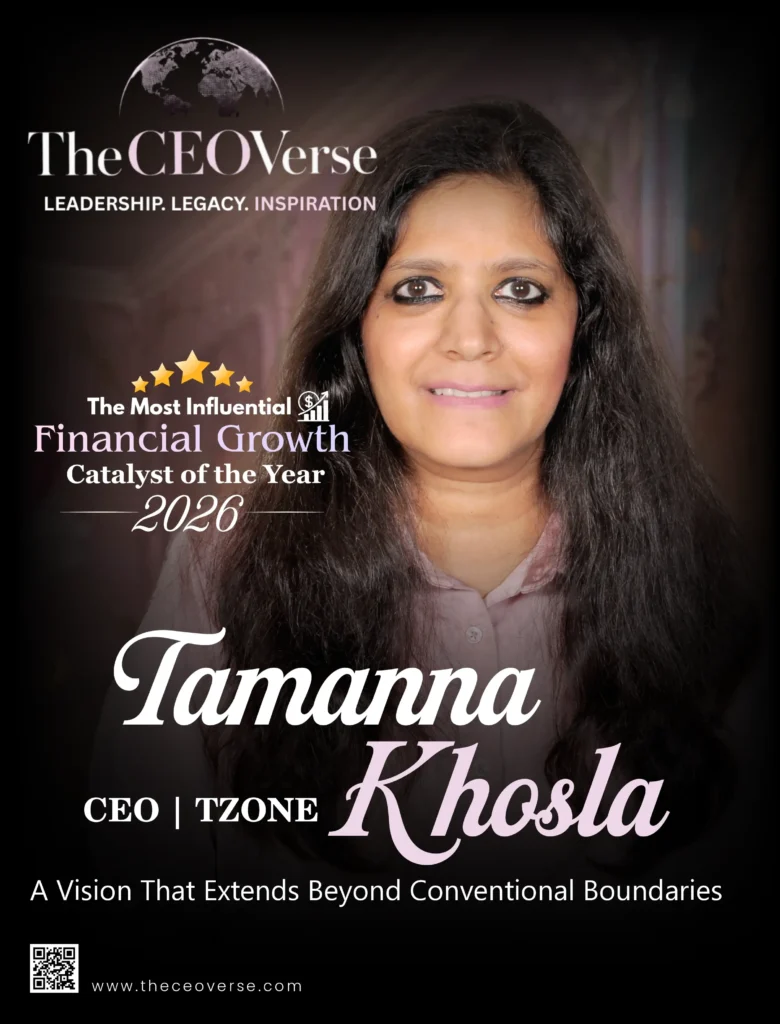
TheCEOVerse • Digital Edition
“The Most Influential Financial Growth Catalyst of the Year 2026”
Cover story
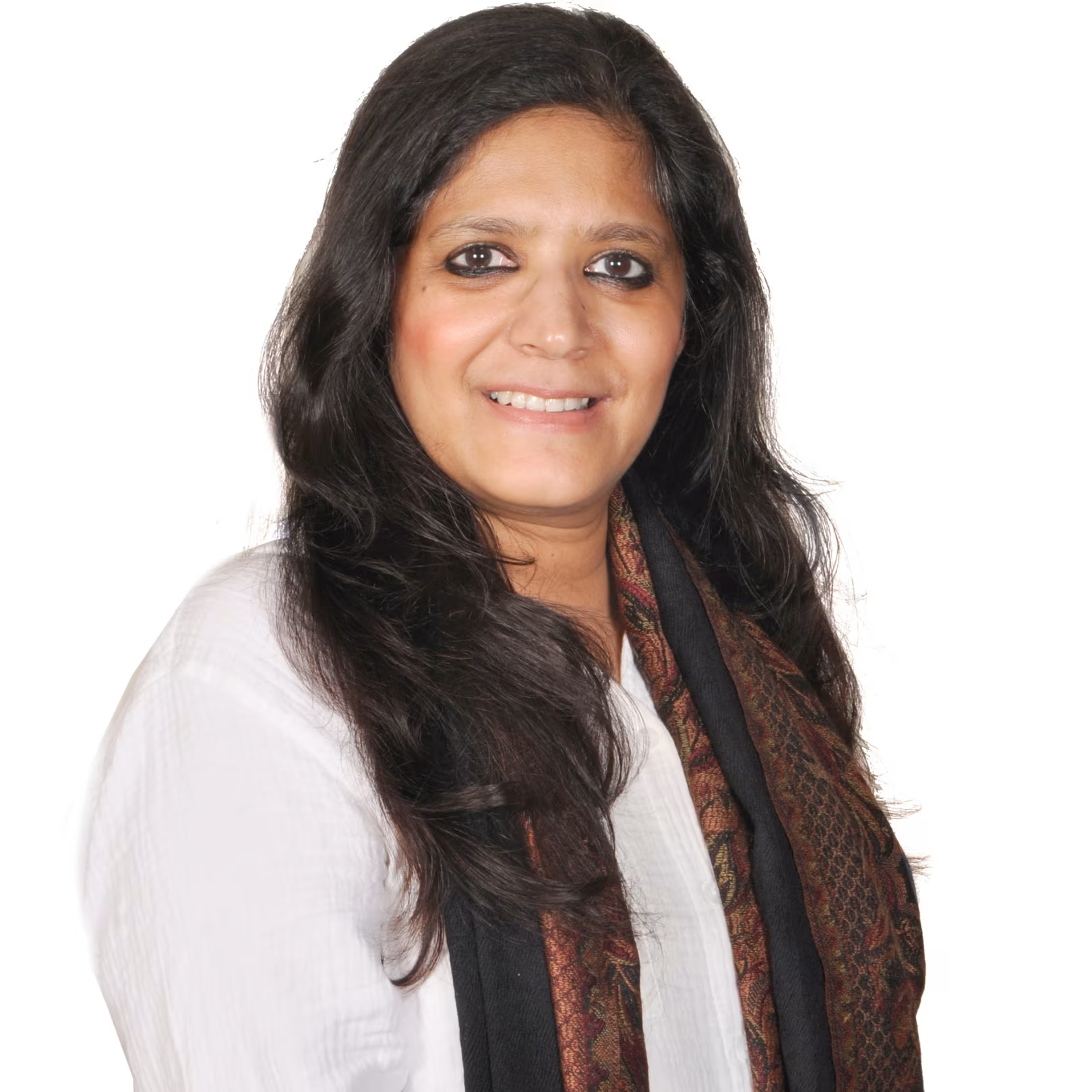
Tamanna Khosla
Featured Profile - Tamanna Khosla
A vision that extends beyond conventional boundaries
Tamanna Khosla’s approach to leadership is shaped by an intellectual journey that has crossed political science, feminism, philosophy and law. As CEO of TZONE, her profile reflects a broader interest in how ideas, resources and independent thinking can contribute to meaningful institutional development.
Her academic interests initially leaned towards science, but during her senior secondary years, political science and the humanities became increasingly central to her direction. At Lady Shri Ram College, she developed a deeper engagement with feminism and international relations. Her master’s studies at Jawaharlal Nehru University expanded this perspective, bringing questions of political power, oppression and gender into sharper focus.
Her M.Phil and doctoral studies further broadened her intellectual foundation, with law and philosophy becoming important parts of her work. This multidisciplinary background shaped a way of thinking that does not treat complex challenges as isolated problems. Instead, she considers the wider structures, relationships and ideas influencing them.
Her professional journey subsequently took her into academia, where she held a teaching position at Delhi University. That chapter ended abruptly. Khosla says academic hostility contributed to her removal and that opposition within the system later made it difficult for her to obtain another academic position.
Rather than allowing that experience to bring her intellectual pursuits to a halt, she continued building her work independently. She authored ten books, earned a law degree and established herself beyond the university environment as a public intellectual, legal scholar and feminist thinker.
The strategic value of independent thinking
For Khosla, effective leadership begins with the ability to look beyond the immediate problem. She believes she can often identify a possible solution before others have fully articulated the issue itself.
She attributes this ability not simply to intuition, but to a continuous commitment to learning. Her approach is deliberately open to knowledge from different people, generations, countries and circumstances. She also believes that even unexpected observations, including those drawn from organisms, can offer valuable insight.
This attitude towards learning allows her to consider possibilities outside conventional professional frameworks. Rather than limiting her understanding to familiar sources, she treats knowledge as something that can emerge from almost anywhere.
Her perspective has implications for how she approaches ambitious projects. Identifying an opportunity is only one part of the process. Understanding its wider context, recognising the people capable of contributing and creating the conditions for sustained work are equally important.

Faith as a constant in leadership
While Khosla values intellectual exploration and independent analysis, she identifies faith as her most dependable guide when making difficult decisions.
Her belief in a higher power and spiritualism has remained central throughout her journey. She describes faith in goodness and trust in God as important influences that help her navigate uncertainty and determine her direction.
She also places value on understanding people and their motivations. One quality she identifies in herself is the ability to read people accurately without making that ability apparent. It allows her to observe relationships and circumstances with attention while keeping her judgments understated.
These personal convictions provide an important foundation for her approach to leadership. For Khosla, decision-making is not solely a technical exercise. It also involves judgment, observation and a belief system that remains consistent when circumstances become difficult.
Building the financial foundation for bigger ideas
One of Khosla’s most significant long-term ambitions is the development of a research institution that can bring together exceptional thinkers from around the world.
She envisions an organisation that welcomes what she describes as “nerds and geniuses”, individuals with the intellectual ability and curiosity to explore difficult questions without being confined by conventional disciplinary boundaries.
The proposed institution would examine contemporary global challenges alongside questions extending towards extraterrestrial possibilities. Its broader intellectual purpose would include developing new philosophical and legal frameworks while investigating oppression across race, class, gender, geography and society.
Realising such an ambition requires more than a compelling concept. It requires financial stability, access to resources and the ability to attract the right people.
This is why Khosla’s priorities for the next five years centre significantly on establishing the financial foundation for the institution. She wants to secure sufficient resources to recruit individuals capable of building the organisation alongside her and to provide them with the means necessary to pursue meaningful work.
For her, financial resources should serve a larger purpose. They should remove barriers that prevent talented individuals from exploring important questions, rather than becoming an objective in themselves.

Creating the conditions for exceptional talent
Khosla’s institutional vision places considerable importance on the people who will eventually contribute to it. She believes exceptional thinkers should have the freedom, support and resources to concentrate on their work.
Her intended approach is to establish the necessary financial runway, bring together individuals with complementary intellectual strengths and create an environment in which they can pursue challenging ideas without constantly having to struggle for basic support.
This is a different way of looking at organisational development. Growth is not treated simply as an expansion in size or visibility. It is connected to the ability to create an environment where people can contribute meaningfully and where ambitious research can receive sustained attention.
The proposed institution would bring together multiple perspectives to examine issues that cross traditional academic and social boundaries. Its success would depend not only on the quality of its ideas, but also on the resources and collaborative environment available to the people developing them.
Turning adversity into intellectual conviction
Khosla’s interest in freedom and oppression is also connected to experiences she describes as deeply personal. She speaks of severe oppression within her family, as well as within Indian society and academia, which she says continued over several decades.
She describes facing these challenges as a woman with limited support from those around her. Through those experiences, faith remained the source of strength she considers most significant.
These circumstances form part of the context behind her continuing engagement with questions of power, equality and individual freedom. Her interest in these subjects is not limited to academic debate. They are concerns she connects with her own experiences and the wider social structures she wants to understand.
This perspective also informs the purpose of her proposed research institution, where examining different forms of oppression and developing new philosophical and legal frameworks are central ambitions.
Learning from excellence without losing originality
Khosla’s advice to aspiring thinkers and professionals reflects two principles: remain open to learning and protect the originality of one’s own work.
She encourages people not to envy those who possess greater knowledge or have achieved more. Instead, they should study their work, understand their approaches and use those lessons to improve their own capabilities.
However, she draws a clear distinction between learning and imitation. Another person’s intellectual contribution belongs to its creator. Developing one’s own direction requires respecting that originality rather than reproducing someone else’s achievements.
She applies the same distinction to financial resources. Money is necessary to build and sustain an ambitious institution, but it should not become the primary motivation behind an initiative intended to advance freedom and egalitarianism.
In her view, talented individuals deserve recognition, meaningful resources and the independence to explore ideas without unnecessary restrictions. These are the conditions she wants the institution to embody.
The long-term measure of influence
Tamanna Khosla’s journey has moved through academic research, legal education, authorship and independent intellectual work. The different stages have remained connected by recurring questions about power, freedom, gender and oppression.
Her current institutional ambition brings these interests into a broader framework. By working towards the financial foundation of a research organisation, she aims to create opportunities for exceptional minds to collaborate and pursue questions that extend beyond conventional boundaries.
For Khosla, the importance of financial resources lies in what they make possible. Funding can provide access to talent, support sustained research and reduce the limitations that often prevent capable individuals from pursuing ambitious ideas.
As CEO of TZONE, her leadership profile is defined here by that wider perspective: recognising the importance of resources while keeping intellectual freedom and meaningful work at the centre of the vision.
The most significant outcome of this ambition will not simply be the establishment of an institution. It will be the environment it creates for independent thinkers, the ideas it enables them to pursue and the contribution those ideas may eventually make to a more open and egalitarian world.
For Khosla, financial strength is most meaningful when it becomes the foundation for something larger than itself.