TheCEOVerse • Digital Edition
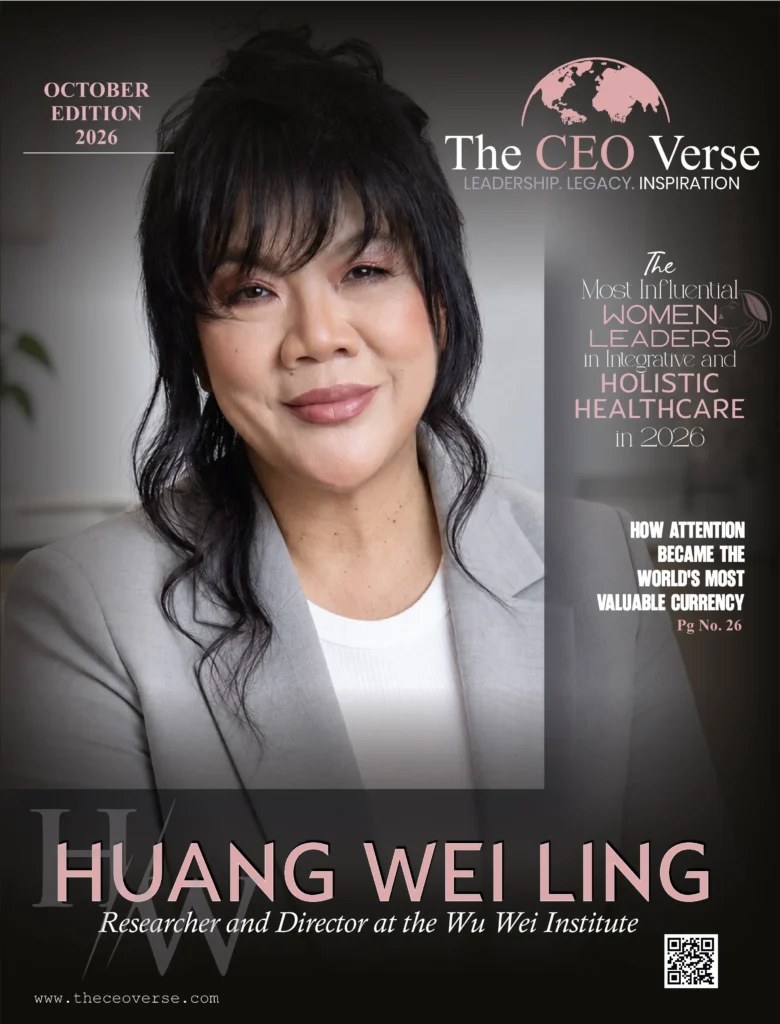
“The Most Influential Women Leaders in Integrative and Holistic Healthcare in 2026”
Cover story
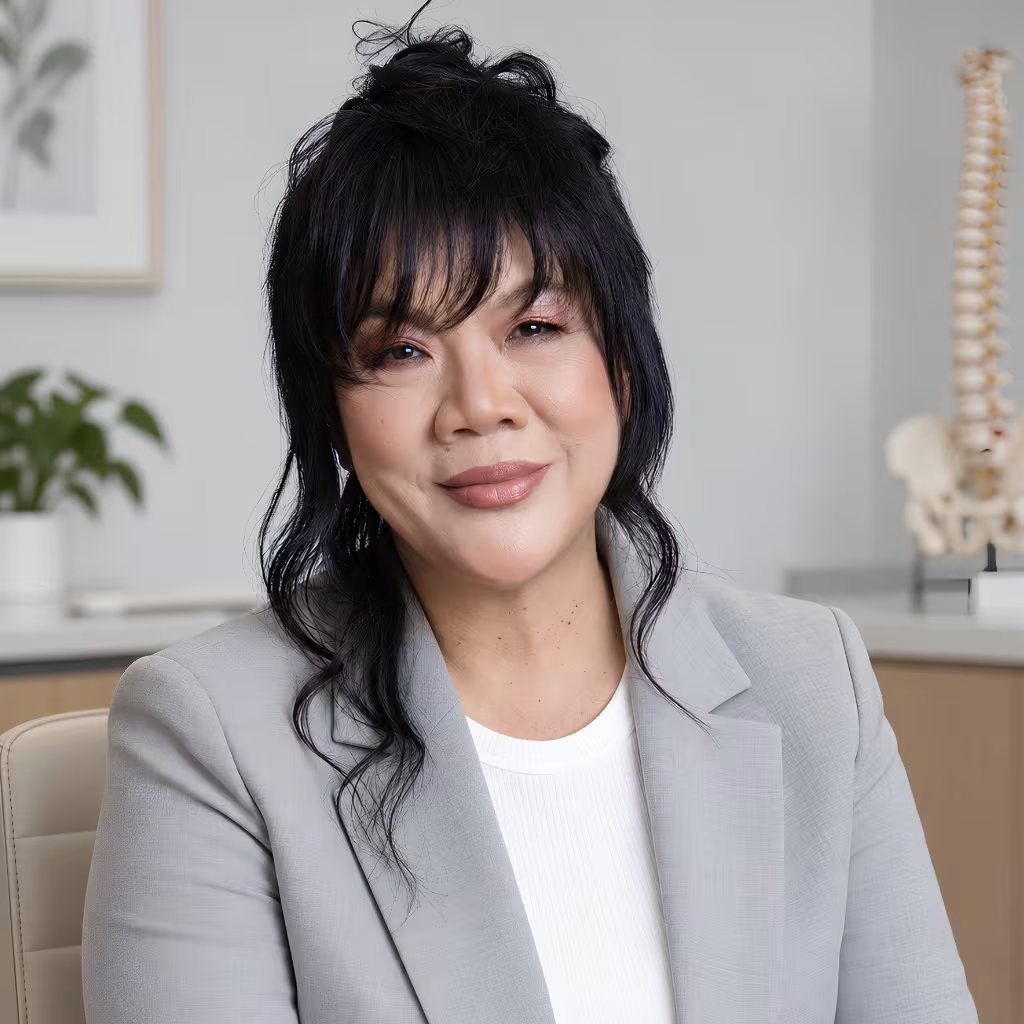
Huang Wei LING
Featured Profile - Huang Wei LING
Dr. Huang Wei Ling: The Pioneer of Root Cause Healing and Redefining Modern Medicine
Standing before a room of cynical physicians, colleagues forged in the exact same data driven crucible as you, and asserting that their prescriptions might be harming the very patients they intend to cure demands a distinct brand of courage. Continuing to deliver that message across five continents, at over 500 conferences and webinars for nearly thirty years, requires an even more extraordinary depth of conviction. But that perseverance is precisely what turned decades of quiet disbelief into genuine attention and real change in the world.
That is the story of Dr. Huang Wei Ling, MD, the Brazil based physician, researcher, and founder of the Wu Wei Institute, whose career reads less like a conventional medical biography and more like a slow, deliberate act of rebellion against the idea that a human being can be reduced to a diagnosis. Over the last three decades, she has built a body of work, more than 300 published scientific papers, a globally recognized clinical protocol, and a growing international following of physicians hungry for a different answer. It asks Western medicine an uncomfortable question. What if we have been treating the leaves while the root quietly withers?
A Childhood Between Two Worlds
Long before she wore a white coat, Huang Wei Ling was already living the central tension that would massively influence her career. Born to a Taiwanese family, she immigrated with them to Brazil when she was just a year and a half old. A toddler transplanted into a country whose language, customs, and rhythms bore no resemblance to the ones her parents had known. Her family’s early years in Brazil were full of trails and tribulations that follow an immigrant on their journey. That time period was defined by tremendous hard work, cultural friction, financial uncertainty, and an unshakeable insistence on dignity.
It would be easy, in hindsight, to romanticize that beginning. But the truth is more instructive. The household Huang Wei Ling grew up in was itself a quiet negotiation between East and West, tradition and adaptation, the old world and the new one her parents were determined to master. She did not yet know it, but she was being trained, long before medical school, to hold two systems of knowledge in her hands at once, without letting either one collapse into the other. That instinct would eventually become the foundation of her entire medical philosophy.
The Making of a Western Physician
Huang Wei Ling’s formal path into medicine followed a conventional, demanding trajectory. She graduated in Medicine in Brazil and specialized in Infectious and Parasitic Diseases, a discipline that sharpened her into a clinician obsessed with precision. The kind of doctor trained to trace an illness back to a single pathogen, a single lab value, a single measurable cause. Alongside this, she pursued further specializations in General Medicine, Parenteral and Enteral Nutrition, Pain Management, and Acupuncture, building a clinical toolkit that was, by any conventional measure, remarkably impressive.
In her early career, that toolkit was put to serious use. She took on responsibility for controlling all prescribed antimicrobial medication within her hospital system, a role that demands both scientific exactness and institutional courage. Someone has to be the person willing to say a prescription is wrong, even when a more senior colleague has written it. Her diligence in this area earned her an award for the best paper presented at the Brazilian Hospital Infection Control Congress in 1998, an early signal that her name would not stay confined to a single place for long.
For years, this was the entirety of her medical world. Diagnose the disease through symptoms and laboratory exams, then treat it with specialized, and high amounts of conventional medicine. It was rigorous. It was respected. And, as she would soon discover, it was incomplete.
The Dialogue That Shifted a Paradigm
Every transformative career has a hinge moment, and for Huang Wei Ling, it arrived in 1996 in the most unassuming way possible. A piece of advice from her mother. Drawing on a deep, inherited understanding of Eastern wisdom, her mother gently urged her to look past the boundaries of her Western training. It was not a dramatic ultimatum, nor a rejection of the medicine she had spent years mastering. But it was an invitation to widen the lens.
Huang Wei Ling accepted, and began studying Medical Acupuncture and Traditional Chinese Medicine (TCM). She has since described this decision not as an addition to her medical toolkit, but as an event that shattered and rebuilt her entire understanding of health, disease, and the human body. The metaphor she returns to again and again is arboreal. Western medicine spends most of its energy tending to the “leaves and branches” of a tree, including isolated symptoms, individual organs, discrete diagnoses, while too often neglecting the root, which is the energy balance of the whole organism.
What followed was not a rejection of her scientific training but a fusion of it. She began layering her deep knowledge of infectious disease onto the ancient framework of Yin, Yang, Qi, Blood, and the Five Elements, and in doing so, she stopped seeing patients as collections of diagnoses and started seeing them as integrated energy systems. It was this hybridization, rigorous Western pathology married to the constitutional logic of TCM, that would eventually give rise to the Wu Wei Institute and mark as the true beginning of her global medical mission.
The Foundation of a Medical Rebellion
Founding a new type of clinic is one thing. Defending it, year after year, inside a medical establishment that does not officially recognize concepts like meridian energy or chakras is another challenge entirely. And it is here that Huang Wei Ling’s career takes on its most important arc.
Around 2014, she began noticing something unusual in her clinic. Patients were arriving with almost no measurable energy in six of their seven chakras, a pattern that, by her own clinical observation, was becoming disturbingly common. She came to call this phenomenon the “New Global Immunodeficiency”, a state of profound energy depletion that, in her assessment, was leaving people extraordinarily vulnerable to chronic inflammation, emotional disorders, the majority of contagious issues and including at the final stage of immunodeficiency, the malignancies disorders.
The implications were unsettling, and so was the response she anticipated. If patients were already running on empty, she reasoned, then flooding their systems with strong pharmacy bought medicines was not treatment. It was closer to pouring fuel into an empty tank, further draining the very reserves the body needed to heal. This was not a comfortable thing to say inside a medical culture built on the authority of drug science. Yet rather than soften the claim or quietly shelve it, Huang Wei Ling did what she had always done when faced with resistance. She went to the data.
She began documenting cases with meticulous clinical detail, anchoring her observations in the Arndt Schulz Law, the century old pharmacological principle stating that highly diluted substances stimulate cellular and energy activity, while high concentrations suppress it. From this foundation, she developed the Wu Wei Protocol. It is a Constitutional Homeopathy of the Five Elements, rooted in TCM, designed to replenish the internal organ energies that conventional treatment had failed to restore. Applying it across thousands of patients, she found that an energy-based intervention could reverse the trajectory of conditions that had resisted standard treatment for years. What began as a lonely, unpopular clinical observation eventually became an internationally published body of research. Proof that persistence can turn skepticism into curiosity, and curiosity into acceptance.
Inside the Wu Wei Protocol
Today, the Wu Wei Institute, which evolved from her original Medical Acupuncture and Pain Management Clinic, founded in 2000, does not sell a product in any conventional sense. Its core offering is a methodology. A highly individualized, multi phase clinical system built to restore vital energy in patients facing chronic, autoimmune, psychiatric, and infectious disease among other clinical conditions.
The protocol unfolds across several interconnected layers of care. It begins with energy diagnosis and chakra evaluation, in which Huang Wei Ling and her team map a patient’s internal Yin, Yang, Qi, and Blood status, assessing the energy condition of the five major internal organs through radiesthesia. From there, patients are treated with Constitutional Homeopathy of the Five Elements Based on Traditional Chinese Remedies. That is a system of highly diluted, TCM based remedies developed through her own research to replenish depleted organ energy. Auricular acupuncture and apex ear bloodletting are used to regulate systemic and neurological responses while releasing internal Heat and acute toxicity. Finally, systemic Chinese diet therapy rounds out the approach, offering patients precise, individualized nutritional guidance based on the energy of food. And to steer them away from items that generate internal stagnation, such as dairy, raw foods, Cold beverages, and refined sugar.
It is a system built, deliberately, around a single conviction. That the goal of medicine should be to rebuild the body’s internal defenses, not merely to silence whatever symptom happens to be loudest that day.
Leadership Forged in Resistance
Ask Huang Wei Ling what has made her an effective leader, and she will not point to management frameworks or business strategy. She points, instead, to three qualities that were forced into existence by the very resistance her ideas encountered. Intellectual courage, clinical empathy, and sheer persistence.
The courage shows up in her willingness to publish findings that contradict conventional guidelines, to defend those findings at international conferences, and to keep doing so without flinching at professional skepticism. The empathy shows up in a simpler, quieter place. In her insistence on looking past a patient’s tenth failed specialist visit and asking about their emotional habits, their diet, their energy deficits, rather than filing them away as another unsolved case. And the persistence is almost a matter of public record. More than 300 scientific articles authored, and appearances as a keynote speaker, chair, or honored guest at over 500 international medical congresses and webinars across the United States, Europe, Canada, Asia, and Latin America.
None of these qualities function in isolation. Together, they describe a particular kind of leader. One who treats institutional acceptance not as something to be requested, but as something to be earned through sheer weight of evidence, repeated until it can no longer be dismissed.
The Ethos Behind the Innovation
Strip away the clinical terminology, and Huang Wei Ling’s practice rests on a small number of unshakeable convictions. The first is the oldest promise in medicine. Primum non nocere, first, do no harm, a principle she believes is too often compromised by the over prescription of aggressive drug prescriptions that trade one symptom for several new ones. The second is her refusal to treat the disease instead of the patient. In her clinic, two people with an identical Western diagnosis, whether fibromyalgia or chronic migraine, may walk away with entirely different treatment plans, because their underlying energy imbalances are never quite the same. And the third is an insistence on honesty about the scale of the problem. An acknowledgment that humanity’s baseline vitality has shifted dramatically in recent decades under the weight of modern lifestyle factors, electromagnetic exposure, and chronic stress, and that real advocacy for patients means naming that decline rather than working around it.
These values are the operating logic of a clinic that has spent nearly three decades treating chronic pain, anxiety, insomnia, and complex systemic disease by asking not “what symptom needs silencing” but “what has gone quiet inside this person that needs to be woken back up.”
What “Wu Wei” Really Means
The philosophy that gives her institute its name is older than modern medicine itself. Wu Wei (無為), a foundational concept in Taoist thought, is often translated as “action through inaction” or “effortless action.” Huang Wei Ling is careful to clarify what this does not mean “it is not passivity”, and it is certainly not doing nothing. It means acting in alignment with the natural intelligence of the body, rather than overriding it.
Her critique of modern healthcare culture follows directly from this idea. She sees a medical system addicted to force, one that chemically suppresses symptoms rather than listening to what the body is trying to communicate. Her counter belief is disarmingly simple. Healing happens when practitioners step back, clear the artificial blockages standing in the way of recovery, replenish the fundamental life force of Qi, and allow the body’s own harmony to reassert itself. It is a philosophy she traces directly back to Hippocrates’ own words that the natural forces within us are the true healers of disease, and one she has spent her career trying to practice with scientific rigor rather than romantic vagueness.
The Inheritance She Carries Forward
Every physician who challenges convention draws strength from somewhere, and for Huang Wei Ling, that strength has two clear sources. The first is her own family. The resilience of parents who left Taiwan for an unfamiliar country and built a life defined by hard work and quiet wisdom. Whose willingness to bridge two cultures gave their daughter the worldview she would later apply to medicine itself. It was her mother’s counsel, after all, that first pointed her toward Traditional Chinese Medicine.
The second source is historical. The lineage of clinicians who understood the human body as a whole system long before modern imaging or genetic sequencing existed to prove them right. Wei Ling speaks with particular reverence for Hippocrates, the Yellow Emperor, and Samuel Hahnemann, the founder of homeopathy, figures who diagnosed systemic imbalance simply by observing the patterns nature revealed to them. Keeping that observational wisdom alive inside a world of MRI machines and genetic panels is one of the quiet purposes of her work.
Recognition on a Global Stage
The scientific and institutional world has, gradually but unmistakably, begun to take notice. Beyond her more than 300 peer reviewed publications spanning cardiology, neurology, oncology, gastroenterology, immunology, pediatrics, urology, infectious disease, gynecology, and public health, Huang Wei Ling has been named a recipient of the Nobel Scientist Award, recognizing her pioneering research into integrating Western clinical practice with Traditional Chinese Medicine. She has also received an Industry Icon 2026 nomination, honoring the long term impact of her work on global health reform, and was recently celebrated among The Global Icons of Impact for Innovation, honored in Singapore in a room filled with practitioners from dozens of countries. It is a moment she has described, with characteristic modesty, as confirmation that the most important work is still being built, not completed.
Taken together, these honors chart the arc of a career that began as a solitary clinical hunch and has grown into an internationally referenced framework, one that positions the Wu Wei Institute as an educational touchpoint for clinicians worldwide who are trying to understand the deeper roots of modern chronic illness.
The Road Ahead: From Clinic to Classroom
Huang Wei Ling is candid that clinical proof, however extensive, is only half the mission. The next chapter she envisions for the Wu Wei Institute is educational. Structured training programs and certification courses built specifically for Western trained physicians who want to learn how to diagnose energy deficiency, measure chakra energy through radiesthesia, and safely apply the Elemental Homeopathy that underpins her protocol.
Her reasoning is pragmatic as much as philosophical. In a world where populations are growing sicker, more fatigued, and more depleted of vital energy, she argues that a healthcare model built exclusively on symptomatic, strong prescription routine is simply not sustainable at a public health scale. Her long term ambition is to partner with universities and research centers to run large scale clinical trials that could embed her energy framework into mainstream medical curricula, ultimately building a global network of Wu Wei Certified clinics, a system designed to give patients everywhere access to root cause, life restoring medicine, rather than another prescription aimed at the nearest visible symptom.
Advice for the Next Generation of Healers
When Huang Wei Ling speaks to young physicians and aspiring leaders, her advice avoids easy inspiration in favor of something more pointed. Do not mistake technological advancement for conceptual perfection. Medicine today has extraordinary tools at its disposal. Artificial intelligence, robotic surgery, genomic mapping, she warns that none of it will truly heal a patient if the underlying concept of the body remains flawed, still treated as an isolated machine whose symptoms merely need to be hidden.
Her second piece of advice is about temperament rather than technique. Remain steady in the face of skepticism. When a clinical truth challenges commercial or academic dogma, resistance is not a sign of failure. it is, in her framing, validation that the paradigm is being stretched toward something larger than it was before. Her final instruction is the simplest, and the one she returns to most often in her own practice. Listen to patients with your whole being, look past the surface of laboratory results, lead with empathy, and always have the courage to treat the root.
A Legacy Still Being Written
One of the most extraordinary elements of Huang Wei Ling’s story is that of triumph over skepticism. However, a deeper approach would be emphasizing the real significance of translation. It is about a physician who refused to let two vast, ancient systems of medical knowledge remain strangers to one another, and who has spent nearly three decades building the vocabulary, the clinical evidence, and the institutional patience required to make them speak to each other fluently.
From a childhood shaped by immigration and cultural duality, through a rigorous Western medical training, into a hinge moment prompted by her own mother’s wisdom, and onward into the discovery of a global energy depletion that conventional medicine had no name for, Huang Wei Ling’s career has followed a single, quietly radical thread. The belief that the future of healthcare does not lie in inventing more complex interventions, but in returning, with scientific discipline, to the profound and simple truth of energy equilibrium. The Wu Wei Institute is her attempt to prove that belief. With one patient, one publication, and one converted skeptic at a time.