TheCEOVerse • Digital Edition
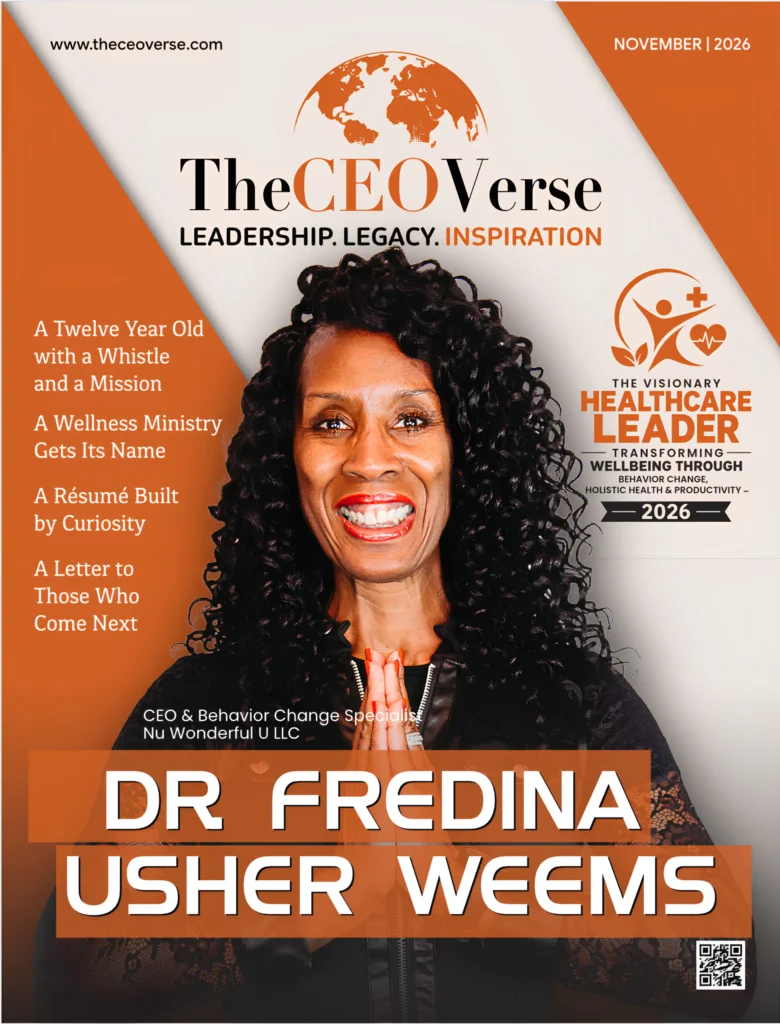
“The Visionary Healthcare Leader Transforming Wellbeing Through Behavior Change, Holistic Health & Productivity – 2026”
Cover story
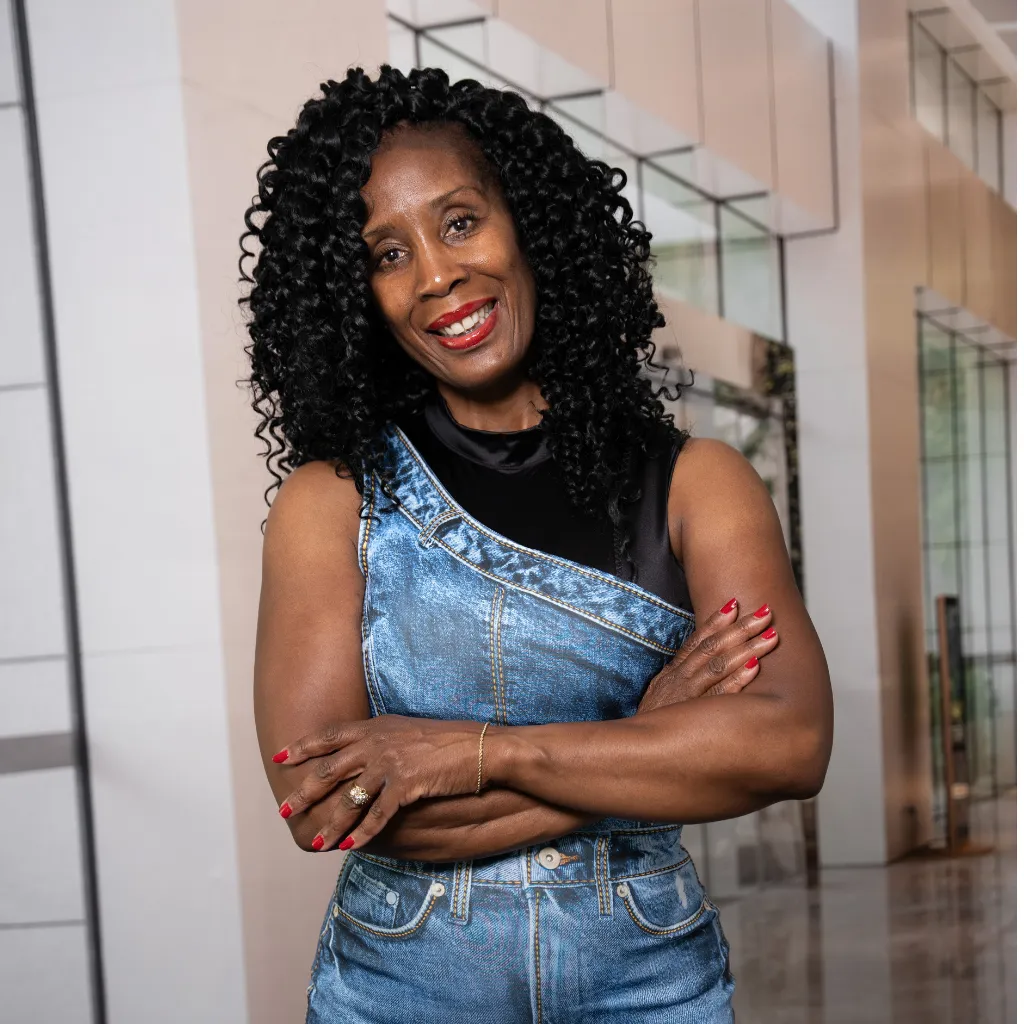
Dr. Fredina Usher-Weems
Featured Profile - Dr. Fredina Usher-Weems
Most people who rebuild their lives do it quietly. There is rarely a single moment of triumph. There is a decision, then another, then a morning when the old habit loses its grip. Dr. Fredina Usher Weems has spent a lifetime sitting beside people during those quiet decisions. She is a fitness coach, minister, chaplain, scholar, author of a doctoral intervention, and founder, and she has come to believe that no one can be fixed from the outside. What she offers is a place where change feels safe enough to begin.
A Twelve Year Old with a Whistle and a Mission
Her story starts in a family that loved her and also worried her. As a child, Fredina watched relatives lose ground to illness. On her mother’s side the pattern was obesity, diabetes and heart trouble. On her father’s side it was high blood pressure, high cholesterol and a shaky sense of self worth. These were not abstractions to her. They were the reasons dreams got postponed and birthdays were spent managing symptoms. She decided, with the stubbornness of a girl who had seen too much too early, that she and her two sisters would not inherit the same story.
Her first act of resistance was practical. At twelve she began leading morning fitness sessions at her parents’ daycare. The children she coached were small, restless and easily bored, which is a demanding audience for any instructor. She learned that movement had to be fun before it could become a habit, and that a leader’s energy is contagious. Decades later, speaking to a Cleveland public radio audience about fitness trends, she was still making the same argument. People stick with exercise they enjoy, and a newcomer should add one new activity at a time rather than leap into a punishing five day schedule. The twelve year old with the daycare class had already worked it out.
Nineteen Years Inside a World Class Institution
In October 1995 she joined the Cleveland Clinic, where she would work until July 2014, a stretch of nearly nineteen years. As a wellness professional and coach, she helped build and oversee the Center for Lifestyle Fitness program. The work was both creative and administrative. She wrote and revised wellness manuals, produced media presentations and newsletters, drafted publicity articles and circulated fitness and wellness tips. She also designed exercise guidance meant to prevent injury before, during and after workouts.
Her classes carried real clinical weight. She led aerobic programs for participants trying to lower or eliminate their dependence on medication for high cholesterol, diabetes and high blood pressure. These were the same conditions that had shadowed her family. She also organized wellness events that reached beyond the clinic’s walls and taught children, teachers and administrators how to make physical activity enjoyable. Her record there includes changed lifestyles, higher energy, reduced obesity and healthier self esteem. The school based program she helped shape became a requirement in a large number of school districts. Few wellness careers can point to that kind of institutional reach, and it gave her something no classroom could. Years of watching what actually makes people change and what doesn’t.
The Call That Would Not Stay Quiet
While the clinic built her expertise, another calling was growing alongside it. From 2006 to 2009 she served as pastor’s assistant and Sunday school teacher at North Olmsted Community. She helped conduct worship services and visited members at home, in hospitals, and in convalescent facilities. At Kiddie Tot’s Nursery School, she also taught children, giving them child care and Scripture lessons suited to their ages. At Lee Memorial, she volunteered as a prayer warrior as well, a role that asks for faithfulness more than recognition.
In January 2010 she became a licensed pastor and volunteer at The Church on the Rise in Westlake, and the responsibilities multiplied. She stood at the altar to pray with those who answered the call from the pulpit. She spoke at the congregation’s fellowship gatherings and took part in midweek exhortation services. She even served as chair coach for the church’s “Biggest Loser” competition, where her fitness background and her ministry finally shared one room. She also counseled women privately through grief, depression, the death of family members, marriage struggles, and family conflict. In June 2015 she was named an elder, a role grounded in supporting pastoral leadership and keeping a congregation focused on its mission.
Together, these years show how her two vocations converged. She was a health professional who kept meeting spiritual needs, and a minister who kept meeting physical ones. Rather than choose between them, she began to wonder what it would look like to serve both at once.
The Long Road of Learning
Her answer took more than a decade of study. In 2005 she began a master’s degree in religion at Liberty University while still working full time, an effort that sat alongside her family life, her Bible study, her love of fitness and her involvement with Toastmasters. She completed it in 2010 and went straight on to a Master of Divinity, finished in 2014. In the same year she began a Doctor of Wellness program at Ashland, which she completed in 2018. Her purpose throughout was to educate people about what she calls God’s Divine Health Plan, a wellness that treats spirit, soul and body as one. She then returned to Liberty for a master’s in pastoral counselling and leadership, finished in 2019, which examines how biblical principles of personhood connect to the science of psychology and how mental health care benefits from spiritual health. In 2026, she completed Women Coach Specialist.
She has described the discipline this required in personal terms. Along the way she learned to say no to people, places and situations that could have pulled her off course. Her path also included a bachelor’s degree in business administration, which later proved useful when she became an entrepreneur.
A Wellness Ministry Gets Its Name
In January 2012, in the middle of her studies, Fredina founded Wonderfully Made Inc. in Greater Cleveland. Its slogan, “Wholistic Call to Care,” states the idea in four words. The company works with professionals, schools, organizations, church leaders and non profit groups, encouraging, motivating, educating and collaborating so that their people can move through healthcare transitions of spirit, soul and body. The purpose is practical. A well balanced person is a more effective, efficient and productive employee or student.
She spells the word wholistic on purpose, and she defines it as a balanced lifestyle across seven areas. Vocational, financial, emotional, mental, physical, spiritual and intellectual. The list matters because it refuses the shortcut. Plenty of programs offer a diet or a workout plan. Her model asks whether a person’s money worries, job frustration or unspoken grief might be the real reason the diet keeps failing. In her view, a lasting habit rarely survives in a life that is out of balance somewhere else.
Learning to Sit with Sorrow
Some of her most demanding service happened far from the gym. In early 2015 she completed a chaplain internship at the Louis Stokes Cleveland VA Medical Center at the Wade Park campus. Working under the chaplain director as part of a volunteer healthcare team, she attended to the pastoral needs of patients, families and staff. The work asks a chaplain to help people understand life’s events in light of their spiritual and emotional well being, offering prayer or reflection when it is wanted. It is also work that demands more listening than speaking.
She carried that skill into the community. From October 2016 until May 2021 she served as Minister of Grief Recovery at Church on the North Coast in Valley View. The ministry grew from an observable need. Adults, children and families who had suffered a loss in the previous twelve to twenty four months had little structured support. She helped shape an eight session, topic based program, typically held in the spring, and the ministry mailed grief recovery packages and made family visits on request. In the same period she completed American Sign Language certification at Cleveland Hearing and Speech in 2015, a credential aimed at interacting with people of all ages across the speech and hearing community. It suggests how seriously she takes the idea that care should reach people in the form they can receive it.
The Research That Walked into a Neighbourhood
Her doctoral work is the clearest picture of how she thinks. Her project at Ashland Theological Seminary, titled “Integrating God’s Divine Wellness Plan to Impact Christian Women’s Holistic Lifestyle in Cleveland, Ohio,” was not a paper that stayed on a shelf. It was a community intervention. She designed six weeks of holistic workshops for women in Cleveland’s Union Miles neighbourhood, aiming to help participants bring faith based wellness principles into their everyday routines. She used pre-tests and post-tests, both quantitative and qualitative, to measure what the African American women in the program actually learned about wellness lifestyles.
The choice of audience was deliberate. Women often carry the health of an entire household while neglecting their own, and in many communities the church is the one institution people trust enough to talk to about it. By combining workshops, measurement and a trusted setting, she treated behaviour change as something that could be taught, tested and refined, and she did it before the term “behaviour change specialist” had become a standard job title.
From Wonderfully Made to Nu Wonderful U
In October 2020 she added a second venture, Nu Wonderful U LLC, based in Cleveland and positioned around the title Behaviour Change Specialist. The two companies share a spiritual vocabulary, but the newer one narrows its focus. It works with individuals, schools, organizations and companies to encourage healthier choices, build resilience and support productivity, with particular attention to women. Its programs, which have included coaching sessions, tutoring and teaching, are described as faith centered. One distinctive thread is the use of inspirational music alongside coaching, an approach meant to build confidence and purpose without lecturing anyone into it.
Trust is the company’s working principle. Every client is treated as a unique person, fearfully and wonderfully made, to use the phrase that appears throughout her work. Personality, culture, lifestyle, opinions and feedback are all treated as part of the process rather than obstacles to it. Sessions are meant to be nonjudgmental, so that clients can arrive as themselves, speak honestly and improve at their own pace.
Dismantling the “Perfect Syndrome”
Ask Dr. Usher Weems what stops people from changing, and her answer is not laziness or a lack of information. It is shame. Many of the women she has coached arrived emotionally exhausted, worn down by cycles of yo yo weight loss, unhealthy relationships, missed promotions or other people’s gossip and judgment. Many were stuck in the past, holding on to old failures as if they were verdicts.
Her response is a concept she calls the “perfect syndrome,” the belief that you must be flawless and mistake free before you deserve success. Her method is to help each client look for the lesson inside a setback instead of the grade attached to it. She asks them to treat their lifestyle journey as ongoing learning rather than a test to pass or fail, and to let go of the “what if” thinking that keeps people frozen. Releasing guilt and the habit of seeking approval, she argues, is what makes everything else possible. She measures her success less in pounds than in posture, such as the moment a woman who arrived insecure stands with settled confidence and meets a challenge head on.
What Teams Taught Her
Years of working with groups taught her two lessons that she now teaches back. The first is self identity. Working alongside people whose values and personalities differed sharply from her own, she saw how much easier collaboration becomes when you know your strengths, your weaknesses and your worth. One experience with a group whose views differed widely from hers sharpened her communication. She learned to step back from her own preferred way of doing things in order to work well with others.
The second lesson is not taking things personally. After years of teaching, socializing and counselling, she concluded that everyone carries their own beliefs and values, and that a different perspective does not automatically mean one side is wrong. Agreeing to disagree, she says, is often the healthiest outcome. It is a leadership lesson that looks modest on paper and usually takes years of practice.
A Résumé Built by Curiosity
Her credentials read like a map of a mind that does not stop. Beyond her degrees, she holds certifications in nutrition coaching through the National Academy of Sports Medicine, wellness coaching through IAP Career College, and life coaching through the Life Coach Training Institute. She has trained as a behaviour specialist and in mental health and mindfulness, and she is certified in areas including group aerobics, prenatal fitness, tai chi and yoga. Her educational credentials include TESOL, elementary English and math, public speaking and executive functioning. More recently she has pursued women focused specialist training with Girls Gone Strong, including a menopause certification, which signals where she sees the next unmet need. Women in midlife, whose health questions are too often treated as an afterthought.
What is striking is how coherent the list is. A fitness coach who studies nutrition, a minister who studies psychology and a teacher who learns sign language, each credential widens the door through which a person can be reached.
Words as Wellness
She is also a writer, and her poetry offers a window into her philosophy. Her “Phenomenal Woman” poem addresses women directly, praising their endurance through foreseen and unforeseen challenges, their ability to weather disappointment, and their refusal to be defined by gossip or jealousy. It ends with a line that sums up her mission. Simply being the best you possible.
She has carried the same message to audio. On a podcast hosted by Black Women in Business, she discussed how embracing one’s authentic self leads to personal growth, stronger communities and genuine leadership. The episode framed being fearfully and wonderfully made as more than a mindset, calling it a movement toward a more inclusive and empowered world. The format suits her, since much of her work depends on the conversation rather than the lecture.
A Legacy Stepping Into the Light
For years, her transformative work resonated quietly in the lives of those she served. Today, the rest of the world is taking notice. The Silicon Review celebrated this momentum in its December 2025 edition, spotlighting Nu Wonderful U LLC among its “5 Amazing Women Leaders to Watch 2025” for its groundbreaking fusion of faith centered wellness, spiritual coaching, and uplifting music. Continuing this inspiring arc, The Enterprise World featured her in a 2026 cover story as “The Most Influential Wellness Leader Transforming Healthcare Behavior.” More than just accolades, these honors signal a powerful shift, proving that a heart led, values driven vision can spark a widespread movement of healing and wholeness.
A Day That Begins in the Dark
Her own routine reflects the discipline she asks of others. She begins at midnight with family prayer, followed by meal preparation and a breakfast smoothie. Personal spiritual growth fills the early hours, then social media and business marketing, then a workout of tai chi and mindfulness. The workday opens around six with teaching and tutoring, and coaching sessions follow in the afternoon. By four she is eating a light dinner, then spending time with family, and she is asleep by six in the evening. It is an unusual schedule, and it makes one point clearly. She builds her life around the same priorities she recommends to clients, with faith first, family protected and her body treated as something to maintain rather than to punish.
The Future Will Be Personalized, but Not Automated
She is optimistic about what comes next. In her view, hyper personalization will transform health care in the coming years, as consumer devices connect with AI platforms to generate custom nutrition and recovery plans. Her own work, she notes, has always been personalized, and she sees this as a natural extension of it.
She also sees a limit. An algorithm can produce a meal plan or an exercise routine, but it cannot read a person’s mental or emotional state, and it cannot sense the grief or exhaustion behind a missed workout. A wholistic approach keeps spirit, soul and body in balance, and before anyone can benefit from a nutrition plan, someone has to understand who they are and what they carry. For Nu Wonderful U, the opportunity is to grow alongside these tools, offering the human understanding that data alone cannot supply.
A Letter to Those Who Come Next
Asked what she would tell future wellness leaders, especially young women, she offers advice that sounds like a summary of her life. View every experience as part of the journey. Opportunities, achievements, setbacks and disappointments are not simply signs of success or failure. Each shapes your character and prepares you for what comes next. Growth rarely follows a straight line, and you decide whether each challenge moves you closer to your purpose or stops your development. For business leaders, she adds a pairing that is harder than it sounds. Know who you are and walk in confidence, yet stay humble, teachable and nonjudgmental, and let others be their best.
When she is asked which book every leader should read, her answer is the Bible. That choice tells you most of what you need to know about the foundation of her work.
The Last Word
Dr. Fredina Usher Weems’ legacy isn’t built on single, dramatic transformations, but on the quiet magic of thousands of personal breakthroughs. A daycare vibrant with young potential, a clinic where healing begins, a sanctuary offering solace, and a community of women empowered to take their next step. What connects them is a belief she formed as a girl watching people she loved struggle, that change becomes possible when a person feels seen rather than judged. Her ambition is not perfection, and she says so repeatedly. It is for each person to become the best version of themselves, and to find the courage to keep walking after the first stumble.