
From Excel Sheets to AI Dashboards — How the Corner Office Went Digital
Read Time : 6 minutes
Social Share :
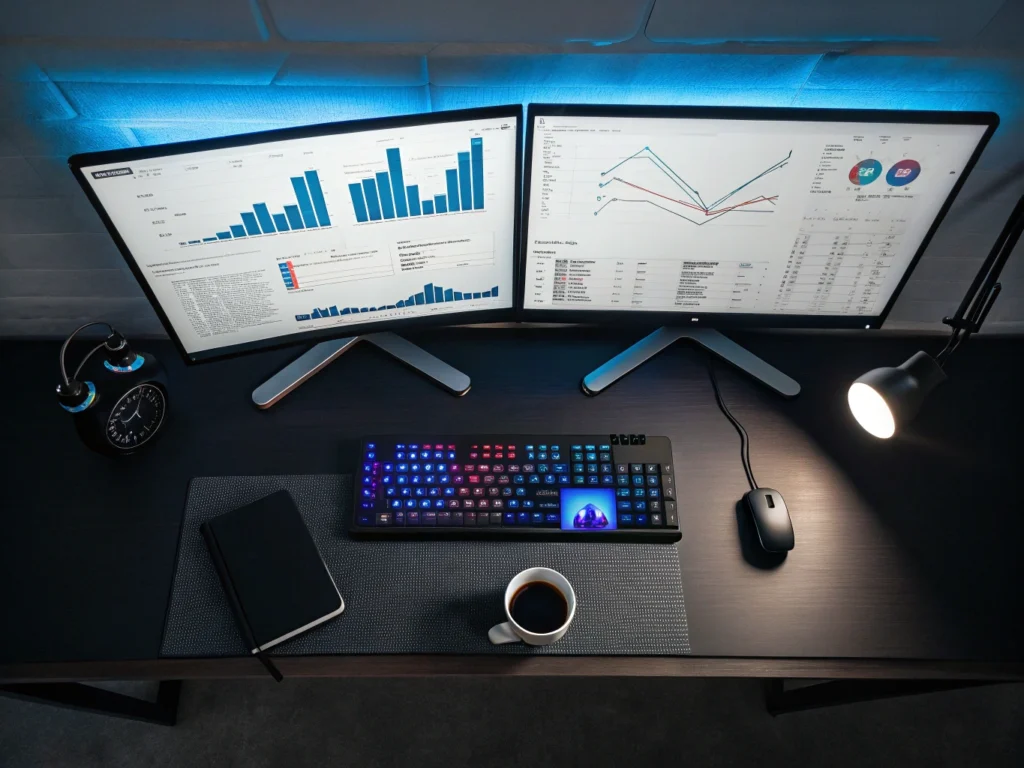
The End of Static Spreadsheets
For years, Excel sheets dominated decision-making — rows, columns, and manually updated reports forming the backbone of business analysis. But static data has limits in a world that moves in real time.
Leaders today cannot afford delays or outdated insights. The shift away from spreadsheets marks the beginning of a faster, more responsive way of operating.
The Rise of Real-Time Intelligence
Modern dashboards provide live data, constantly updating to reflect what’s happening across the business. This eliminates guesswork and reduces the lag between insight and action.
Instead of reviewing yesterday’s performance, executives now make decisions based on what’s happening right now — a critical advantage in competitive markets.
AI as the New Analyst
Artificial intelligence has transformed dashboards from passive displays into active decision-making tools. Patterns, trends, and anomalies are now identified automatically.
This means leaders spend less time analyzing data and more time acting on insights, shifting their role from data processors to strategic thinkers.
From Data Overload to Clarity
More data doesn’t always mean better decisions. Without structure, it becomes noise. AI dashboards filter, prioritize, and present only what truly matters.
This clarity allows executives to focus on key metrics and high-impact areas, avoiding the overwhelm that often comes with traditional reporting systems.
Speed as a Competitive Edge
In the digital era, speed is everything. The faster a company can interpret data and act on it, the stronger its position in the market.
AI-powered dashboards reduce decision-making time from hours or days to minutes, giving leaders the ability to respond instantly to change.
The New Language of Leadership
Data visualization has become the new language of the boardroom. Clean charts, predictive models, and interactive dashboards replace dense reports and lengthy explanations.
This shift makes communication faster, clearer, and more aligned — ensuring that everyone operates with the same understanding.
The Fully Digital Corner Office
Today’s corner office is no longer defined by physical space, but by digital capability. Leaders can access critical insights from anywhere, at any time.
As AI continues to evolve, the gap between data and decision will only shrink — redefining what it means to lead in a digital-first world.