
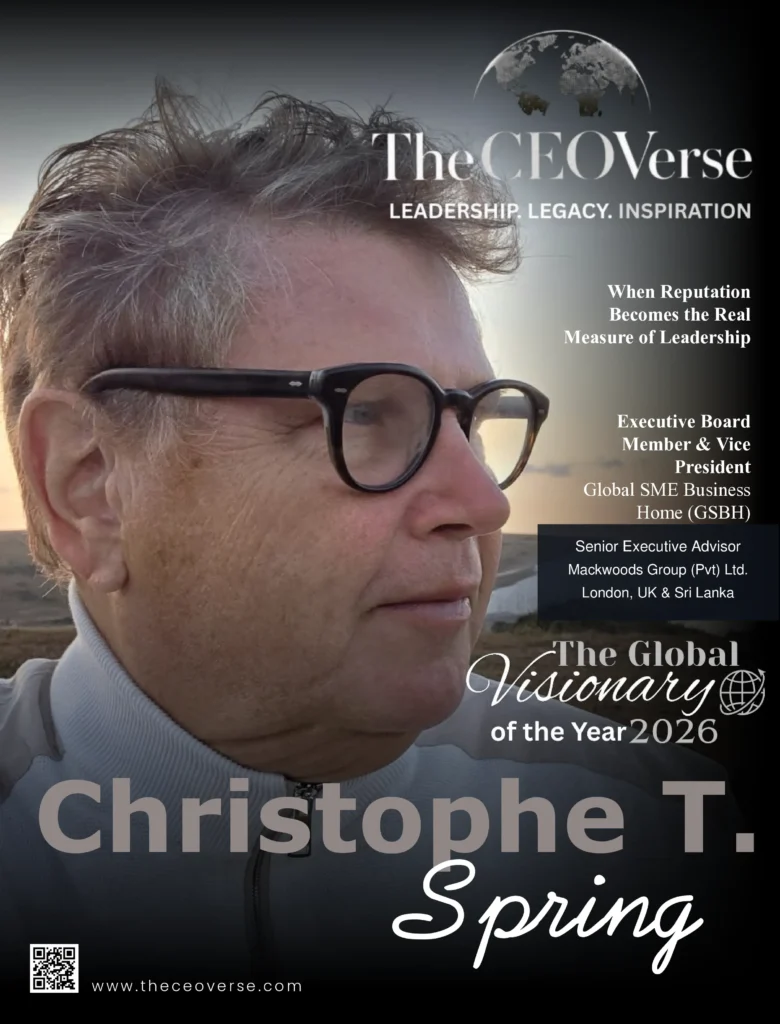
TheCEOVerse • Digital Edition
“The Global Visionary of the Year 2026”
Cover story
Christophe T. Spring
Featured Profile - Christophe T. Spring
Christophe T. Spring: When reputation becomes the real measure of leadership
A professional reputation is rarely established when circumstances are comfortable. It is shaped when conversations become difficult, decisions become unpopular, and personal conviction begins to compete with professional convenience. For Christophe T. Spring, those moments have defined much of a career spanning more than four decades across Europe, North America, the GCC, and Asia.
His experience includes international sales, work across more than 36 countries, multiple languages, and relationships extending into business and diplomatic circles. Yet behind that international career sits a principle that has remained consistent: truth can carry a cost, while integrity continues to hold its value long after a particular position has disappeared.
Spring has experienced that cost himself. There have been occasions when speaking openly resulted in lost opportunities and positions. He does not describe those decisions as mistakes. Given the same circumstances again, he says he would make the same choices because professional positions can change quickly, while the reputation built over decades can influence what comes next.
That belief became tangible when another professional opportunity emerged only weeks after a difficult period in his career. The opportunity was not simply a consequence of what appeared on his résumé. People remembered how he had treated them when circumstances were difficult. For Spring, that experience demonstrated how professional history is ultimately preserved through human relationships.
Leadership is tested in the conversations people avoid
Spring’s approach to leadership has been shaped by international experience rather than a single formula. Working across different markets exposed him to varied cultures, expectations, communication styles, and business environments. Those experiences strengthened his belief that leadership begins with responsibility.
Some of the most important conversations, in his view, are precisely the ones people would prefer to avoid. Disagreement can be uncomfortable, but leaving problems unresolved can create greater consequences over time. Leaders therefore need the willingness to address issues directly, question decisions when necessary, and communicate honestly even when the message is difficult.
Yet directness does not have to come at the expense of dignity. Spring places importance on maintaining respect while holding people accountable. Empathy and responsibility can occupy the same conversation, and a difficult decision does not need to diminish the person affected by it.
For him, leadership is consequently not centred on being liked. It is about becoming trusted enough to tell the truth while still treating people with respect.
Pressure reveals the principles that matter
Courage occupies an important place in Spring’s understanding of leadership. He believes leaders should protect their people, challenge the status quo when circumstances require it, and remain committed to their principles even when doing so carries a personal or professional cost.
That belief is also connected to how he understands resilience. Setbacks, in his view, are not defined by the fact that they happen. The more important question is what follows. A serious hip injury later in life reinforced that lesson personally, requiring him to rebuild from the ground up.
The experience strengthened a broader principle that applies equally to professional life. Falling is not necessarily the defining event. The decision to stand again can matter more.
That perspective also changes the way difficult periods are viewed. One chapter may close unexpectedly, but the circumstances surrounding its ending do not have to determine the value of everything that follows.
When principles cost more than silence
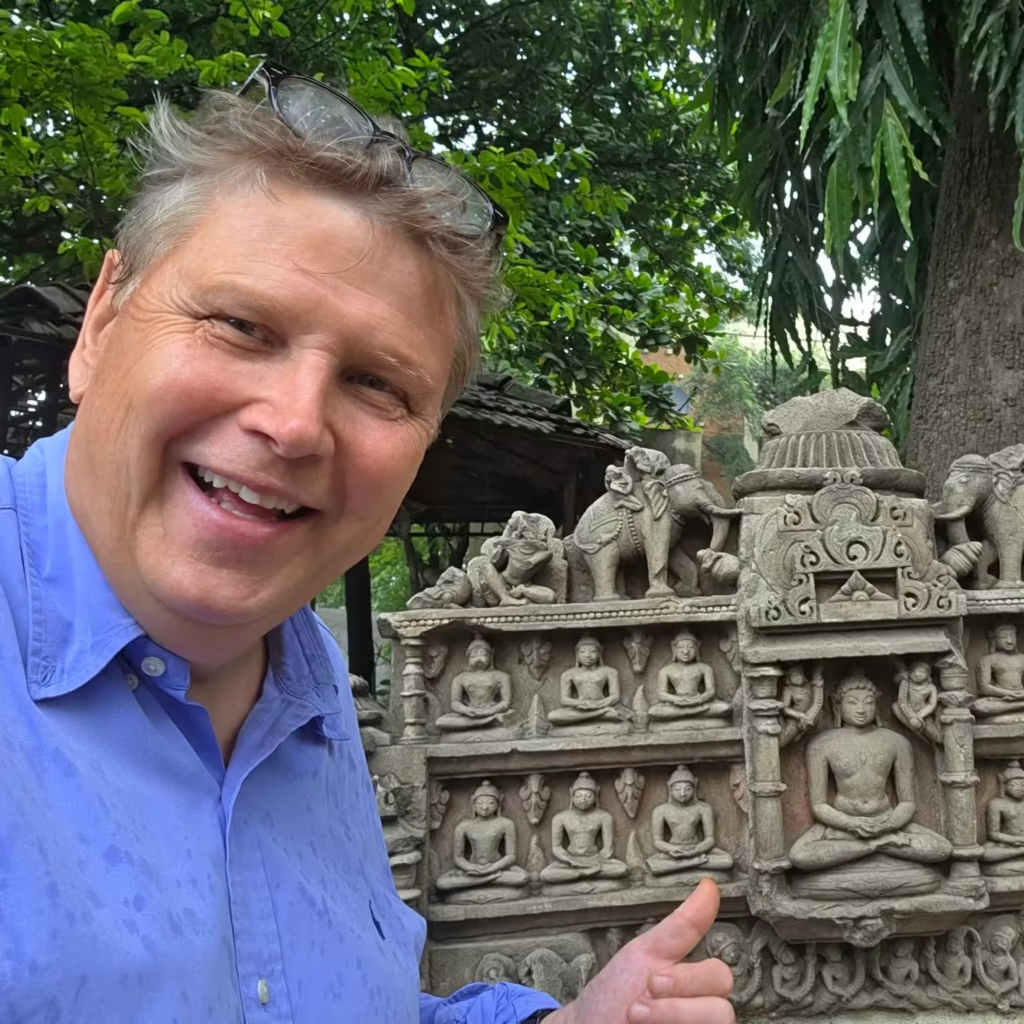
Some of Spring’s most difficult professional choices involved standing beside loyal employees, questioning decisions that others were willing to support, and refusing to quietly abandon principles simply because doing so would have been easier.
Those decisions sometimes came with consequences. But his evaluation of them extends beyond the immediate cost. Positions change. Organisations evolve. Titles disappear. What remains is the character with which those moments were handled.
The professional opportunity that emerged only weeks after a difficult transition became an example of that longer view. Integrity does not always produce an immediate or measurable return. Its value can become visible later, through the trust that remains when circumstances have changed.
For Spring, that creates a different standard for evaluating decisions. The question is not only whether a decision works in the moment, but whether it remains something he can stand behind years later.
The value of a relationship after the role ends
An international career inevitably involves movement. Markets change, organisations take new directions, responsibilities evolve, and professional roles come to an end. Spring accepts that change as a natural part of business.
What he does not believe should change is the way people are treated.
His experience has reinforced the idea that relationships can outlast professional labels. A person may eventually forget a title or a business card, but the memory of whether they were treated fairly and with dignity can remain much longer.
That gives relationships a significance beyond their immediate business value. For Spring, they are not simply a by-product of professional success. They are part of what makes that success endure.
An international career built on human connection
Spring’s international network represents another defining part of his professional journey. Over the years, he has developed relationships with ambassadors from all five continents, ministers, entrepreneurs, global executives, and members of the diplomatic community.
Among the encounters he highlights are meetings with His Holiness Pope Leo XIV and the Apostolic Nuncio. For Spring, experiences within these circles have reinforced the importance of approaching relationships with humility rather than allowing position or status to define an interaction.
Titles may create access, but they do not automatically establish trust. Listening, mutual respect, and genuine engagement remain essential.
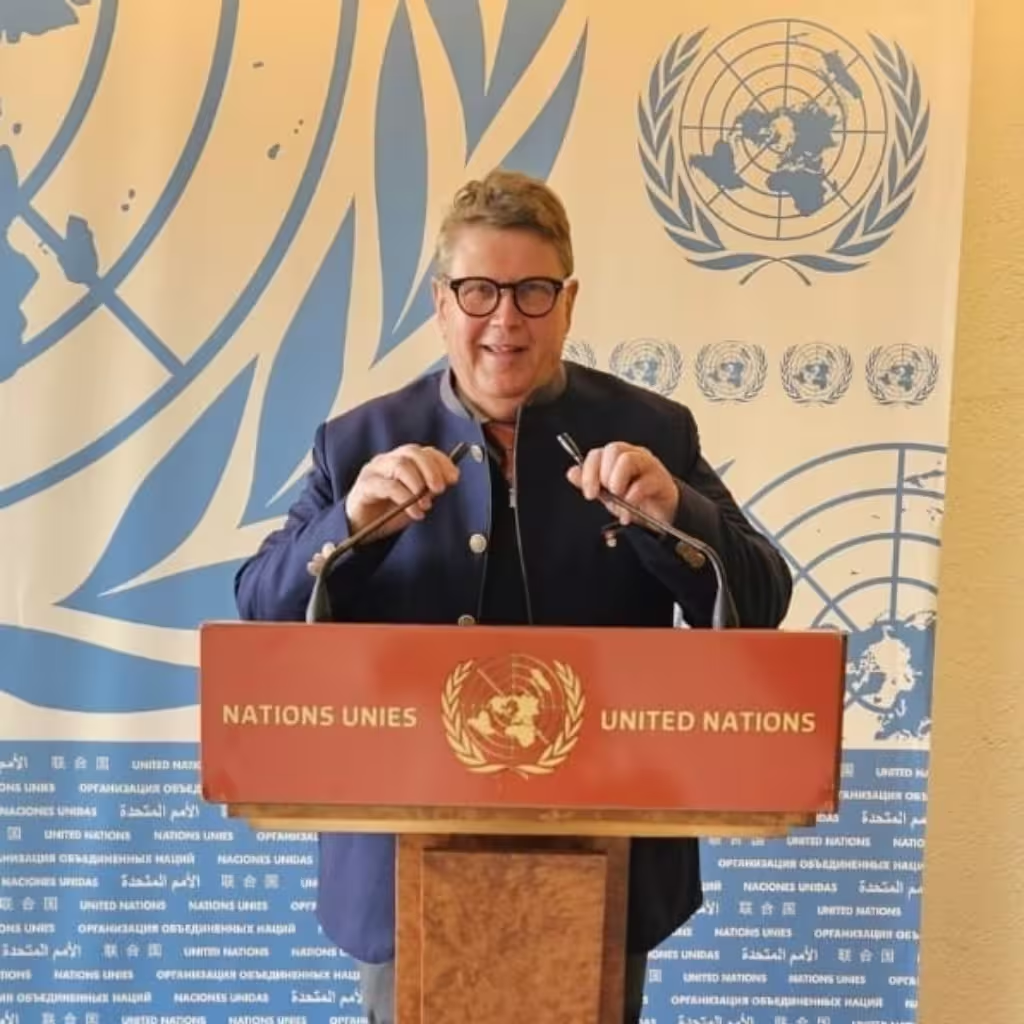
That understanding carries into his current work as Executive Board Member and Vice President at Global SME Business Home. His involvement in international diplomatic circles is something he regards not simply as an honour, but as a responsibility to create stronger connections between people, industries, cultures, and nations.
Business can build more than markets
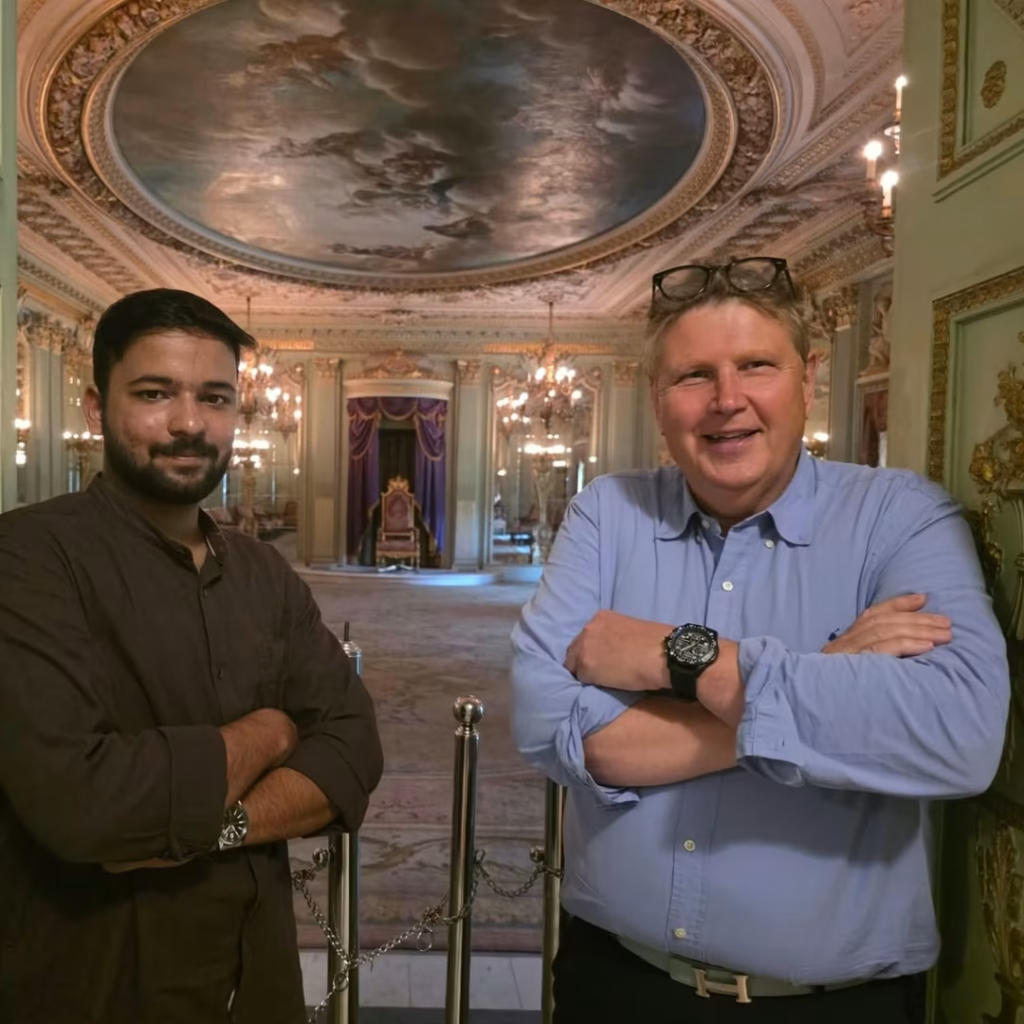
Spring sees business and diplomacy as forces capable of contributing in different but complementary ways. Business can create prosperity. Diplomacy can create understanding. Bringing those two dimensions closer together can help establish bridges between nations, cultures, and people.
That philosophy also informs his broader view of collaboration. His professional focus has increasingly included creating connections between communities rather than viewing business entirely through the lens of competition.
He believes the future belongs to those who can collaborate across cultural, industrial, and professional boundaries. In an interconnected environment, relationships can create opportunities that isolated participants may not be able to generate independently.
For Spring, collaboration is therefore not simply an alternative to competition. It can be a practical way to accomplish things that would otherwise remain beyond the reach of individual participants.
Lessons that exist beyond the boardroom
Some of Spring’s most memorable leadership lessons have not come from business environments at all. Animals have provided their own forms of instruction.
Dogs represent unconditional loyalty. Elephants offer lessons in intelligence, memory, and family. Horses have made perhaps the strongest impression because of the way they respond to trust, humility, and consistency while showing little tolerance for ego.
The lesson is straightforward but relevant to leadership. Authority alone does not create trust. Behaviour does.
For Spring, observing these qualities outside conventional business environments provides a useful counterpoint to traditional leadership thinking. Strategy and decision-making matter, but so do the qualities people experience directly when they interact with a leader.
Curiosity comes before the technology
Spring’s interest in art, architecture, and culture adds another dimension to the way he approaches ideas. These areas encourage him to step outside established patterns and examine familiar problems from different perspectives.
That habit of looking differently informs his understanding of innovation. Technology, he believes, is rarely where innovation truly begins. The starting point is curiosity, the willingness to question assumptions and consider whether something can be approached in another way.
Technology, systems, and strategy then become tools for supporting the answer.
The distinction is important because innovation can easily become associated with whatever technology is newest. For Spring, the more meaningful question comes earlier: what is being questioned, explored, or imagined before the technology enters the picture?
Success through the people around you
After more than four decades, Spring does not place positions or distinctions at the centre of how he thinks about legacy. His attention turns instead toward the people he helped, the relationships he built, and the bridges created throughout his career.
He measures that impact through people who continue to call him years after their professional relationship has ended. He looks at friendships that became partnerships and professional connections that eventually created bridges between countries rather than simply between companies.
There is also a collective dimension to that measure. Teams that achieved more together than any individual could have accomplished alone represent another form of success. Leadership, from this perspective, is not about making oneself indispensable. It is about creating conditions in which people can achieve more together.
The reputation that remains
The different chapters of Christophe T. Spring’s career span international business, sales, diplomacy, leadership, cross-cultural relationships, innovation, and collaboration. On the surface, those experiences may appear distinct. The principle connecting them is considerably simpler.
Truth can create difficult moments. Integrity creates lasting credibility. Leadership requires courage as well as dignity. International relationships demand humility and listening. Innovation begins with curiosity. Collaboration can create possibilities that isolated competition cannot.
After more than four decades, Spring’s measure of a career therefore comes back to what remains when the formal position disappears.
The people who still call. The relationships that became friendships. The introductions that became opportunities. The connections that developed into bridges between companies, cultures, and countries.
Titles change. Roles end. Markets move.
Reputation remains.