TheCEOVerse • Digital Edition
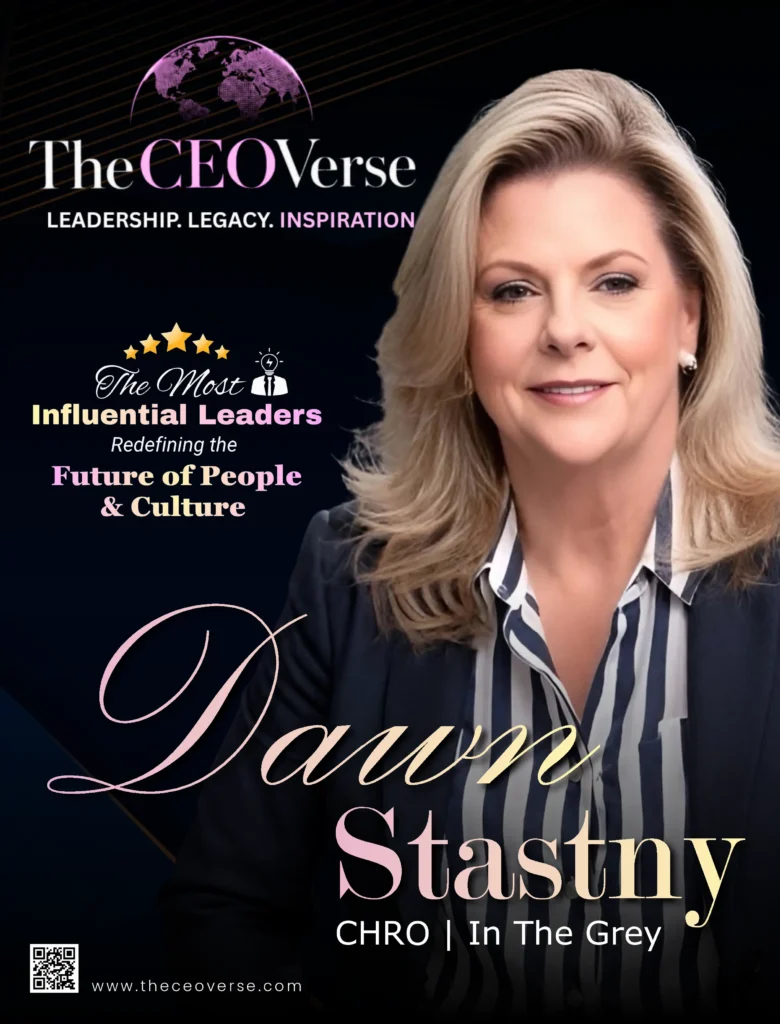
“The Most Influential Leaders Redefining the Future of People & Culture”
Cover story
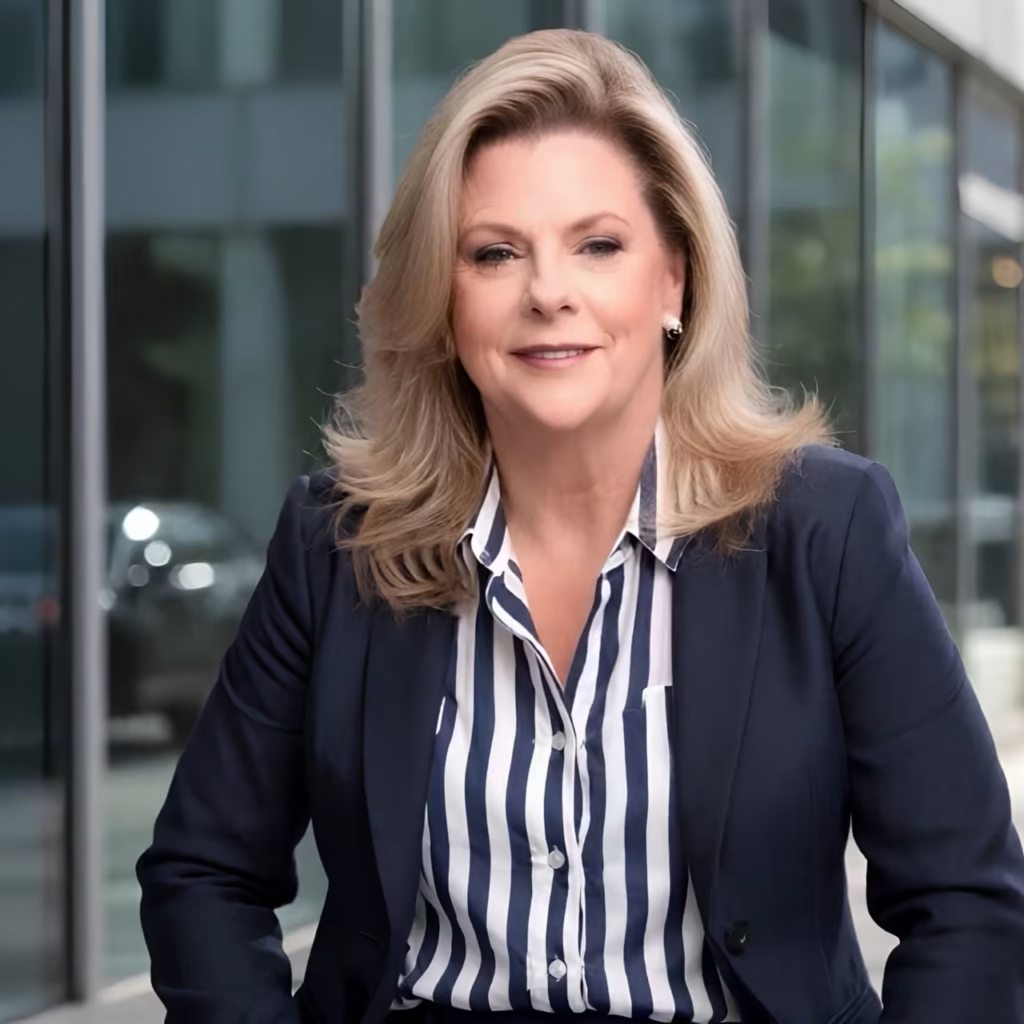
Dawn Stastny
Featured Profile - Dawn Stastny
Dawn Stastny: The Most Influential Leaders Redefining the Future of People & Culture
True leadership rises beyond grand declarations and the talks of five year blueprints, finding its purpose in the needs of the present and the courage to act. Such leaders choose to talk about people, the ones who opened doors for them, the ones they’ve had to hold accountable, the ones whose careers they quietly shaped without ever asking for credit. Dawn Stastny, SPHR, SHRM-SCP, an accomplished Chief Human Resources Officer currently bringing her expertise to In The Grey Consulting as she evaluates her next full-time executive leadership opportunity, is exactly that kind of leader. Across more than three decades in human resources, compliance, and enterprise transformation, she has built a reputation not on titles but on a single, recurring idea. Organizations are only as strong as the people inside them, and the job of a leader is to make those people stronger than they found them.
Stastny’s story is that of a young professional drawn into HR almost by accident, a career built through 14 M&A transactions, a philosophy forged in rooms where doing the right thing was neither convenient nor popular, and a present chapter defined deliberately by pause, reflection, and reinvention. It is, in her own words, a life measured “less by the positions I have held and more by what remains after I leave.”
An Unexpected Beginning: Discovering the Human Side of Business
Long before boardrooms and executive titles, Dawn Stastny’s professional instincts were shaped in a very different territory. Regulatory and compliance. It was there, poring over regulations and organizational rulebooks, that she first developed what would become her defining trait. A relentless curiosity about why organizations and the people inside them actually behave the way they do.
“Understanding the rules was important,” she reflects, “but understanding the people, motivations, and decisions behind them was where I could make the greatest difference.” That single realization redirected the entire trajectory of her career. What began as a foundation in regulatory discipline evolved into a deeper pull toward Human Resources. Not the HR of policy manuals and benefits enrollment, but HR as a strategic nerve center where business strategy, culture, risk, and execution collide.
She earned her Bachelor of Science in Business Administration with a focus on Human Resources and Organizational Development from Texas Woman’s University, laying the academic groundwork for a career that would eventually carry her through some of the most complex transformations in American manufacturing, logistics, and consumer goods. Early roles at organizations including GE, True North Communications, Affinity Logistics, and SJ Pharmaceuticals/Trophikos Nutraceuticals gave her a front row seat to vastly different industries. Advertising, logistics, pharmaceuticals, each one teaching her that no matter the sector, the fundamentals of leadership never really changed. People needed to trust their leaders. Leaders needed to earn that trust every day.
The Stellaris Group Journey: From Practice to Perspective
In 2011, rather than climbing further up someone else’s ladder, Stastny built her own. She founded and led Stellaris Group, an HR consulting firm based in Roswell, Georgia, that specialized in compliance and organizational development for small and mid sized businesses. Essentially the companies that needed the sophistication of a full HR department without the overhead of one. It was entrepreneurial, hands on work. Recruiting, employee relations, regulatory compliance, and the unglamorous but essential architecture that keeps a company out of legal trouble and its people treated fairly.
The Stellaris Group chapter did more than sharpen her technical expertise. It taught her how to operate independently, how to advise executives who didn’t always want to hear what she had to say. And how to build credibility from scratch, client by client. During this period, she also earned her SPHR (Senior Professional in Human Resources) and SHRM-SCP (SHRM Senior Certified Professional) credentials. The two most rigorous certifications in her profession. Along with recognition as a HIPAA Compliance Officer, a distinction that proved especially valuable in regulated industries like healthcare and pharmaceuticals.
It was during these years that a phrase she would return to again and again began taking shape in her thinking, collect people. Not in a transactional sense, but as an operating philosophy. Invest in others, sponsor them, challenge them, and use whatever influence you have to open doors the way others once opened them for you.

Fourteen M&A Transactions and the Making of an Executive
Stastny’s move from independent consulting into full time corporate leadership marked the beginning of the most operationally intense stretch of her career. First at Coregistics, the first of three companies that created BelPak, then into nearly a decade steering human resources and compliance for BelPak, a manufacturing and logistics driven organization across North America, in the US and Canada. This was where the theory of organizational development met the brutal, unglamorous reality of executing it at scale.
Over the course of her career, Stastny led through 14 M&A transactions, mostly sell-side rather than acquisitions, with 12 of the 14 completed under Stellaris Group. A number that, on paper, looks like a bullet point on a résumé but, in practice, represents years of sleepless nights, delicate negotiations, and the emotionally fraught work of integrating organizations with entirely different histories, cultures, and ways of working. Multisite operations, workforce integration, cultural alignment, governance overhauls, safety and compliance transformations. She moved through all of it, often simultaneously.
What set her apart in these high stakes environments wasn’t simply operational competence. It was her insistence that even the most complex transformation had to be built by building people first. She has spoken about successful organizational integrations not in terms of synergy targets or cost savings, but in terms of the leaders who emerged stronger on the other side of the merger. A subtle but important distinction that reveals how she actually measures success.
Her work during this period didn’t go unnoticed. She was named to the Chicago Titan 100, a highly selective program recognizing the city’s most accomplished CEOs and C level executives for leadership, vision, and influence. She was also honored among the Top 25 CHRO Voices in Manufacturing for 2025, a recognition she describes as particularly meaningful because it specifically celebrated workforce leadership and innovation within an industry not always known for prioritizing its people function. Food Logistics named her a 2026 Women in Supply Chain Trailblazer Award recipient, and she was included among the Top Corporate Leaders in the USA for 2026. A cluster of honors that, taken together, paint the picture of an executive whose influence extended well beyond the walls of any single company.
The Cost of Doing What Is Right
Ask Dawn Stastny about the hardest chapter of her career, and she won’t point to the acquisitions or the restructurings. The operationally complex problems, in her words, are demanding but also solvable. Instead, she points somewhere quieter and far more uncomfortable. The moments when what she believed was right collided with what was easier, more comfortable, or more expedient for others.
Stastny is candid that leadership becomes fundamentally different, and far more difficult, the moment advocating for the correct decision carries a personal cost. In those periods, she leaned on a set of principles she has carried since her earliest days in compliance. Know what you stand for, tell the truth, document the facts, protect the people who depend on your leadership, and hold onto your integrity even when the circumstances around you make that inconvenient.
She also arrived at a more nuanced understanding of resilience. One that resists the popular narrative of simply enduring indefinitely. “Sometimes resilience means recognizing when you have done everything within your authority to influence an outcome,” she explains, “and having the courage to choose a different path.” It’s a strikingly honest admission from an executive, acknowledging that knowing when to walk away can be just as much an act of leadership as knowing when to stay and fight.
Those chapters, she says, changed her. Not by hardening her, but by clarifying her. “Values are not really values until honoring them costs you something.” It’s a line that could easily read as a platitude if it weren’t clearly earned through lived experience, spoken by someone who has actually had to choose between comfort and conviction more than once.
The Three Pillars: Integrity, Courage, and Humanity
If you ask Stastny to distill her entire leadership philosophy into just three words, she doesn’t hesitate. Integrity, Courage, and Humanity.
Integrity, she explains, comes first because leadership without trust has no foundation. People watch what leaders tolerate just as closely as what they say, and credibility is built in the consistency between the two. Courage matters because leadership constantly demands difficult conversations, decisions made with imperfect information, and a willingness to stand up for people even when doing so carries risk. And humanity, perhaps the most quietly radical of the three, insists that even in a world obsessed with metrics and performance, execution is ultimately a human endeavour. Some of the most consequential moments of her career, she notes, had almost nothing to do with a business outcome and everything to do with how someone was treated in a difficult moment.
These aren’t values she reserves for the boardroom, either. She’s explicit that she has never found it useful to separate her personal ethics from her professional ones. “Who you are should not change when you walk into a boardroom.” Respect, Accountability, and Service to others round out a values framework that has remained remarkably consistent even as her titles, industries, and responsibilities have shifted dramatically over three decades.
Sponsorship Over Mentorship: A Career Built on Reaching Back
Perhaps the most distinctive thread in Stastny’s story is her insistence on the difference between mentorship and sponsorship. A distinction many executives gloss over but one she treats as central to how she leads. Mentorship, she explains, offers advice. Sponsorship puts your own credibility on the line for someone else. That difference has profoundly shaped both how she leads and why she feels such a deep obligation to advocate for others, often before they’ve fully proven they’re ready.
Her inspirations reflect this same throughline. She draws energy from people who use whatever influence or position they hold to make life better for someone else. Frequently without recognition, and sometimes at real personal cost. She speaks with particular warmth about the mentors and leaders who challenged her thinking and opened doors for her long before she saw the same potential in herself.
Closer to home, she cites her daughter as one of her most persistent sources of inspiration, watching the next generation find its own voice, define success on its own terms, and enter the workforce with entirely different expectations about leadership and work life integration. It’s a reminder, she says, that what leaders model often teaches far more powerfully than anything they say aloud.
And running through nearly every conversation about purpose is her admiration for Ruth Bader Ginsburg, whose stated wish to use whatever talent she had to do her work well and help repair the tears in society has become something close to a personal compass for Stastny as she’s moved deeper into her career. It’s a principle she returns to often. Success isn’t about how high you climb, but what you do with the position once you’ve reached it.

A Deliberate Pause: Writing the Next Chapter on Her Own Terms
After nearly a decade leading one of the most consequential chapters of her career, Stastny made a deliberate choice: to create space before deciding what comes next.
She stepped away between major cycles of acquisition and integration with no interest in simply moving from one executive seat to another. After three decades of building, transforming, integrating, and leading organizations, she has earned the perspective to know that the next opportunity should be chosen for its potential for impact, not simply its title.
For Stastny, this pause is not an absence from the work. It is an intentional period of selectivity.
Her career has been built around creating organizational capability that lasts: developing stronger leaders, building scalable organizations, aligning cultures, navigating complex M&A and transformation, and creating the infrastructure businesses need to perform through growth and disruption. The question now is where that experience can create the greatest meaningful and lasting impact.
That requires being thoughtful about fit. The right opportunity is not defined solely by scope, compensation, or title. It is an organization with meaningful work to do, leaders willing to engage in it, and a mandate broad enough to turn strategy into execution. It is a place where she can build capability, develop people, challenge thinking, strengthen the enterprise, and ultimately leave the organization better equipped to succeed long after she is gone.
Her timing is particularly relevant. Artificial intelligence, changing workforce expectations, demographic shifts, and continued economic uncertainty are reshaping how organizations operate. Stastny believes human capital leadership has a significant responsibility in this environment: helping businesses navigate transformative change without losing sight of the humanity underneath it.
Technology can accelerate work, improve processes, and fundamentally change how organizations operate. But leadership, judgment, trust, accountability, and culture remain irreducibly human.
Stastny is particularly drawn to organizations where the people agenda is understood as a business agenda, not a support function adjacent to strategy. Where the CHRO is expected not simply to support the strategy, but to help author it, challenge it, and build the organizational capability required to execute it.
For Stastny, this next chapter is therefore not a race to the next executive title.
It is a deliberate search for the right place to invest the experience of an entire career, and an opportunity to do work significant enough that its impact remains after she does.
Legacy as a Living Practice, Not a Retirement Age Reflection
What ultimately separates Dawn Stastny from many executives at a similar career altitude is how early, and how insistently, she thinks about legacy. Most leaders treat it as a question for the twilight of a career. Stastny treats it as a daily operating principle.
“Careers move quickly,” she says. “Titles change, awards gather dust, and eventually someone else sits in your chair.” What endures, in her view, isn’t the résumé, it’s the people a leader has developed, the leaders they’ve sponsored, and whether the organizations they touched became more capable because they were there. Awards, she’s quick to point out despite her own considerable collection of them, recognize a moment. Legacy is what remains after the moment has passed.
Her advice to aspiring leaders reflects this same conviction, distilled into something close to a personal code. Build competence and know your business, but stay curious enough to keep learning and humble enough to admit when you’re wrong. Find people who will tell you the truth rather than what you want to hear. Protect your integrity fiercely, because the moments when doing the right thing is inconvenient will reveal far more about your character than the easy ones ever could. And never mistake a title for leadership. Authority may come with a position, but trust and credibility have to be earned continuously.
Her closing thought, the one she returns to most often when asked what she hopes people take from her journey, isn’t really a question about success at all. It’s a question about impact. Not “How successful was I?” but “Who is better because I was here?”
For a leader who has spent thirty years moving through boardrooms, acquisitions, and compliance frameworks, it’s a strikingly simple standard. But for Dawn Stastny, it has always been the only one that mattered. And it’s the one she is now building the next chapter of her career around, deliberately, on her own terms, one person at a time.