
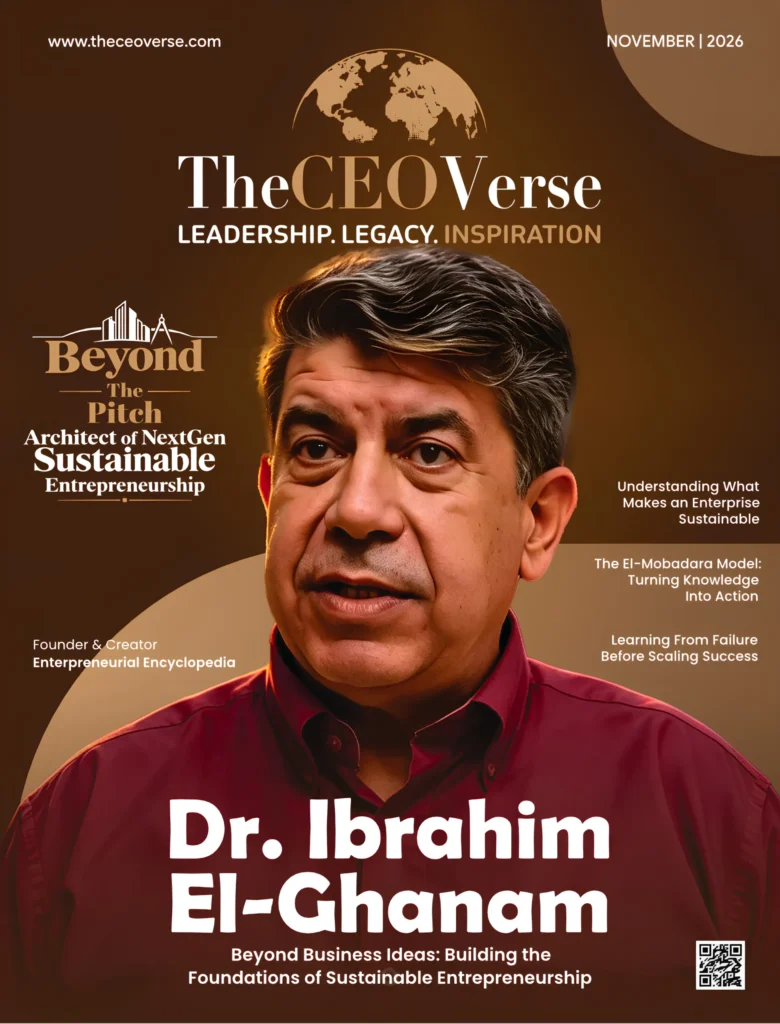
TheCEOVerse • Digital Edition
“Beyond the Pitch: Architect of NextGen Sustainable Entrepreneurship”
Cover story
Dr. Ibrahim El-Ghanam
Featured Profile - Dr. Ibrahim El-Ghanam
Beyond Business Ideas: Building the Foundations of Sustainable Entrepreneurship
A compelling business idea may be where entrepreneurship begins, but it is rarely what determines whether an enterprise survives. Sustainable businesses require much more: an understanding of local markets, practical operating systems, capable leadership, financial discipline and the ability to adapt as circumstances change. Dr. Ibrahim El-Ghanam has spent more than four decades exploring these foundations, helping entrepreneurs move beyond promising concepts towards enterprises capable of creating lasting value.
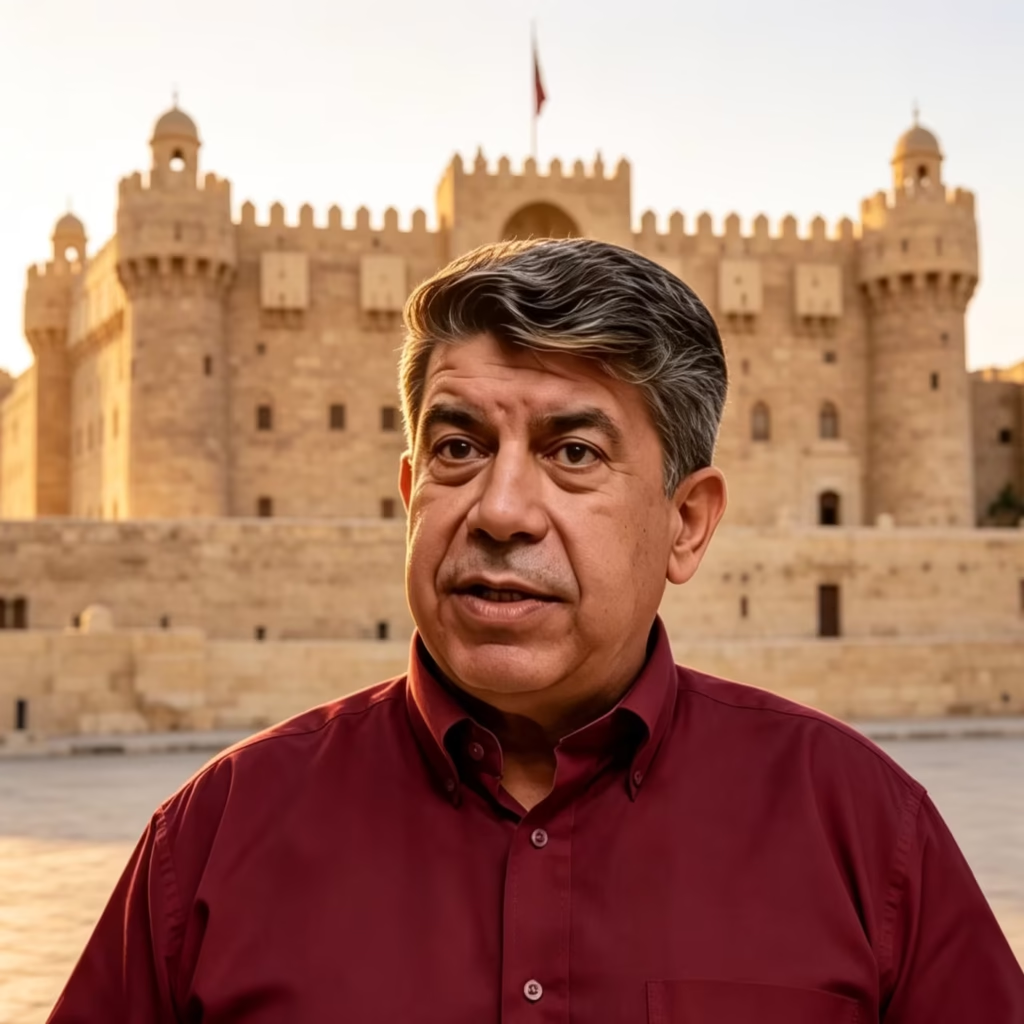
Born in Cairo in 1962, El-Ghanam began his professional journey in architecture during a period of significant development across Egypt. The country’s expanding cities, infrastructure and public facilities attracted him to a profession built around creating structures that would serve communities for generations. His architectural education introduced him to principles that would remain relevant throughout his career: establish strong foundations, plan carefully and understand the environment in which something is being built.
As his professional experience grew, however, he began recognising that the same principles applied beyond physical construction. He encountered aspiring entrepreneurs with promising ideas and considerable determination, yet many struggled to establish sustainable businesses. Their difficulties often had little to do with ambition. They lacked practical guidance, appropriate systems and business frameworks that reflected the economic and cultural realities around them.
This realisation gradually redirected his career towards entrepreneurship development, leadership education and institutional advisory work.
Over four decades, El-Ghanam has served as an Associate Professor at Al Ahram Canadian University, Senior Consultant to the Egyptian Banking Institute and the Central Bank of Egypt, and advisor to government agencies, universities, financial institutions and international development organisations. His work has involved thousands of entrepreneurs, helping them transform ideas into viable enterprises while learning from the experiences of the communities in which they operate.
Today, through Reyada Academy for Leadership & Entrepreneurship Development, he continues to advance a broader vision: making practical entrepreneurial knowledge accessible and equipping people with the capabilities to build businesses that can endure.
Understanding What Makes an Enterprise Sustainable
For El-Ghanam, the development of a business begins long before expansion, investment or market recognition. It starts with understanding the conditions in which an entrepreneur must operate.
One of the most influential experiences in his professional journey came when he introduced internationally respected business frameworks from Europe and North America into entrepreneurship programmes across Egypt. These models were comprehensive and supported by established methodologies, but their application did not consistently produce the expected results.
The underlying issue was their limited connection to local realities. They had been designed for business environments with different financial systems, institutional structures and commercial practices. They did not adequately account for informal business networks, local payment arrangements, limited access to capital or the importance of personal relationships in commercial decision-making.
Rather than expecting entrepreneurs to adapt themselves to imported frameworks, El-Ghanam began investigating how successful businesses actually developed within their own environments.
His search for answers took him beyond formal classrooms and conference rooms. He spent months listening to entrepreneurs in workshops, rural communities, local markets and home-based enterprises across Upper Egypt.
He encountered weavers preserving traditional craftsmanship while reaching new customers through digital platforms, farmers adapting established agricultural practices to changing environmental conditions and young entrepreneurs managing businesses through little more than a smartphone and determination.
These experiences reshaped his approach. Global knowledge remained valuable, but it needed to be interpreted through the circumstances of the people expected to use it. Entrepreneurship development could not succeed through replication alone. It required an understanding of local needs, available resources and practical opportunities.
This became one of the defining ideas behind his work: sustainable enterprises are built by connecting sound business knowledge with the realities of the market.
The El-Mobadara Model: Turning Knowledge Into Action
Years of observing businesses and working alongside entrepreneurs led El-Ghanam to develop a framework centred on relevance rather than replication.
The El-Mobadara Model provides a four-phase approach to entrepreneurship development: assessment, adaptation, implementation and continuous learning.
Its purpose is not to prescribe a universal business formula. Instead, it encourages entrepreneurs to understand their starting conditions, assess their resources and develop strategies suited to their economic, cultural and institutional environments.
This distinction is important. A business model that performs well in one market may require considerable adjustment before it can succeed elsewhere. The El-Mobadara approach places that evaluation at the beginning of the development process rather than treating adaptation as an afterthought.
Over the years, the framework has been adopted by government agencies, commercial banks, universities and international development organisations, supporting the development of thousands of small and medium-sized enterprises across Egypt.
Its wider significance lies in connecting entrepreneurial education with practical implementation. Rather than measuring the value of a programme by the volume of information delivered, the approach places importance on whether entrepreneurs can apply what they learn to improve their businesses.
For El-Ghanam, the real achievement of an entrepreneurship framework is its usefulness beyond the training environment. Knowledge must translate into better decisions, stronger systems and enterprises capable of responding to uncertainty.

The Human Foundation of Next-Generation Entrepreneurship
Sustainable entrepreneurship is not simply a matter of financial performance or operational efficiency. It also depends on the people responsible for making decisions, managing uncertainty and maintaining the organisation’s direction.
El-Ghanam has long explored the relationship between entrepreneurial performance and the wellbeing of business leaders. His work considers the influence of decision fatigue, burnout, chronic stress and leadership resilience on the ability to manage an enterprise.
Entrepreneurs frequently carry responsibilities that extend across finance, operations, employees, customers and future planning. Without attention to their physical, emotional and mental wellbeing, even promising businesses can become vulnerable to poor decisions and unsustainable working patterns.
His programmes therefore recognise that business development must consider the individual alongside the organisation.
This perspective adds an important dimension to the future of entrepreneurship. Building a resilient enterprise requires more than developing a viable commercial model. It also means cultivating leaders who can make sound decisions, adapt under pressure and maintain the discipline needed to guide their organisations over time.
Alongside this work, El-Ghanam continues developing an open-access knowledge platform intended to capture more than four decades of practical experience. It examines not only successful business journeys but also failures, recurring mistakes and the factors that influence whether enterprises survive difficult periods.
By documenting both outcomes, he hopes to make practical knowledge more accessible to entrepreneurs who may otherwise have limited opportunities to learn from experienced practitioners.
Leadership That Multiplies Capability
El-Ghanam does not define leadership through authority or the ability to hold the most expertise in an organisation. He sees its greatest value in helping other people become more capable.
As he often explains:
“Leadership is not about being the smartest person in the room. It is about helping everyone else become smarter.”
This belief has influenced the development of the El-Mobadara Model and the work of Reyada Academy for Leadership & Entrepreneurship Development.
The framework evolved through continuous dialogue with entrepreneurs, educators, financial institutions and community organisations. Ideas were refined through practical application, tested in different environments and improved through feedback from the people expected to use them.
The same philosophy informs the Academy’s investment in trainers and institutional leaders. More than 250 master trainers and institutional leaders have completed advanced development programmes under El-Ghanam’s guidance. Many now lead entrepreneurship and leadership initiatives within universities, financial institutions, government agencies and development organisations, adapting the approaches to their own communities.
This creates a multiplier effect. Instead of concentrating expertise within one institution or relying on one individual, the work develops people who can continue sharing knowledge and strengthening entrepreneurial capabilities independently.
The Academy’s knowledge initiatives have also attracted educators, practitioners and volunteers from more than 20 countries. Their involvement reflects a shared belief that useful entrepreneurial knowledge should not remain restricted to a small group of institutions or individuals.
For El-Ghanam, leadership becomes more meaningful when its impact continues through the people it develops.
Learning From Failure Before Scaling Success
One of the most important lessons in El-Ghanam’s career came from a programme that appeared professionally complete.
It was academically rigorous, carefully structured and based on internationally recognised methodologies. Yet participation declined, implementation remained limited and many participants struggled to apply the knowledge they had received.
The experience revealed a gap between the programme’s design and the actual needs of entrepreneurs. It had been developed around what experts believed business owners should learn rather than the challenges they were experiencing in their everyday operations.
That realisation changed the way he approached entrepreneurship education.
A theoretically impressive framework could not create meaningful results if its intended users found it difficult to implement. A simpler approach, grounded in practical realities, could be far more effective if entrepreneurs could apply it consistently.
The experience established a principle that continues to guide his work: practical relevance will always outperform theoretical perfection.
It also influenced his understanding of sustainable growth. Expansion should not be treated as an achievement in itself. Businesses and development initiatives must have the systems, leadership and resources necessary to maintain the value they create.
El-Ghanam captures this philosophy through a belief that has become central to his work:
“You cannot save everyone. But you can build systems that help people save themselves.”
The objective is to strengthen capability rather than create dependence. Entrepreneurs should receive the knowledge, practical tools and confidence needed to recognise problems, make informed decisions and respond to future challenges independently.
Integrity and the Value of Experience
Although his career has crossed architecture, entrepreneurship and education, El-Ghanam traces one of his most important values to the influence of his father.
He often recalls a lesson that has remained with him throughout his professional life:
“Integrity is the only asset that never depreciates.”
For him, integrity is the foundation of credibility. Honesty, transparency and consistency influence the quality of professional relationships and the trust organisations are able to establish.
Commercial performance may change with market conditions, but the importance of trust remains. He believes that success achieved without integrity has little lasting value.
His understanding of entrepreneurship has also been shaped by the thousands of business owners he has encountered across Egypt. He considers many of them his greatest teachers.
He remembers a weaver in Luxor who strengthened an entire community by choosing cooperation over competition, a farmer in Sohag who transformed exhausted land through persistence and innovation, and a young entrepreneur in Minya who chose to create opportunities locally rather than leave in search of them elsewhere.
These experiences reinforced his belief that useful knowledge often comes from people whose challenges are not represented in conventional textbooks.
He has also learned from enterprises that disappeared quietly. Many entrepreneurs possessed commitment and determination but lacked timely guidance, practical knowledge or someone who could help them identify problems before they became irreversible.
Understanding those experiences has become an important part of his approach to building stronger entrepreneurial systems.
Building Businesses Around Meaningful Problems
When advising aspiring entrepreneurs, El-Ghanam often begins with a question that comes before business plans, investment discussions or expansion strategies:
What meaningful problem are you trying to solve?
He believes too many businesses begin with a product and only afterwards search for customers. More sustainable enterprises begin by understanding people’s needs and developing solutions that create genuine value.
As he explains:
“The market rewards businesses that solve real problems. Everything else follows.”
He also encourages entrepreneurs to distinguish between expansion and resilience. A business may increase its sales or customer base while its leadership, financial discipline and operating systems remain underdeveloped. Such growth can create greater exposure to risk rather than long-term stability.
For this reason, he emphasises investment in the foundations that are not always immediately visible: integrity, sound decision-making, capable teams, personal wellbeing and continuous learning.
Studying failure is equally important. Successful outcomes can reveal what worked in a particular situation, while unsuccessful ventures often expose weaknesses that future entrepreneurs should learn to recognise.
His advice also extends to the relationship between global ambition and local understanding. International business practices can provide valuable insights, but copying another organisation’s journey rarely produces sustainable results.
Entrepreneurs must understand the market, culture, available resources and opportunities surrounding their own businesses. The strongest strategies are those that turn knowledge into solutions that work within those conditions.
Building Knowledge Beyond Commercial Boundaries
A significant part of El-Ghanam’s current work is dedicated to making practical entrepreneurial knowledge available beyond conventional paid training environments.
His open-access knowledge initiative has been developed over several years with almost no external funding, no marketing budget and no paid team. It has relied on volunteer contributions, disciplined effort and a strong commitment to the underlying purpose.
The initiative has required work during evenings, weekends and every available opportunity. Rather than allowing limited resources to determine its value, El-Ghanam has focused on maintaining clear priorities and ensuring that every contribution serves a practical purpose.
Its guiding question is simple: will this genuinely help entrepreneurs build stronger and more sustainable businesses?
The platform is intended to preserve and share lessons from decades of work, including business frameworks, practical experiences and the mistakes that often remain undocumented.
For El-Ghanam, knowledge should not be restricted by commercial boundaries when it can help people develop the confidence and capabilities to improve their circumstances.
The involvement of educators, practitioners and volunteers from more than 20 countries also reflects the potential of collaboration in expanding access to useful information.
This approach is consistent with his broader vision of entrepreneurship development: strengthen people, share knowledge and create systems that can continue delivering value without depending on one individual or institution.
Recognition as a Platform for Wider Impact
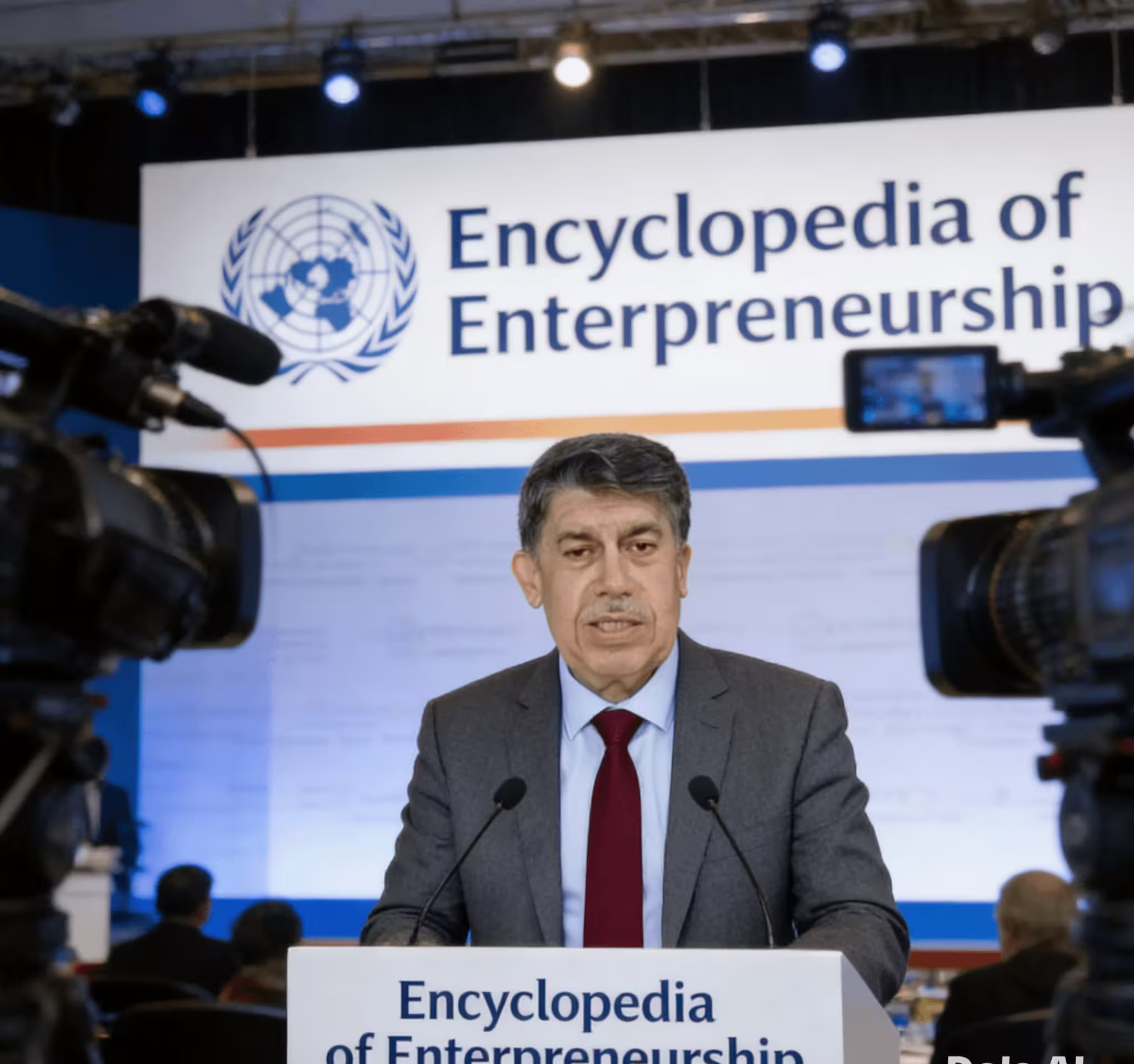
El-Ghanam regards professional recognition as an opportunity to amplify ideas rather than a final destination.
For him, the most important messages remain consistent: entrepreneurship should be practical rather than purely theoretical, leadership should empower rather than control, and knowledge should be shared rather than restricted.
A wider platform can encourage educators, researchers, practitioners and business leaders to contribute their experiences, strengthen existing frameworks and expand opportunities for future entrepreneurs.
He also sees recognition as a responsibility. Greater visibility should help bring attention to meaningful work, inspire collaboration and encourage people to consider how their own knowledge can benefit others.
His focus remains on improving resources, documenting practical experience and supporting the people who can use that knowledge to build stronger enterprises.
The Next Generation Will Build on Strong Foundations
Dr. Ibrahim El-Ghanam’s professional journey began with a belief in the importance of strong physical foundations. Over time, that belief developed into a broader commitment to building the foundations of sustainable entrepreneurship.
Through the El-Mobadara Model, Reyada Academy and his open-access knowledge initiatives, he has worked to connect business education with local realities, strengthen leadership capabilities and make practical knowledge more accessible.
His approach places equal importance on the enterprise and the person leading it. A viable business idea needs more than a compelling pitch. It requires a clear understanding of the problem being addressed, an appropriate operating model, disciplined leadership and the resilience to adapt as circumstances change.
His vision of next-generation entrepreneurship is therefore not defined by rapid expansion or the pursuit of recognition. It is built around enterprises that solve meaningful problems, leaders who develop other leaders and knowledge systems that allow communities to become more independent.
More than four decades after moving beyond architecture as his primary profession, El-Ghanam continues to see himself as a builder. The materials have changed from concrete and steel to people, institutions, knowledge and ideas.
Yet his purpose remains consistent: to create strong foundations that allow others to build something lasting.
For him, the most meaningful legibrahiacy is not an organisation that depends on its founder, but a generation of entrepreneurs equipped to create, lead and sustain businesses long after the original guidance has been given.