TheCEOVerse • Digital Edition
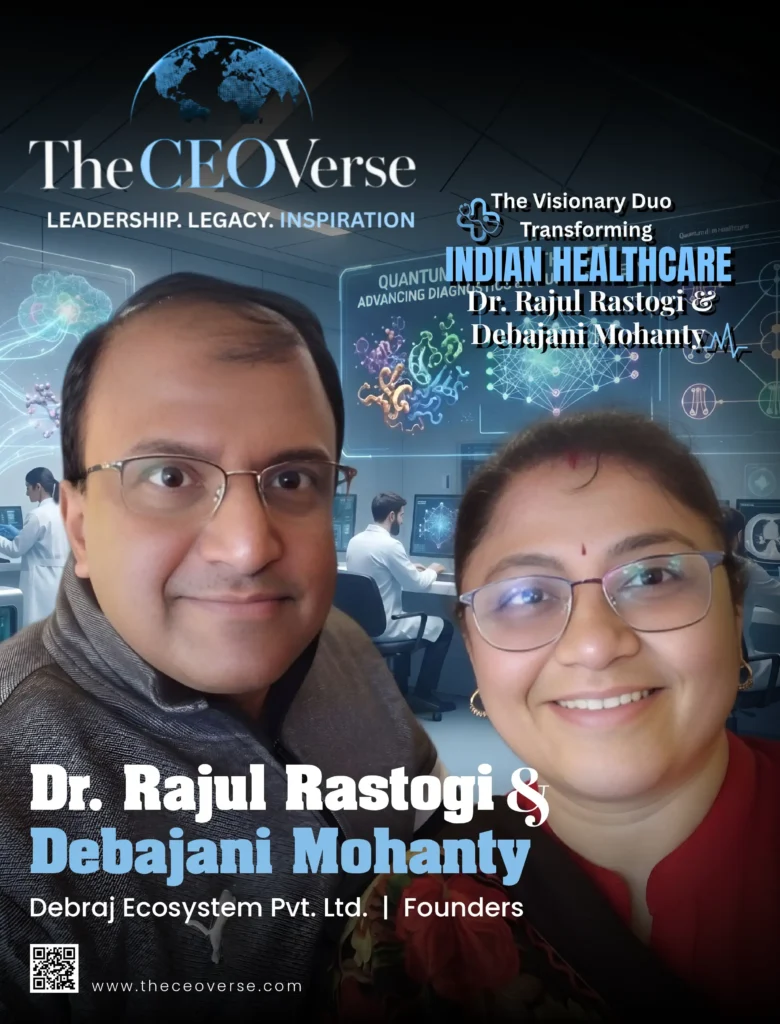
“The Visionary Duo Transforming Indian Healthcare: Dr. Rajul Rastogi & Debajani Mohanty”
Cover story
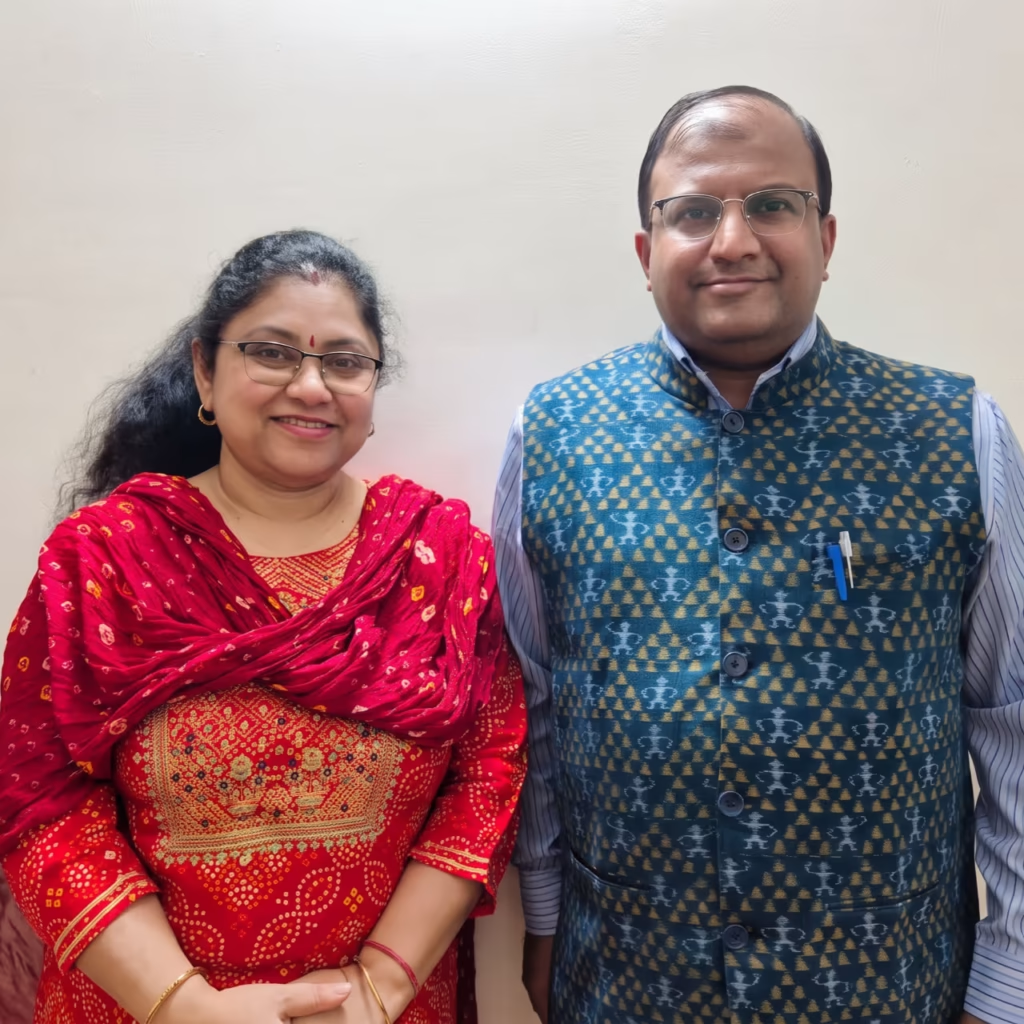
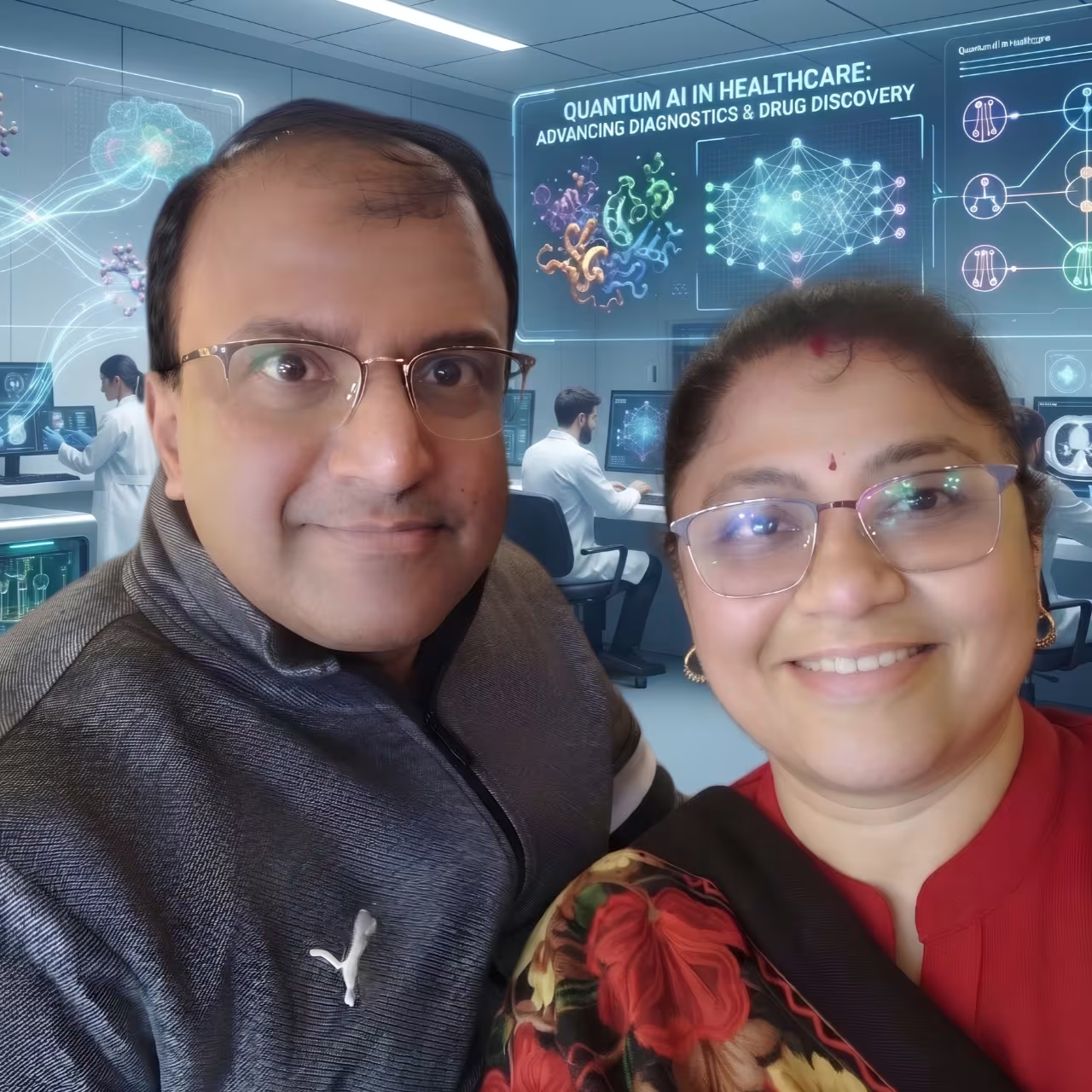
Dr. Rajul Rastogi and Mrs. Debajani Mohanty
Featured Profile - Dr. Rajul Rastogi and Mrs. Debajani Mohanty
The Renaissance of Indian Medicine: How Dr. Rajul Rastogi and Debajani Mohanty Are Rebuilding Indian Healthcare
A radiologist who refused to stay behind a screen and a blockchain pioneer who chose to rewrite her own code. Together, they are proving that the next era of medicine is being forged where human grit meets technological vision.
A City of Brassware Becomes a Cradle of Deep Tech
Moradabad is known the world over as India’s “Brass City”. A town whose economy has, for generations, run on the patient hammering of metal into art. It is an unlikely address for a duo betting its future on quantum computing. And yet, tucked inside the campus of Teerthanker Mahaveer Medical College & Research Centre (TMMC&RC), that is precisely where Prof. Dr. Rajul Rastogi has spent the better part of two decades. Not shaping brass, but shaping the way India looks inside the human body.
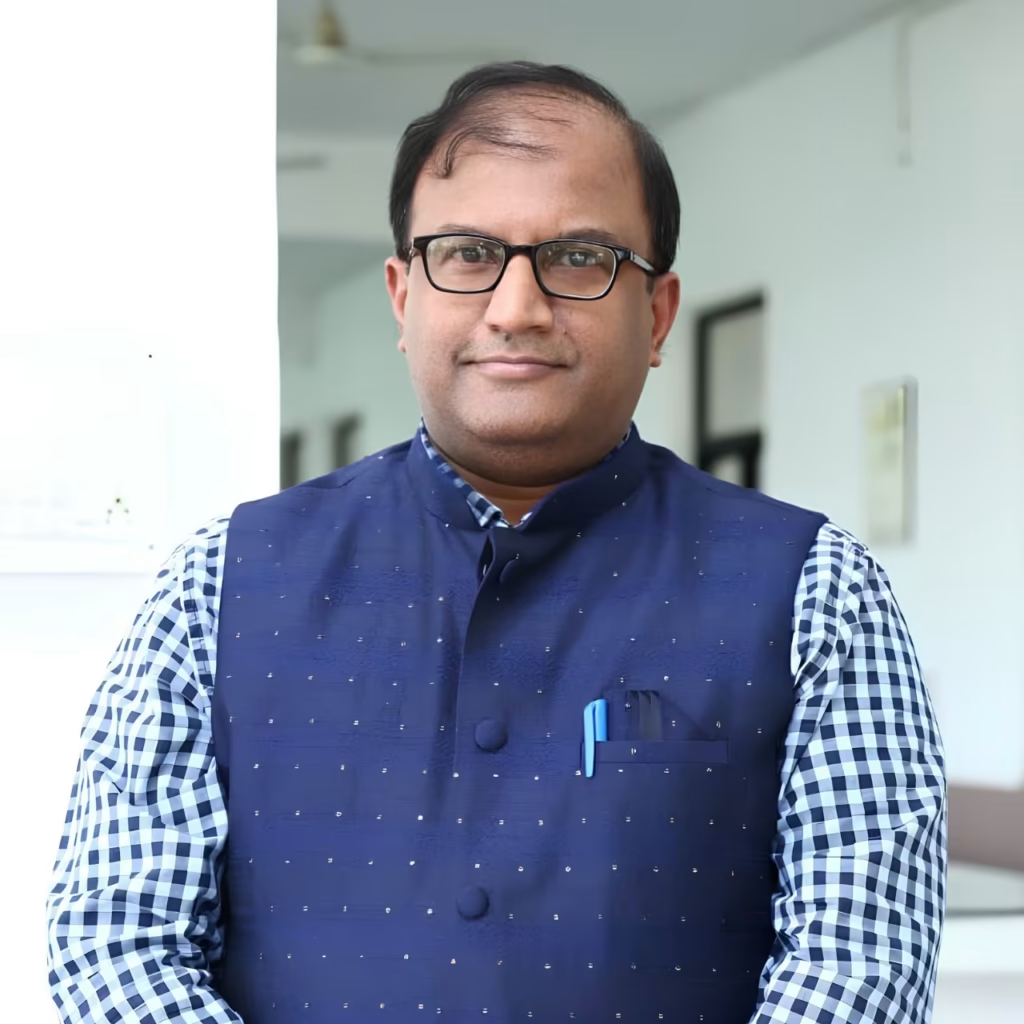
For more than twenty five years, Dr. Rastogi has worn the white coat of a radiologist, reading CT scans, MRIs, and ultrasounds with the kind of patience that only comes from having done it thousands of times over. Today he holds the title of Professor in the Department of Radiodiagnosis at TMMC&RC, where he also chairs the College Research Committee and serves as the institution’s Nodal Officer for Artificial Intelligence in Healthcare and Medical Education. But numbers on a resume rarely tell the real story. The real story begins somewhere far less glamorous. In the sheer, grinding repetition of a radiologist’s daily grind.
“The immense amount of repetitive and redundant work that needs to be done by a radiologist” is how Dr. Rastogi himself describes the spark. Every scan he read, every report he dictated, carried a quiet frustration. Not with the work itself, but with the absence of tools built for India. Devices and software designed in Boston or Berlin rarely accounted for the sheer scale, the diversity, or the resource constraints of Indian healthcare. That gap between what existed and what was needed became the seed of everything that followed.
From Reading Scans to Rewriting the Rulebook
Curiosity, for Dr. Rastogi, was never content to stay curious. He enrolled in specialised training in AI in Healthcare from IIIT Hyderabad and Johns Hopkins University in the United States. A decision that pulled him out of the comfortable rhythm of clinical practice and into an entirely new vocabulary of algorithms, datasets, and neural networks. He began showing up at national and international platforms not merely as a radiologist presenting case studies, but as an advocate for something larger. A bridge between doctors, who understand disease, and engineers, who understand systems.
It is a distinct kind of courage, choosing to become a beginner again in your forties, after two decades of expertise. But Dr. Rastogi’s instinct was less about reinvention and more about translation. He didn’t want to abandon radiology. He wanted radiology to catch up with what technology had already made possible elsewhere in the world. And to do it on Indian terms, for Indian patients, within an Indian healthcare system straining under some of the widest doctor to patient ratios on the planet.
That instinct needed a partner fluent in a language Dr. Rastogi was only beginning to learn. He found one much closer to home than any conference stage, in his own wife.
The Architect Who Built Banks Before She Built Bridges to Medicine
Long before Debraj Ecosystem existed as a company, Debajani Mohanty had already built a formidable career of her own, one that had nothing to do with hospitals or diagnostics. A solution architect by training and instinct, she spent close to two decades in enterprise technology, rising through organisations like NIIT Technologies, where she built scalable B2B and B2C platforms across the travel and BFSI sectors. She later became Chief Architect at EarthId, working on self sovereign digital identity. A field that sits at the intersection of privacy, trust, and emerging technology.
It was blockchain, though, that first turned Debajani into a name recognised far beyond corporate India. She authored five Amazon bestseller books on blockchain technology, several of which were translated into German and Chinese to reach audiences well outside the English speaking world. Her expertise earned her recognition as one of India’s Top 30 Blockchain Influencers, a place on lists of the Top 100 Global Social Influencers, and acknowledgment as one of India’s Blockchain Catalysts. She has addressed audiences at IIT Madras, at international fintech festivals in Europe, and at innovation summits where she was as comfortable discussing central bank digital currencies as she was mentoring young engineers.
By any measure, this was already a wholesome and fulfilling career. The kind most professionals would be content to simply extend for another twenty years. Instead, as her husband’s world tilted increasingly toward AI driven radiology, Debajani made her own quiet pivot. She began cross training in Quantum AI, a field still considered futuristic even among technologists, drawn by the same instinct that had once pulled her toward blockchain when few in India understood the word. The sense that something transformative was coming, and that it was better to be early than to be ready.
Two Disciplines, One Dinner Table
What happened next reads less like a corporate origin story and more like the plot of a very uniquely kindred and harmonious marriage. One where the conversation over dinner might just as easily turn to differential diagnoses as to qubits and quantum entanglement. As Dr. Rastogi’s focus sharpened around AI applications in radiology, and Debajani’s expertise deepened in quantum computing, the couple began to see something neither had been looking for individually. A genuine convergence.
Quantum AI, they realised, was not just a buzzword stitched onto artificial intelligence for effect. Its computational power. The ability to process massive, complex, high resolution medical datasets with a speed that classical computing simply cannot match, carried real implications for medicine. It could, in theory, compress drug discovery timelines from years into days. It could sharpen early diagnostic accuracy for diseases like cancer, where every week of delay can alter outcomes. It could, eventually, help build the kind of precision medicine that tailors treatment to a person’s individual physiology rather than to population averages.
This was the moment the two career paths, one built on decades inside hospital corridors, the other on decades inside server rooms and boardrooms, stopped running parallel and began to intersect. Out of that intersection came Debraj Ecosystem Pvt. Ltd., a name deliberately blended from “Deb” and “Raj“, Debajani and Rajul, a company named, quite literally, after the marriage that built it.
The Curriculum Nobody Taught Them
Ask most founders what surprised them most about starting a company, and the answer rarely involves the product. For Dr. Rastogi and Debajani, it was the sheer administrative unfamiliarity of entrepreneurship itself. Medical school teaches you to read a chest X ray. Engineering teaches you to architect a system. Neither teaches you what a chartered accountant means when they start discussing minimum statutory requirements, compliance structures, or the fine print of company registration. That early phase, being unglamorous, procedural, often frustrating, was its own quiet trial by fire, one that every founder eventually has to survive before their actual idea gets a chance to breathe.
Once Debraj Ecosystem was formally registered, the real obstacles began to surface. And they were formidable enough to have stopped a less committed team in its tracks.
The cost of pioneering. Quantum hardware remains prohibitively expensive, forcing the fledgling company to rely on advanced simulated environments rather than physical quantum machines for its initial development and testing. Building the future on virtual infrastructure because the real infrastructure simply wasn’t affordable yet.
A talent desert. India’s ecosystem, they discovered, suffers from a severe shortage of interdisciplinary specialists capable of bridging the abstract mathematics of quantum physics with the practical engineering of artificial intelligence frameworks. The people who could do both were vanishingly rare.
A profession reluctant to change. Perhaps the most delicate challenge came from within medicine itself. Many doctors, Dr. Rastogi found, were simply not ready to engage with emerging technology. Not out of hostility, but out of an honest scarcity of time and a lack of exposure to futuristic tools that seemed disconnected from the daily reality of patient care.
Capital that feared the unknown. And then there were the investors. Cautious by nature, doubly so when the technology in question was as experimental and unproven, in commercial terms, as quantum computing. Securing early stage capital meant navigating rooms full of scepticism, again and again.
Turning Obstacles Into Architecture
Faced with four formidable walls at once, the couple didn’t wait for outside rescue. They built their way around each one, using exactly the resources they already had.
With no army of quantum specialists to hire, Debajani effectively became the specialist herself, mastering quantum AI architecture from the ground up to drive the company’s technical roadmap personally. Where the market lacked clinically grounded solutions, Dr. Rastogi leaned on his decades inside hospitals to partner directly with visionary medical specialists across disciplines. Clinicians who could validate use cases in real time and ensure that whatever the engineers built actually mattered at a patient’s bedside. And where most quantum AI ventures struggle to access the sensitive, high quality datasets that machine learning models are hungry for, Dr. Rastogi’s professional medical network and clinical relationships opened doors. Always, the couple is careful to note, within strict ethical guidelines and data privacy protections.
It is this clinician led model that Debraj Ecosystem considers its sharpest point of differentiation. Plenty of companies are experimenting with quantum AI in healthcare, but many, in Dr. Rastogi’s assessment, remain disconnected from the people who actually practice medicine. Solving elegant technical problems that don’t map cleanly onto the messy, human realities of an overstretched health system. Debraj Ecosystem’s answer was to flip the sequence. Let doctors define the problems, and let engineers build the solutions under their supervision, rather than the other way around.
The Lesson Written in Hindsight
Every founder eventually collides with the impulse of doing too much. For Dr. Rastogi and Debajani, that lesson arrived early and stayed with them. Faced with high tool costs, scarce expertise, and investor hesitation, the temptation was to chase every promising application of quantum AI across the vast landscape of medicine simultaneously. Creative resourcefulness and cross disciplinary teamwork got them through the toughest stretches But the sharper insight, the one that reshaped how they now build, was learning to concentrate on a small number of high feasibility use cases within their core domain rather than spreading themselves thin across an ocean of possibilities. It is the kind of discipline that sounds obvious in hindsight and is almost impossible to practice in the heat of early stage ambition.
The Mentors Who Shaped the Man Behind the Microscope
No physician builds a career in isolation, and Dr. Rastogi is quick to credit the giants whose shadows he was fortunate to stand under. He speaks with particular reverence of Prof. Dr. Satish Kumar Bhargava, a B.C. Roy Award recipient, one of India’s highest honours in medicine, and Dr. Harsh Mahajan, a Padma Shri awardee, both towering figures in Indian radiology whose mentorship, he says, profoundly shaped his professional philosophy and redirected his focus toward impactful innovation rather than routine practice.
But mentorship, in Dr. Rastogi’s telling, flows in more than one direction. He speaks with equal warmth about the postgraduate residents, PhD scholars, academic deans, and incubator heads who backed his vision when it was still just an idea worth entertaining. And at the centre of it all, he reserves his most personal acknowledgment for Debajani. The woman who, in his words, stood by his endeavour through every technological limitation, never once wavering in her trust.
A Marriage That Doubles as a Feedback Loop
If most startups struggle to align their technical team with their clinical advisors, Debraj Ecosystem solved that problem by design, simply because its two co founders live inside both worlds simultaneously. Dr. Rastogi approaches every challenge as a radiologist first, instinctively filtering ideas through the lens of clinical utility. Debajani approaches the same challenge as an architect, translating those clinical instincts into quantum and AI systems capable of executing them. The result is a feedback loop that most companies spend years and considerable capital trying to engineer artificially. Theirs simply exists at the breakfast table.
It’s a partnership that extends outward too, drawing in specialists across multiple clinical disciplines who have chosen to lend their expertise to the mission, reinforcing the belief that no single innovator, however brilliant, builds the future of medicine alone.
Engineering the Future, One Problem at a Time
If there is a single phrase that captures Dr. Rastogi’s philosophy, it is one he offers almost as a mantra. The best way to create the future of medicine is to engineer it. His advice to the next generation isn’t abstract inspiration, it’s a call to action rooted in India’s particular structural challenges. The country, he argues, possesses immense intellectual capital, advanced infrastructure, and world class medical expertise. What it lacks is a simple, deliberate habit. Doctors taking the time to document the problems and bottlenecks they encounter daily, so that engineers can build real solutions under their supervision.
The stakes, in his view, are not abstract either. India currently manages an extraordinarily thin ratio of medical specialists to patients, figures that put roughly one radiologist for every 100,000 citizens, and one neurosurgeon for every 370,000. Multiply that scarcity across a billion plus population, and the operational strain on doctors becomes almost impossible to overstate. For a nation aspiring to developed status within this generation’s lifetime, Dr. Rastogi believes modernising healthcare infrastructure isn’t optional. It’s foundational. Automating routine, repetitive processes so human expertise can focus where it matters most. His broader ambition is unambiguous. A future where Indian patients no longer need to travel to Singapore, Dubai, the United States, or the United Kingdom to access world class specialised care, because that care already exists, at home.
Beyond the Company: A Second Mission Takes Shape
As Debraj Ecosystem matures past its earliest, most fragile years, the couple’s ambitions are already reaching beyond the walls of the company itself. Their emerging initiative, Bhavnik Mentorial Academy, reflects a concern that runs deeper than technology. It’s about the emotional wellbeing of India’s next generation of professionals.
Every year, a staggering number of students face devastating setbacks in hyper competitive entrance examinations like NEET and JEE. The gateways to medical and engineering careers that, for many families, represent the only acceptable measure of success. The scarcity of seats relative to the number of aspirants creates a pressure cooker environment, one that too often results in serious mental health crises and, tragically, in loss of life. Many of these students, the couple observes, remain unaware that alternative, equally rewarding career pathways even exist. Bhavnik Mentorial Academy is envisioned as an answer to that gap. A structured space for mentorship, for helping young people rebuild direction after a single setback, and for cultivating what Dr. Rastogi calls a self dependent regimen for improving the emotional quotient of professionals navigating high pressure fields.
What They Want the World to Remember
For all the technical language surrounding quantum architectures and AI driven diagnostics, the philosophy Dr. Rastogi and Debajani Mohanty return to again and again is disarmingly human. Sit quietly with yourself sometimes, Dr. Rastogi advises. Think about what you can give back to society, not just what you can extract from it. He borrows an old idea and reshapes it into something personal. Nothing is heavy to those who have wings, and if you can run fast with genuine effort, you will eventually learn to fly. Provided you carry the blessings of the people around you. The best way to empower yourself, in his words, is to empower others.
It’s a sentiment that could easily read as sentimental if it weren’t backstopped by two decades of clinical service, hundreds of published research papers, fellowships earned through genuine academic rigour, and a company built quite literally from the fusion of two careers into one shared purpose. Dr. Rajul Rastogi built his authority scan by scan, patient by patient, inside a system that rarely rewards patience. Debajani Mohanty built hers system by system, book by book, inside industries that moved faster than most people could track. Together, under the banner of Debraj Ecosystem, they are betting that the next major leap in Indian healthcare won’t come from a single breakthrough discovery, but from the deliberate, patient work of bridging two worlds, medicine and engineering, that have spent too long speaking past each other.
If their instinct proves right, the brass hammers of Moradabad may end up sharing their city’s legacy with something far less tangible, and potentially far more consequential. A quiet, husband and wife led experiment in using quantum artificial intelligence to make Indian healthcare work better, for everyone who needs it most.