TheCEOVerse • Digital Edition
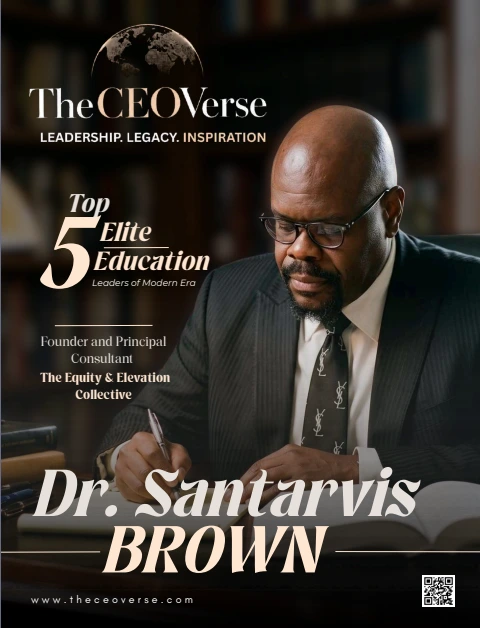
“Top 5 Elite Education Leaders of Modern Era”
Cover story
Dr. Santarvis Brown
Featured Profile - Dr. Santarvis Brown
Dr. Santarvis Brown: The Journey from Teaching Minds to Reshaping Institutions
Nine titles. One conviction that never changed: leadership is something you’re given custody of, not something you own.
The Journey from Teaching Minds to Reshaping Institutions
Dr. Santarvis Brown did not set out to collect job titles. He set out to teach, because he believed, still believes, that education is one of the few forces capable of resetting a person’s trajectory. From the start, though, his interest never stayed confined to the classroom. He was drawn just as much to the larger systems and leadership structures shaping the educational experience around it, the machinery behind the room, not just the room itself.
That dual interest eventually pulled him somewhere larger. A teacher changes a room. A leader, he came to understand, can change the institution around that room. That shift in thinking explains a resume that reads unusually wide for one person: principal, superintendent, university administrator, professor, executive director, nonprofit leader, consultant, researcher, board member, author, pastor.
Today he holds the title of Professor of Management and Leadership at Excelsior University, where the work is less about lecturing and more about preparation: teaching, mentoring, and shaping professionals into ethical, strategic, transformational leaders. It’s where his passion for education and his commitment to developing leaders who can navigate complexity, inspire trust, and produce real organizational change meet in the same job description.
The work doesn’t end at the university gate, either. Executive consulting, ministry, writing, speaking, podcasting, leadership development, it all runs in parallel, aimed at the same outcome: helping individuals and organizations lead with more clarity, courage, compassion, and purpose. The titles kept changing across three decades. The reason for taking them did not.
Leading with Vision, Grounded in Authenticity, Driven by Courage
Ask Dr. Brown what leadership requires and he reaches for three things, insisting none work alone.
Vision, in his framing, isn’t about ignoring reality. It’s understanding it well enough to see what can actually be changed. Across his career, it’s carried him through transitions, growth, uncertainty, reinvention: communicate a future people can believe in, then build the practical strategy to reach it.
Authenticity is what keeps people believing him once the title stops doing the convincing. Authentic leaders are honest about who they are, transparent about what they know, humble enough to admit what they still need to learn. That’s what creates trust, and trust is the foundation every healthy organization sits on. He’s tried, consistently, to lead in a way that lets people see his words, decisions, and values line up.
Courage is the one that surprises people least in theory, most in practice, not the absence of fear, but staying faithful to the mission despite it. It’s what let him challenge outdated systems, advocate for others, navigate crises, and choose what’s right over what’s easy.
Put together, these three describe a discipline more than a style. Vision without courage stalls. Courage without authenticity breeds mistrust. He’s spent a career learning where the seams are.
Leadership Is Stewardship, Not Ownership
Faith sits at the foundation of it all for Dr. Brown, his Christian faith shapes how he serves, decides, responds to adversity, treats people. Leadership, he says, is not ownership. It’s stewardship. Everything entrusted to him is temporary; the job is to strengthen it and hand it forward.
Integrity runs alongside that. Doing right when no one’s watching, credibility built over time through consistent decisions, honest communication, personal accountability, not declared, earned.
Servant leadership follows the same logic. The leader exists to create conditions where people succeed, not the reverse. Excellence, compassion, innovation, human dignity round it out. Organizations perform best, he believes, when leaders give equal weight to people, purpose, and performance, results matter, but so does how they’re achieved.
The through-line: leave every classroom, organization, church, board, and community stronger than he found it.
Confidence and Judgment Over Credentials
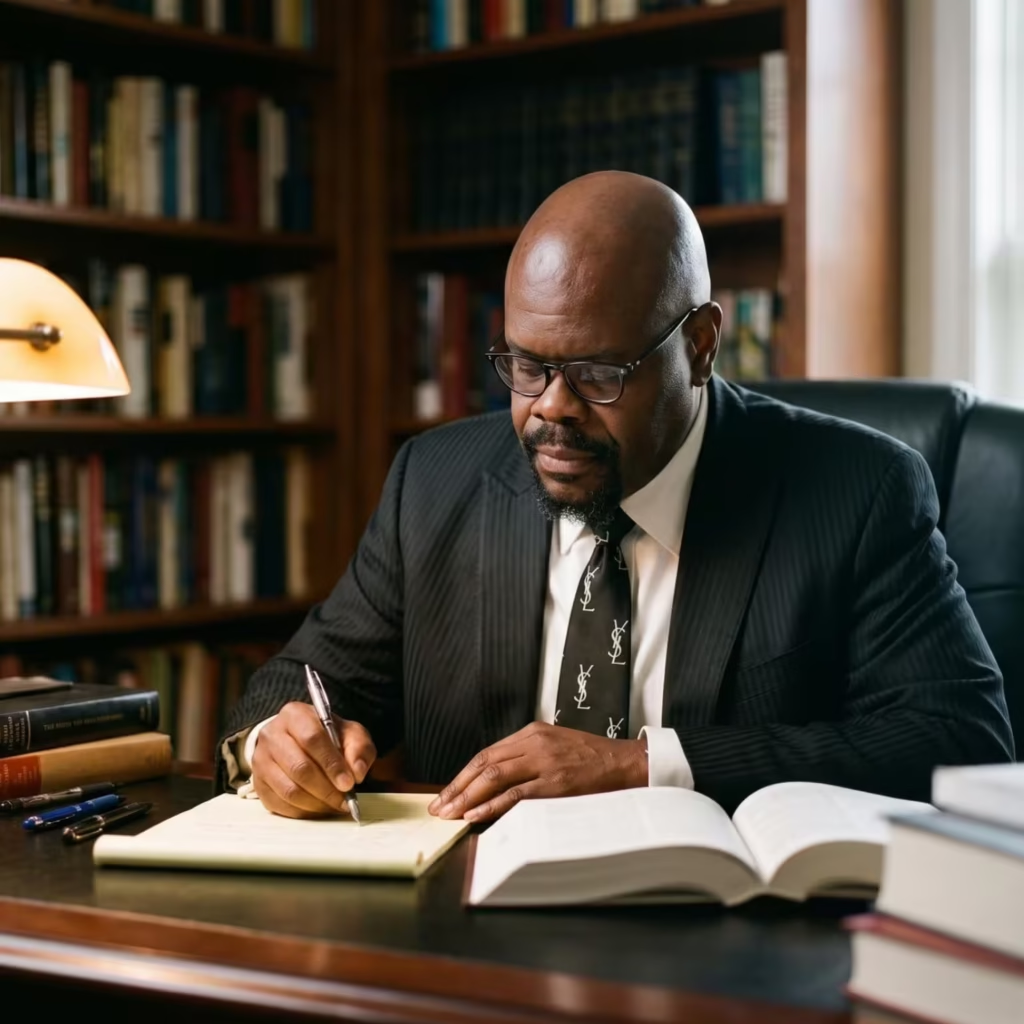
As Professor of Management and Leadership at Excelsior, his work centers on preparing students to become ethical decision-makers, strategic thinkers, effective communicators, transformational leaders, connecting leadership theory to the practical problems organizations actually face.
His goal was never simply to help students earn credentials. What he’s after is judgment, the confidence and character to lead responsibly once the degree is framed and hanging on a wall.
Excelsior serves working adults, military-connected students, career changers, people for whom education competes with a full life already in motion.
The work extends past the university: executive coaching, consulting, board governance training, keynote speaking, across education, nonprofit, faith-based, and corporate sectors. He is creator and host of The LeadershipDoctorSB, an international platform built to help current and emerging leaders strengthen their practice, books, podcasts, workshops digging into emotional intelligence, workplace culture, burnout, organizational trust.
And there’s TheBannedBook.Shop, an independent bookstore he owns, built on the belief that reading itself is a leadership tool, that access to difficult, diverse ideas isn’t separate from developing better leaders, it’s part of it.
Decisive and Compassionate Are Not Opposites
The hardest stretches weren’t singular crises, they were long seasons of leading organizations through significant change while supporting the people affected by it. Organizational transformation is rarely simple. Even necessary change breeds fear, resistance, uncertainty, emotional fatigue.
Restructuring, financial stabilization, cultural renewal, personnel decisions with no clean answer. What he took from those years wasn’t a hardening but a hard-won balance: communicate urgency without devaluing people, make a difficult call and still treat the person on the other end with dignity. Transparency, consistent communication, careful listening, the mission kept at the center, not abstractions, the only way through.
He learned not to carry it alone. Mentors, prayer, trusted teams. Resilience, in his words, isn’t pretending something doesn’t hurt. It’s acknowledging that it does, and moving forward anyway, a little wiser than before.
Awards Were Never the Real Scoreboard
The list of recognitions is long enough to fill its own page. Fulbright Specialist. AGB Pathway to the Presidency Fellow. AI 2030 Institute Scholar. A seat on the Harvard Business Review Advisory Council. A presentation at the Oxford University Research Symposium. Distinguished Professor honors. Recognition as a Top Educator by the International Association of Top Professionals. His work has appeared on the Nasdaq display in Times Square. He has authored multiple books on leadership, equity, resilience, and faith.
And yet, by his own account, none of it is the real measure.
What he’s actually proud of shows up somewhere else entirely, a former student’s promotion, an organization that got healthier, someone who walked away believing more in their own potential than they did before. The recognitions are real. They’re just not the scoreboard he’s watching.

Leadership Is Heartwork, Not Just Hard Work
Leadership is heartwork, not just hard work, the line that captures how Dr. Brown thinks about the job.
Every assignment, every title, every platform is on loan, not owned. The job is to strengthen it before passing it on. But here the stewardship instinct turns inward, toward what leadership feels like day to day, not a strategic plan, a conversation. A decision made in front of people watching to see if it holds. Encouragement offered at the right moment. Presence, when presence is the only thing that helps.
He’s not interested in being the most important person in a room. He’s interested in what the room needs, clarity where there’s confusion, courage where there’s fear. His goal is to lead in a way that helps people feel seen, valued, challenged, empowered. That’s the metric that doesn’t show up on a CV.
Teaching Is the Cultivation of Hope
His inspiration doesn’t come from a single source. Faith comes first, a reminder, constantly renewed, that purpose outlasts position. His wife, Maria Brown, has been a steady source of strength through demanding seasons. His children, Dorrien and Santarvis Jr., shape how he thinks about legacy.
But it’s his students who pull the sharpest line out of him. Many are balancing jobs, families, financial pressure, and coursework all at once, and watching that determination changed how he defines his own role. Teaching, he says, is not simply the transfer of information. It is the cultivation of hope.
He finds the same thing in communities that keep going despite having less to work with than they should. They keep him tethered to something real, actual people, actual struggle, actual stakes.
Developing Leaders Who Develop Other Leaders
What comes next, in his own words, sits at the intersection of leadership, education, technology, faith, and social impact, a wide list, but not a scattered one.
At Excelsior, that means preparing students for a version of higher education already being reshaped by artificial intelligence, workforce disruption, and new expectations around flexibility. Beyond the university, it means expanding his research and writing on ethical leadership, organizational trust, and workplace well-being, and continuing to build out The LeadershipDoctorSB with resources meant to be used, not just read. He wants TheBannedBook.Shop to grow into something bigger than a store, a genuine cultural and educational platform built around reading and dialogue.
International collaboration, consulting, board work, mentorship, all of it in service of one goal he states plainly: multiplying impact by developing leaders who go on to develop others.
Influence Is Earned, Never Issued With the Title
Asked what he’d tell someone starting out, Dr. Brown doesn’t lead with encouragement. He leads with a correction.
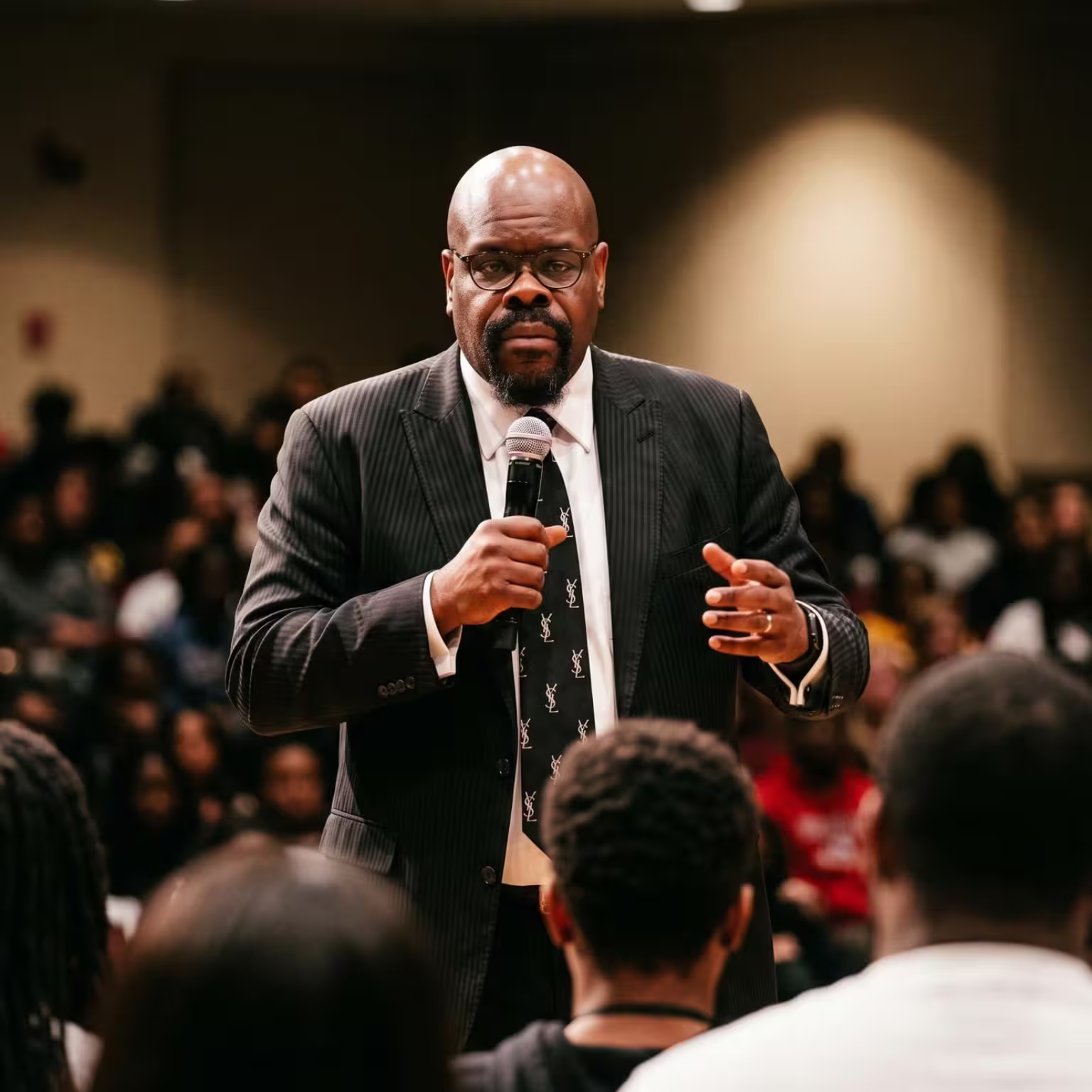
A title gives you authority. It does not automatically give you influence. Influence is earned, through integrity, competence, consistency, humility, service, and none of that arrives with the appointment letter. From there, his advice moves through familiar territory but lands with specificity: stay a student of the world, because the moment a leader thinks there’s nothing left to learn is the moment they start declining. Build emotional intelligence, because it decides who stays trusted long after the technical skills got you in the door.
Setbacks, he insists, don’t disqualify anyone. Some of the most painful chapters end up teaching the most. And in the end, he measures leadership by one thing: what grows around you. If the people you led become more confident, more capable, more courageous because of it, the leadership mattered. Everything else is paperwork.
Every Room Answers to the Same Mission
Beyond the classroom and boardroom, Dr. Brown serves as Pastor of Greater Mt. Pleasant African Methodist Episcopal Church. Ministry reshaped his leadership philosophy in a specific way, it reminded him people don’t just need strategy, they need hope, care, presence, truth, community. Across congregations, he’s watched membership grow, outreach expand, debt shrink, new ministries take root. Transformational leadership, he’s concluded, has to address the institution and the human spirit at once.
Writing lets him extend the classroom and the leadership work past geography, a way to speak to leaders he’ll never meet personally, whose work can still be strengthened by lessons he’s already learned. Through The LeadershipDoctorSB, that reach turns practical: helping people lead confidently without arrogance, set boundaries without losing compassion, pursue excellence without burning out. TheBannedBook.Shop carries the same conviction differently, that access to ideas builds empathy and critical thinking, and protecting the freedom to read is part of developing courageous citizens.
Faith, family, the chance to serve outrank every professional achievement. Classroom, boardroom, pulpit, bookstore, same mission each time. He doesn’t want the legacy to be the titles. He wants it to be the people who discovered their own potential because he showed up first.