TheCEOVerse • Digital Edition
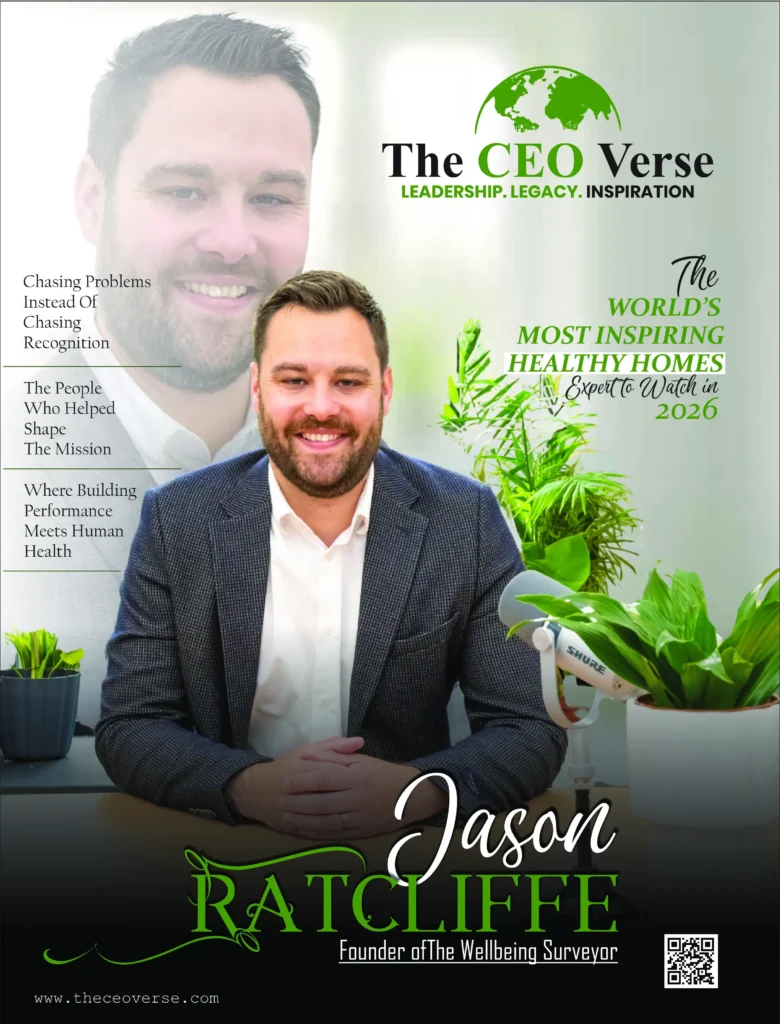
“The World’s Most Inspiring Healthy Homes Expert to Watch in 2026”
Cover story
Jason Ratcliffe
Featured Profile - Jason Ratcliffe
Jason Ratcliffe: The Vision Behind A Healthier Way Of Living
Buildings are inspected for defects every day. What is considered far less often is what those same buildings may be doing to the people who live inside them.
That overlooked question became the starting point for The Wellbeing Surveyor, founded by Jason Ratcliffe. With a professional background in surveying, Ratcliffe understood how buildings were traditionally assessed, but he also began noticing a wider gap. Homeowners were describing poor sleep, respiratory problems, headaches, fatigue, and discomfort, experiences that could not always be explained by a conventional inspection alone.
This led him to consider the built environment from a different perspective: not simply as a structure to be maintained, but as an environment capable of influencing human health and quality of life.
Further study in public health, sustainability, and research broadened his understanding and helped shape the philosophy behind The Wellbeing Surveyor. What began as a question within surveying has since developed into a practice spanning consultancy, research, education, and innovation.
The underlying belief is simple: buildings should not merely last longer; they should help people live better.
Where Building Performance Meets Human Health
Traditional surveying naturally focuses on the physical condition of a property, its roof, walls, damp, maintenance requirements, and structural performance. Ratcliffe’s work adds another dimension to that assessment.
A building can be structurally sound and energy efficient while still creating an environment that affects sleep, concentration, stress, recovery, or comfort. Understanding those connections requires looking beyond individual defects and considering the wider environmental conditions in which people spend their lives.
The Wellbeing Surveyor brings surveying, public health, environmental science, sustainability, and research together to develop that broader picture.
Alongside consultancy, the practice is involved in research, independent product evaluation, and the development of evidence around healthy buildings. Some initiatives remain confidential until publication or launch, but they share a common purpose: making healthy buildings measurable, practical, and accessible.
When Recovery Added A Deeper Purpose
A brain haemorrhage became a profound personal turning point for Ratcliffe.
Recovery taught him patience and resilience in ways that professional experience could never fully replicate. It also gave him a more personal appreciation of how surroundings can influence concentration, stress, recovery, and everyday wellbeing.
Rather than allowing adversity to define his direction, he used the experience to refine it.
His commitment to evidence-led work became stronger, along with the determination to ensure that his professional efforts were connected to outcomes that could genuinely improve people’s lives. The focus shifted further from simply describing buildings towards understanding what healthier environments could make possible.
The Question That Now Guides His Decisions
Earlier in his career, Ratcliffe viewed saying yes to opportunities as part of professional success. Experience gradually changed that perspective.
Being constantly busy did not necessarily mean creating meaningful progress. Purpose became a more valuable measure.
Today, projects are considered through a simple test: can the work improve people’s lives or advance knowledge?
That question has become an important filter for decision-making, helping Ratcliffe protect the long-term vision of The Wellbeing Surveyor while resisting the temptation to pursue activity simply for the sake of growth.
The People Who Helped Shape The Mission
No professional journey develops in isolation. Ratcliffe’s wife, Sophie, has supported him throughout the process, while mentors from surveying, medicine, academia, and environmental science have brought perspectives that continually challenged and expanded his thinking.
Just as influential have been the thousands of conversations with homeowners.
Their experiences have shown that healthy buildings are not an abstract technical idea. Sleep, breathing, fatigue, comfort, concentration, and recovery are deeply connected to the spaces people occupy every day.
Those conversations have provided an important reminder that behind every building assessment is a human experience.
Connecting Expertise To Solve A Wider Challenge
The future of healthy buildings depends on collaboration.
Researchers, clinicians, architects, engineers, surveyors, environmental specialists, and technology innovators each understand a different part of the wider picture. Progress comes when those perspectives are brought together rather than kept within separate professional boundaries.
Through partnerships and collaboration, Ratcliffe is working towards a broader movement that connects these disciplines and encourages evidence-based change.
The ambition goes beyond improving individual surveys. It is about helping the industry recognise human wellbeing as an essential consideration within the built environment.
Chasing Problems Instead Of Chasing Recognition
Ratcliffe’s advice to those entering the field is grounded in curiosity.
Professional titles and awards can create visibility, but they should not become the ultimate objective. Meaningful problems offer a stronger sense of direction.
His approach encourages people to read widely, question assumptions, explore ideas beyond their own discipline, and remain committed to learning.
For Ratcliffe, innovation begins with asking better questions. Sometimes the most valuable breakthrough does not come from finding a new answer, but from recognising that an old question was never examined deeply enough.
Recognition As A Platform For Change
Recognition has value when it creates conversations.
Every article, keynote, interview, or public appearance can introduce healthy-building principles to a wider audience and encourage people to reconsider what they expect from their homes and other indoor environments.
That makes visibility a means rather than an end.
Ratcliffe’s future ambitions include expanding research, education, and international collaboration while establishing The Wellbeing Surveyor as a recognised voice within the healthy-building sector.
The aim is not simply to create a recognised name, but to make the subject of healthy buildings increasingly impossible to overlook.
Why Safe And Sustainable Is No Longer The Full Picture
People spend much of their lives indoors, yet the influence of those environments on health and wellbeing remains underappreciated.
For Ratcliffe, safety and sustainability are essential, but they should represent the foundation rather than the finish line.
The buildings of tomorrow should actively support the people who occupy them. Homes, workplaces, schools, and healthcare environments should be considered not only in terms of how well they function as structures, but also in terms of how they influence the wellbeing of their users.
Healthy buildings should eventually become an expectation, something as naturally considered as other fundamental safety measures.
From A Professional Practice To A Lasting Movement
The Wellbeing Surveyor represents more than the progression of Ratcliffe’s career. It reflects a larger ambition to influence how society understands the places in which people live, work, learn, and recover.
The ultimate vision is a future where people naturally expect buildings to support their wellbeing and where healthy design and assessment are no longer treated as specialised ideas.
If future generations inherit that expectation as a standard rather than something they must campaign for, the purpose behind the movement will have been achieved.
For Jason Ratcliffe, success is therefore not simply about titles, awards, or professional recognition. It is about creating a lasting change in perspective.
The Wellbeing Surveyor is not the end point of his career. It is the foundation of a wider movement, one working towards a future where every building is judged not only by how well it stands, but by how well it helps people live.