TheCEOVerse • Digital Edition
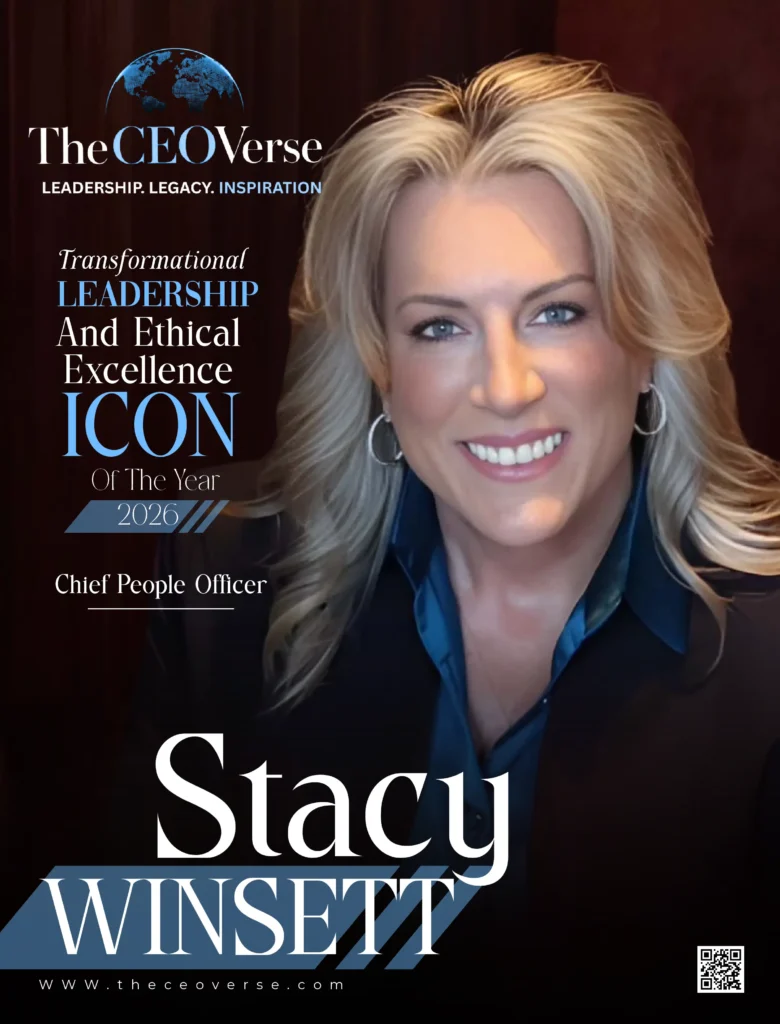
“Transformational Leadership And Ethical Excellence Icon Of The Year 2026”
Cover story
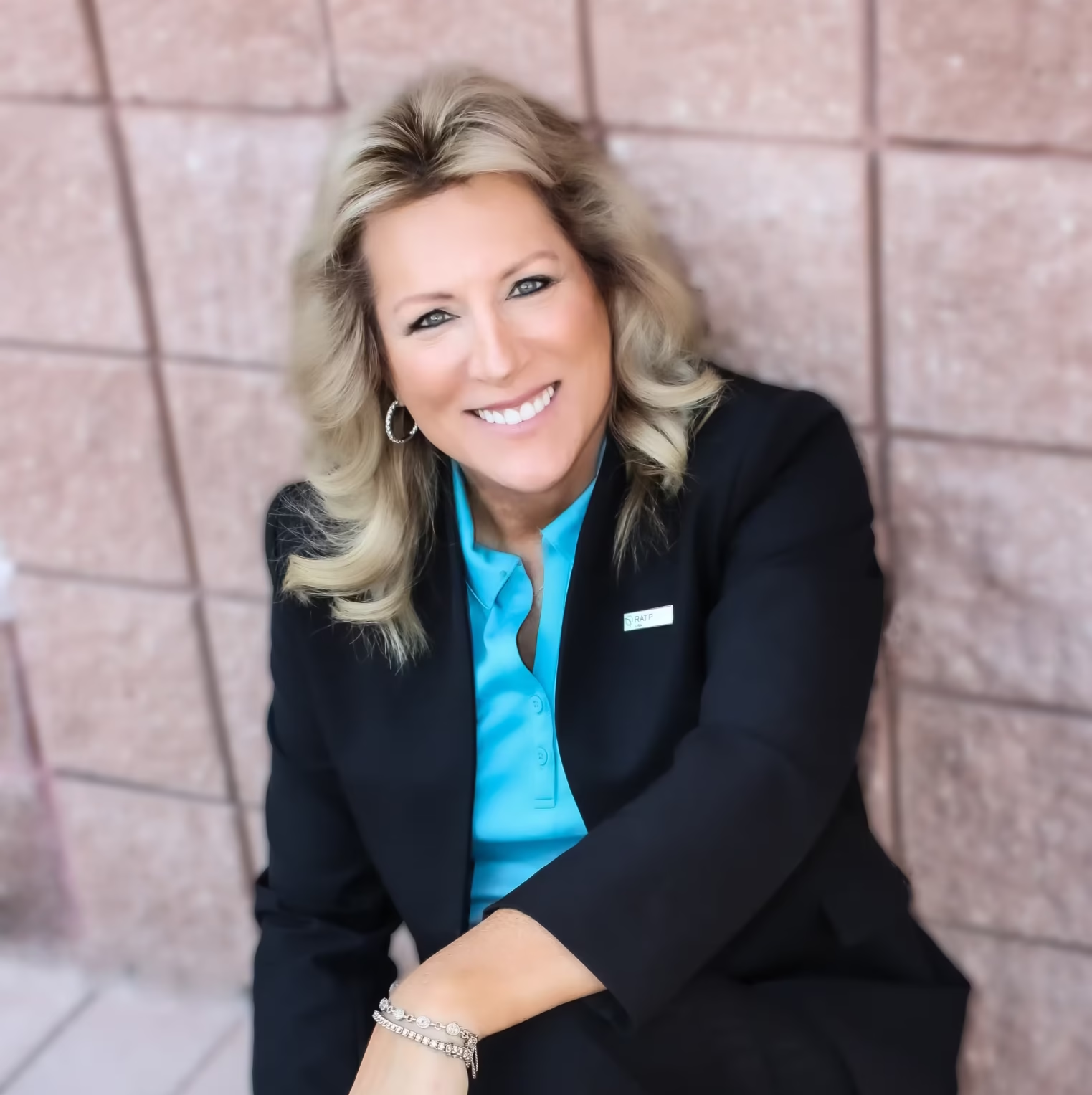
Stacy Winsett
Featured Profile - Stacy Winsett
The Leadership Lesson That Came Before the Career
Stacy Winsett’s professional journey did not begin with a job offer or a business card. It began earlier, in circumstances she describes simply as adversity, long before she entered a workforce that would eventually place her at the head of Human Resources for a company moving thousands of people every day.
She did not recognize it then. Looking back, she says those early experiences quietly shaped a leadership philosophy she would spend three decades refining. Not manufactured wisdom, not a keynote-ready origin story. Just adversity, doing what adversity does, long before there was a title attached to any of it.
Human Resources was not an obvious landing spot. Winsett was drawn to the space where people, business, and leadership intersect, and she noticed something early in her career that most executives take years to internalize: growth, innovation, customer experience, financial performance, all of it eventually comes down to people. Every one of those business problems is, underneath, a people problem.
Thirty years later, that observation has carried her through Human Resources, Labor Relations, Organizational Development, Executive Coaching, and Culture Transformation across aviation, manufacturing, oil and gas, mining services, heavy equipment rental, and public transportation. Six industries. One recurring conclusion, repeated so consistently across such different sectors that it stopped being a theory and became her operating principle: organizations do not transform until their leaders do.
Today, as Chief People Officer for a global transit company, she applies that principle to an organization providing mobility services across the United States. The internal work, she notes, has an external destination. It improves how communities are served.
Three Traits That Refuse to Work in Isolation
Ask Winsett what has driven her success, and she will not give you a single word. She gives you three, and she insists they only work together: courage, stewardship, and curiosity.
Courage, in her definition, has nothing to do with bravado. It is the willingness to make difficult decisions with integrity even when those decisions are uncomfortable. Leadership regularly demands a balance between compassion and accountability, and some of her hardest decisions have lived exactly at that intersection.
Stewardship runs deeper still. Winsett describes leadership as responsibility rather than authority, a distinction with real consequences for how she measures her own success. Business results matter. But she measures herself, more pointedly, by the leaders she develops and the opportunities she creates for people who are not her.
Then there is curiosity, which she treats less as a personality trait and more as a survival skill. The workplace is shifting through technology, artificial intelligence, and changing workforce expectations faster than most leadership models were built to handle. Curious leaders, in her view, ask sharper questions. They stay open to perspectives that contradict their own. They keep learning long after they no longer have to.
None of the three functions on its own. That is the point. Courage without stewardship becomes recklessness. Stewardship without curiosity calcifies. Together, they have let her navigate business complexity without losing the people-centered core of how she leads.
Culture Is the Shadow Every Leader Casts
Winsett’s values read, on paper, like a standard executive list: integrity, courage, stewardship, accountability, compassion. What separates her is not the list. It is what she does with it.
She believes deeply in trust and psychological safety, and she is specific about why. People perform at their best when they feel respected, heard, and empowered to speak up. Innovation and accountability, she argues, are not opposing forces fighting for the same space. They coexist, and they coexist specifically where trust already exists.
One line has become close to a personal doctrine for her: culture is the shadow of leadership.
Not a mission statement bolted to a wall. Not a poster in a break room. Culture, in her framing, is built in the ordinary, unremarkable moments of a workday. Every meeting. Every conversation. Every decision made under pressure, and every response to something going wrong. Each one either strengthens the culture or quietly erodes it. That is why she considers leadership development one of the highest-return investments an organization can make. It is not a program. It is daily maintenance.
The Hardest Person She Ever Led Was Herself
Ask most executives about their hardest career phase and they will describe a negotiation, a merger, a crisis that tested them publicly. Winsett’s answer goes somewhere else entirely.
Her most challenging phase was not external at all. It was recognizing that the habits which built her success had quietly become her ceiling.
Like many leaders, she had equated success with working harder, solving every problem herself, and carrying the full weight of every challenge alone. Those instincts produced results. They also generated pressure, for her and, at times, for the people around her, that she no longer believes was necessary.
Executive coaching and honest self-reflection forced the reckoning. Leadership, she came to understand, is not about doing more. It is about developing others to do more. That shift changed the shape of her days entirely. She now spends far more time coaching, listening, and empowering than she spends trying to fix every problem herself.
Her impact grew the moment she stopped needing credit. That is the irony she names outright, without softening it: becoming a healthier leader is what made her a more effective one.
Credentials Fill the Page, Pride Fills the Room
Winsett was recognized by TheCEOVerse as one of the Top Women Leaders Transforming Workplace Culture in 2026, a recognition she calls especially meaningful because it reflects both her career and her commitment to building healthier, higher-performing workplace cultures. Alongside that sits a dense professional resume: SPHR, GPHR, SHRM-SCP, Executive Coaching, Mediation, and DiSC certifications, accumulated across three decades.
The organization she leads carries its own recognition, ranking 39th globally on the Global Top 100 Most Loved Workplaces list, secured in back-to-back years. Winsett reads that as evidence of what happens when leaders deliberately invest in people, trust, safety, and culture rather than treating those as afterthoughts.
But she does not let the list stand as the final word. Awards are encouraging, she says. They are not the real measure. The real measure is whether employees are proud of the work they do and the organization they represent. Credentials fill the page. Pride fills the room, and only one of those two things is visible from the outside.
What the Fire Left Behind Became the Foundation
Winsett’s guiding belief is disarmingly direct: adversity does not define a person. It develops and refines them.
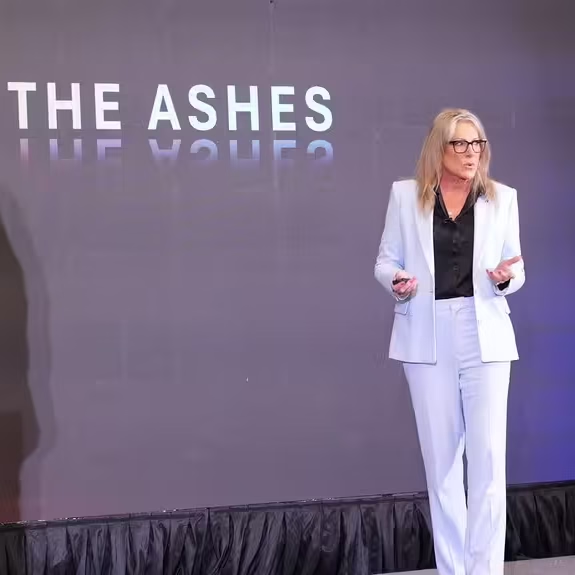
That belief did not stay abstract. It became the foundation of her book, From Ashes to Influence, an exploration of how personal growth and leadership transformation are, more often than not, the same process wearing different clothes. Some of the hardest experiences a person lives through, she argues, become the very experiences that prepare them to lead with empathy, wisdom, and resilience later.
The second half of her philosophy circles back to stewardship. Titles grant authority. They do not grant influence. Influence, in her view, has to be earned through trust, consistency, and service, repeated over time until it becomes undeniable. Every leader, she believes, gets the same opportunity: leave people stronger than they found them, or do not.
Faith Anchors What Service Proves
Winsett names her faith as the deepest source of strength across her life and career, a grounding force that keeps her oriented toward humility and service regardless of circumstance.
Professionally, she is drawn to leaders who choose integrity over convenience, and purpose over personal recognition, consistently rather than occasionally.
But her clearest inspiration comes from somewhere less expected. Frontline employees. A transit operator getting passengers home safely. A mechanic making sure vehicles are ready before the sun comes up. A supervisor holding a team together on a difficult day. None of them are chasing a title. All of them, in Winsett’s eyes, are demonstrating leadership through nothing more complicated than showing up and doing the work. Leadership, she says, was never defined by a title. It is defined by the difference a person makes in someone else’s day.
From Philosophy to Trademark, Culture to Strategy
Winsett’s near-term plans stay close to home: developing her people internally, strengthening labor relations, and keeping people strategy aligned with the broader organization with an occasional keynote speaking engagement externally to draw attention to the importance of culture and stewardship in organizations.
Her newest contribution to that expansion has a name now. The Shadow of Leadership™, a framework built directly from the belief she has carried for years, examines how leadership behavior shapes organizational culture, adaptability, and business performance. The organizations that thrive going forward, she argues, will be the ones that treat trust, accountability, innovation, and psychological safety as a single connected system rather than four separate initiatives.
At RATP Dev USA, that means continued investment in leadership, employee experience, safety, and innovation, with an eye toward strengthening the company’s identity as a people-centered mobility organization. Culture, in her framing, is not an HR function sitting off to the side. It is a strategic advantage, and organizations that keep treating it as anything less will find themselves behind the ones that do not.
Success Is Counted, Significance Is Remembered
Winsett’s advice to aspiring leaders opens with a warning against underestimating your own story. The experiences a person most wants to erase, she says, are frequently the exact experiences that earn other people’s trust. Authenticity creates connection. Connection creates influence, and there is no shortcut around that sequence.
Stay curious. Keep learning. Build self-awareness with the same intention most people reserve for technical skill. Seek mentors willing to challenge you rather than simply encourage you. Listen more than you speak. Extend dignity and respect to everyone, without exception.
Then, the distinction she considers most important of all: do not confuse success with significance. Success is what a person accomplishes. Significance is measured differently. It is counted in the lives someone has positively influenced along the way.
Choose integrity over convenience. Choose courage over comfort. Choose stewardship over self-interest. Do that consistently enough, Winsett says, and what gets built is not simply a successful career. It is a legacy that keeps moving forward through the people it helped become their best.