
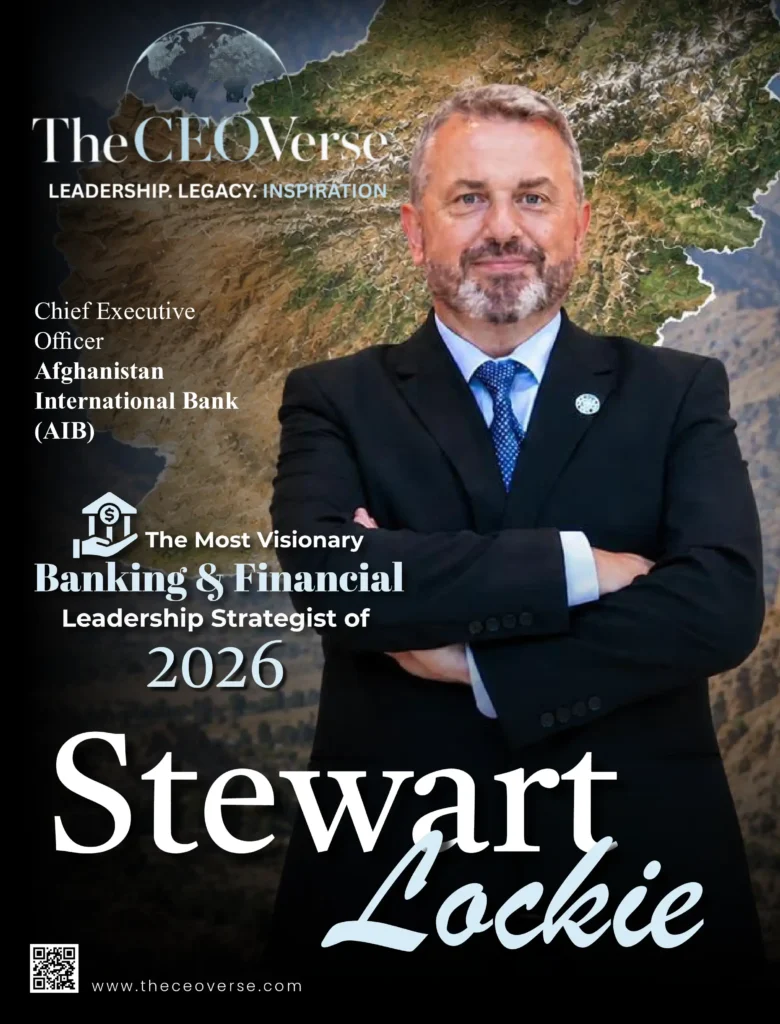
TheCEOVerse • Digital Edition
“The Most Visionary Banking & Financial Leadership Strategist of 2026”
Cover story
Stewart Lockie
Featured Profile - Stewart Lockie
Stewart Lockie: The Most Visionary Banking & Financial Leadership Strategist of 2026
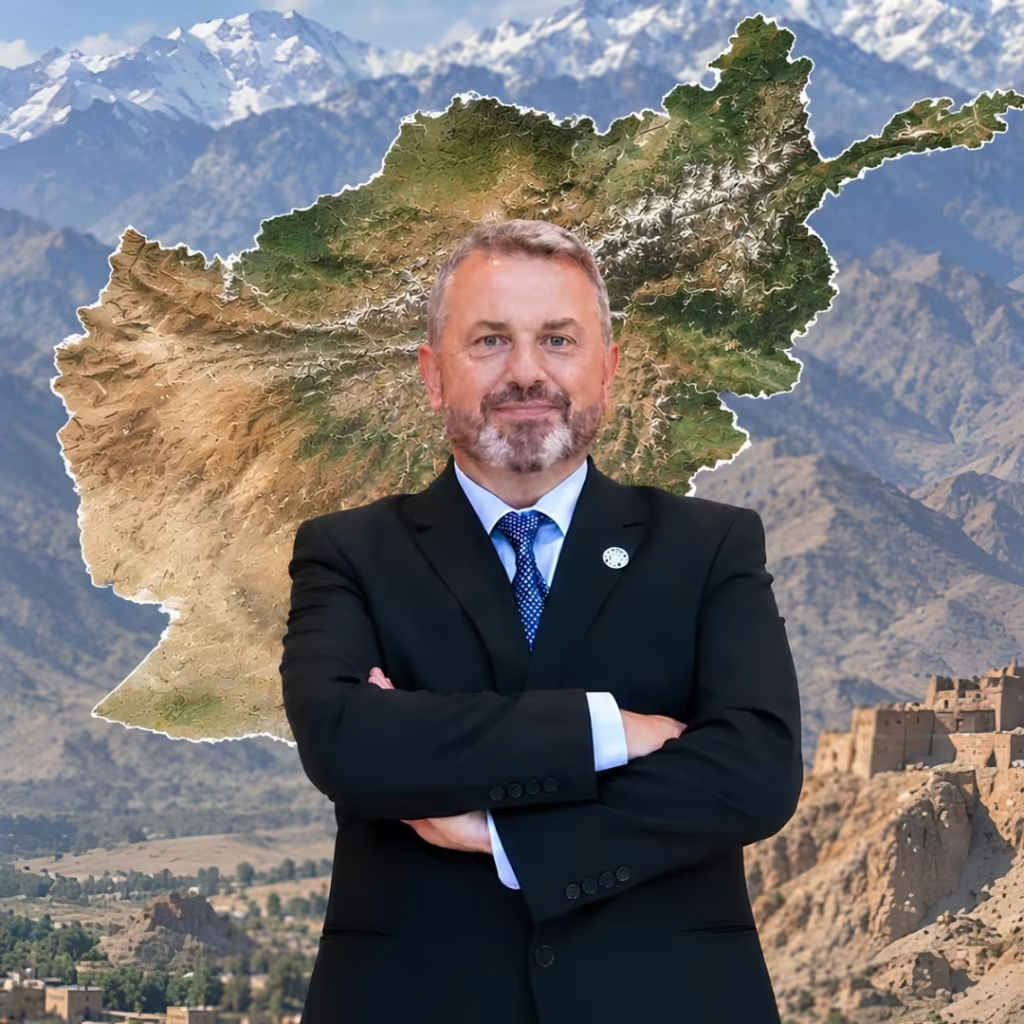
Every banker eventually learns that money is the least interesting part of banking. What matters is the trust that lets a stranger hand over their savings, or lets a bank in one country honour a promise made by a bank in another. Stewart Lockie has spent nearly four decades learning this lesson in branches, boardrooms and regulators’ offices across London, Cairo, Kuwait and now Kabul. Today he is Chief Executive Officer of Afghanistan International Bank (AIB), one of the most closely watched financial institutions in one of the most challenging banking environments on earth.
Far from having a grand title handed to him, his journey is a testament to true grit and ambition. Rising proudly from the front lines of a British high street bank as he kept moving toward harder markets and bigger responsibilities, and kept studying along the way, eventually reaching the very pinnacle of his field. That path led him to a country where a bank is a lifeline as much as a business.
The Foundations of a Global Leader
The story starts in west London. Lockie attended school in Isleworth and Syon, finishing his GCSEs in 1988. He did not come from a family dynasty of financiers, and no private equity fortune was waiting for him. He had a school certificate and a place in the retail branch network of Barclays Bank, which he joined in the same year he left school.
Retail banking in the late 1980s was a different world. Customers queued at counters, managers knew their depositors by name, and a lending decision often turned on the manager’s judgement of a person’s character. Many of Lockie’s convictions today, that banking is about people, that it must be built on dialogue, that relationships outlast transactions, trace back to that formative environment. A young banker who learns the trade face to face does not forget that every account number belongs to a person.
Eighteen Years at the Strategic Core of Banking
He stayed at Barclays for eighteen years, from 1988 to 2006, and the length of that tenure says something about how he works. He did not hop between employers chasing titles. He held a series of roles across the retail business, learning each layer of the machine, until he reached area director level.
Along the way he built a particular reputation. He possesses an exceptional talent for turning around underperforming business units and making them sustainable successes. Turnarounds are unforgiving work. They demand hard decisions about people and processes, patience with the slow business of rebuilding morale, and the nerve to be accountable when numbers refuse to move quickly. Those who do it well earn a different kind of credibility than those who simply inherit healthy operations. Lockie was appointed to lead in several geographies across the United Kingdom, driving commercial growth, and that stretch of his career culminated in heading Barclays’ West End retail business. In a bank of that size, the West End is a showcase, a place where affluent clients and demanding expectations meet.
The bank’s executives noticed. They selected him to lead Barclays’ retail banking interests in Egypt, a two year leadership assignment that took him far outside his comfort zone. He also sat on executive management committees, including the Asset and Liability Committee and the country management committee. For a retail banker, that is the equivalent of being invited into the engine room. He learned how liquidity, risk and strategy fit together at the level where the biggest decisions are made.
Visionary Growth: The Cairo Mandate
Egypt changed the direction of his career. Living and working in Cairo meant adapting to a banking culture, a customer base and a set of social expectations very different from those in Britain. When Ahli United Bank acquired Delta International Bank, it needed a second in command to support the chief executive and deliver the strategy for its new Egyptian business. Lockie was headhunted into the role of Deputy CEO and Chief General Manager for Egypt, and also headed retail and private banking, between 2006 and 2008.
He describes two achievements from this period as his highlights. The first was cultural. Adjusting to the sensitivities and nuances of a new environment while still delivering results, a double challenge for which he was commended. The second was creative. He wrote policies, defined products and built operations from the ground up across the whole of Egypt. Few senior bankers get to do this. Most inherit systems that already exist. Lockie was drafting the rulebook, designing the product shelf and recruiting the people in a country of tens of millions.
The experience gave him something that no business school can supply. The habit of listening before leading. When a foreign banker arrives in a market with a ready made template, he usually fails. When he arrives asking questions, he has a chance. That habit would prove invaluable years later in Kabul.
Twelve Years of Visionary Growth in Kuwait
In January 2009 Lockie joined Al Ahli Bank of Kuwait, initially as Head of Sales, Service and Alternative Channels for the retail bank, working as number two to the General Manager of the retail business. In little over a year he was promoted to Head of Retail Banking, a role equivalent to Retail General Manager and one that required formal regulatory approval. He held it until 2021, a stretch of more than twelve years.
The scale of the job was considerable. He led more than 430 staff and an expanding distribution network across Kuwait, spanning both branches and electronic channels. He carried full profit and loss and strategic accountability, and the responsibility for generating income for the bank. In the language of the industry, he was running a franchise, and had to make sure it grew in line with what customers actually wanted.
His track record from this era highlights a series of significant achievements. One such project delivered a 47 percent increase in revenue for the retail arm of the bank. In one six month sprint, he sourced and developed a team, brought six brand new products to market, and launched a market leading sales and client segment to the country. Those figures describe a man who values speed and structure in equal measure. Six products in six months is only possible when a leader builds the right team first.
Under the direction of the bank’s board, he also led the retail workstream for the acquisition of two banks, one in Egypt and one in the United Kingdom, as part of an expansion programme to build regional and international presence. The Egyptian retail operation was purchased. The UK acquisition, however, was halted by the outbreak of Covid 19. Nobody plans for a pandemic to close a deal, and it remains one of the genuine setbacks in his story. Handling the disappointment of a deal that slips away through no fault of one’s own is part of mature leadership, and he does not appear to have been deterred by it.
Intellectual Curiosity as a Strategic Asset
Behind the operational record lies an unusual commitment to formal learning, particularly for a banker who built his early career through experience rather than through a conventional university route. From 2011 to 2012 he earned the Chartered Manager award from the Chartered Management Institute. He followed it with a Level 7 diploma in Leadership and Strategic Management from the same body, completed over 2012 to 2014. Between 2013 and 2015 he completed a Master of Science at the University of South Wales, graduating with a merit. Then, from 2016 to 2017, he studied for the Chartered Banker MBA at Bangor University and again earned a merit.
These qualifications explain the letters after his name. FCMI, a Fellow of the Chartered Management Institute, and MSc, MBA, FCBI, a Fellow of the Chartered Banker Institute, and CISGOV, a credential in corporate governance. He is also an Honorary Member of the International Retail Banking Academy, a recognition he has held since 2014.
It is worth pausing on the timing. Most of this study took place while he was running a bank with hundreds of employees in Kuwait. He was working through assignments and examinations in the evening and then returning to the demands of the office in the morning. Anyone who has tried to combine a senior executive role with postgraduate study knows what discipline that demands. It also tells us something about his temperament. He treats learning as a continuous obligation, not a phase of life that ends when the career takes off.
From Banking Operations to Industry Vision
In 2021, after more than a decade in Kuwait, Lockie changed course. He became Senior Partner at Hansal International, an international consultancy focused on helping people and businesses improve performance, with a heritage in financial services. He was appointed divisional CEO to lead its overseas interests across the Middle East and North Africa, assessing client needs, selecting and deploying expert practitioners, and safeguarding quality standards. It was a role that required him to think less like a line manager and more like a trusted adviser.
In March 2024 he took on another unusual brief as Regional Director for the Middle East, Egypt and Indian markets at Qorus, a global non profit organisation established in 1971 that helps retail banking and insurance professionals reinvent themselves and thrive. His work there combined education about Qorus’s offerings with real time support for members’ retail banking and insurance strategies, backed by a global ecosystem of data, insights, events and communities.
This period also gave him a public voice. His thought pieces from the Qorus years, including ‘EQ — Born or Developed?’ and ‘Values Based Leadership,’ reveal what truly preoccupied him. He reflects on working across many cultural landscapes and observing very different styles of leadership. He asks whether emotional intelligence is something people are born with or something they can learn. He writes about the chance to meet new people and understand their stories. This is the writing of a leader who has been shaped by travel and cultural friction, and who has come to believe that the human side of leadership is no soft extra but the foundation of everything else.
THE ROAD TO KABUL
In May 2025 Lockie moved to Kabul as Senior Advisor to the CEO of Afghanistan International Bank. The institution he joined had a remarkable history. AIB opened in Kabul in 2004, when the country’s financial system was still being rebuilt. It was owned by a consortium of Afghan and American investors and managed at its outset by the Institutional and Government Advisory group of ING, and its early ambition was to serve the financing needs of Afghans living overseas who wanted to send money home. Over the following years it became the largest bank in Afghanistan, and the only Afghan bank offering international transfers to all countries.
Its mission statement is deceptively simple. To foster economic development in Afghanistan, to act as a catalyst for growth, and ultimately to contribute to the prosperity of the country and its people. His own description of the advisory role stresses that the bank aspires to remain the most reputable financial institution in the country and the bank of choice for Afghans.
A year later, in June 2026, he stepped up to become Chief Executive Officer. After a career spent in other people’s countries, he had been entrusted with the top role at an institution that sits at the centre of a national economy.
Custodian of Institutional Legacy
Taking over a bank is also taking over its reputation, and AIB’s reputation was earned over years. In 2019, when Standard Chartered withdrew completely from the Afghan market, AIB became the only onshore lender able to transmit dollar payments to many countries outside Central Asia, which gave it a systemic importance that few banks anywhere can claim. By 2020 its new headquarters in Kabul had achieved ISO 27001 certification for information security, and the bank was supporting orphanages, women’s organisations and food distribution projects.
Recognition followed. The CFI.co judging panel named AIB the winner for Best Corporate Governance in Afghanistan in 2018, noting that it was the only privately owned Afghan bank trusted with US dollar clearing by international banks. It won the same award again in 2019 and 2020. Euromoney, in its Awards for Excellence, named AIB the best bank in Afghanistan and praised its resilience as a financial lifeline connecting the country with the world, noting that it had held pre tax profit steady in 2023 despite heavy currency pressure. This was not Lockie’s personal work. These accolades belonged to the bank, its earlier leadership, its staff and its board. What they did was set the standard he now has to maintain, and arguably exceed.
Defining a New Era in Islamic Banking
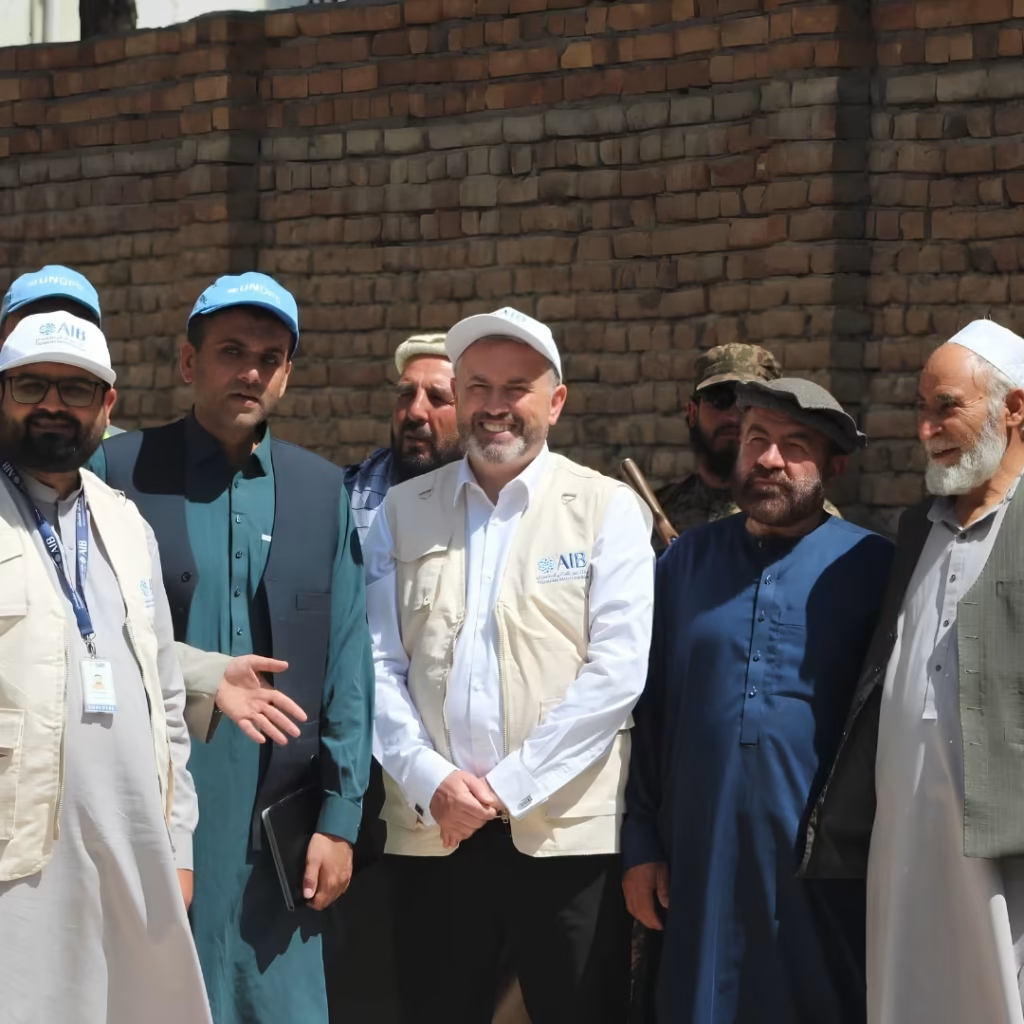
Under the national direction set by the central bank, Da Afghanistan Bank, AIB has completed its transition to a fully Shariah compliant Islamic commercial bank. This is a deep change, not a cosmetic one. It touches governance, risk management and every product on the shelf. In 2023 all new transactions and accounts were already being opened in a Shariah compliant way, and the bank launched Shariah compliant Visa and Mastercard products so that customers could keep using familiar services.
In his own words, Lockie describes his focus as aligning banking practices with Islamic values while supporting the Afghan community. The bank now speaks of becoming a “Real Economy Partner,” a phrase that carries a clear philosophy. Instead of living mainly on fees and commissions, AIB wants more of its capital to flow into productive parts of the economy, financing the businesses and projects that actually create jobs and output.
The product range reflects that thinking. Murabaha facilities help companies finance procurement. Ijarah and Istisna structures are being developed for capital equipment. Salam financing is planned for agriculture, and Musharakah and Mudarabah offer partnership style alternatives. Each uses a different principle of Islamic finance to turn capital into real activity rather than into interest bearing debt.
THE CARD THAT WORKS WITHOUT A SIGNAL
If the Islamic transition is the bank’s philosophical heart, E-Cash is its most ingenious piece of engineering. Afghanistan has a population approaching 44 million, yet only a few hundred operational bank branches serve it. Mountainous terrain, patchy connectivity and unreliable electricity leave millions of people reliant on cash and far from formal finance.
AIB’s answer is a bank card that works without an internet connection. It can hold up to 32 separate digital wallets, which means one person can receive payments from several humanitarian or state support programmes on the same card. It recognises its owner by fingerprint or facial recognition, a crucial feature for customers who face literacy barriers. Cards can be issued in the field, and an account holder can authorise another person, such as an elderly relative or a family member with a disability, to use the card through biometric verification.
The economics are striking. The bank estimates that an E-Cash account costs around 87 percent less to maintain than a standard core banking account, which makes small transactions practical for people on low incomes. Cash in and cash out points across the provinces extend the system further and can be used for humanitarian payments and public sector salaries.
Around E-Cash sits a wider digital programme. The bank is rebuilding its mobile and internet banking platforms in a project it calls the Digital House, built on React Native to deliver a consistent experience across phones, tablets and computers. The country’s first AI assistant tools and WhatsApp self service banking have been launched, a pioneering initiative taken by AIB. Its website has been developed in Dari and Pashto as well as English, because accessibility, as the bank puts it, includes the right to use services in the language one is comfortable with. Open interfaces link AIB to electronic money and microfinance institutions so that money can move between bank accounts and mobile wallets.
For a leader whose career began at a branch counter, there is a certain poetry in this. He has gone from helping customers in person to designing systems that reach people who will never visit a branch at all.
Architecting the Global Network
If E-Cash connects Afghans to their own financial system, correspondent banking connects the whole country to the rest of the world. This is the subject Lockie chose for his most recent leadership insights, written after a tour of AIB’s correspondent partners across the Gulf states.
His argument is memorable. Correspondent banking, he writes, is not a back office function but the bridge between an economy and the outside world. Every trade payment, family remittance and humanitarian transfer depends on foreign banks being willing to hold accounts for AIB and clear its transactions. When those links weaken, he observes, the first people to feel it are not institutions but importers, small businesses and households.
What he heard from partners can be summed up in three ideas. They want transparency, meaning a genuine understanding of customers, flows and controls rather than a bare assurance that controls exist. They want consistency, meaning strong compliance that is visible year after year. And they want dialogue, because issues are far easier to resolve across a table than in an email chain. He is candid that, in an era of global de-risking, banks that stay engaged with challenging markets are making a deliberate choice, and that AIB’s job is to make that choice an easy one to keep making.
The practical corridors are growing. AIB is strengthening payment links through the UAE, India’s GIFT City, Kazakhstan and Malaysia to support essential imports and exports, and it positions its correspondent network as a formal alternative to the informal hawala system. The trip itself is a revealing detail. A chief executive who sets off on the road to sit across the table from his bank’s partners is applying, in person, the same lesson he learned in the branches of west London. Relationships are not maintained by email.
Financing the Power Behind the Economy
The bank’s plans for energy show how its leadership thinks about development. Businesses cannot operate efficiently without reliable power, and in Afghanistan unreliable electricity interrupts production and raises costs. AIB has structured a 200 million afghani credit facility for a renewable energy company and is working with the UNDP on a Green Economy Financing Facility, which is intended to support smaller clean energy projects, rural solar electrification and energy efficiency investment.
The bank sees three other areas with long term promise. Agriculture and small enterprise could generate employment and reduce dependence on imports. Digital payments could make transactions cheaper and bring more people into the formal system. E-commerce could open overseas markets to Afghan craft producers. To support all of this, AIB is expanding in cities such as Herat, Kandahar, Balkh and Nangarhar, and talking to development partners about donor backed first loss structures that can reduce the risk for private investors.
Inside the institution, the agenda is equally practical. Give branches more authority, cut administrative friction, streamline periodic customer reviews and speed up credit approvals. It is the unglamorous, internal kind of reform that leaders with long operational careers tend to prioritise, because they have lived with the frustration of slow processes.
THE HUMAN SIDE OF THE BALANCE SHEET
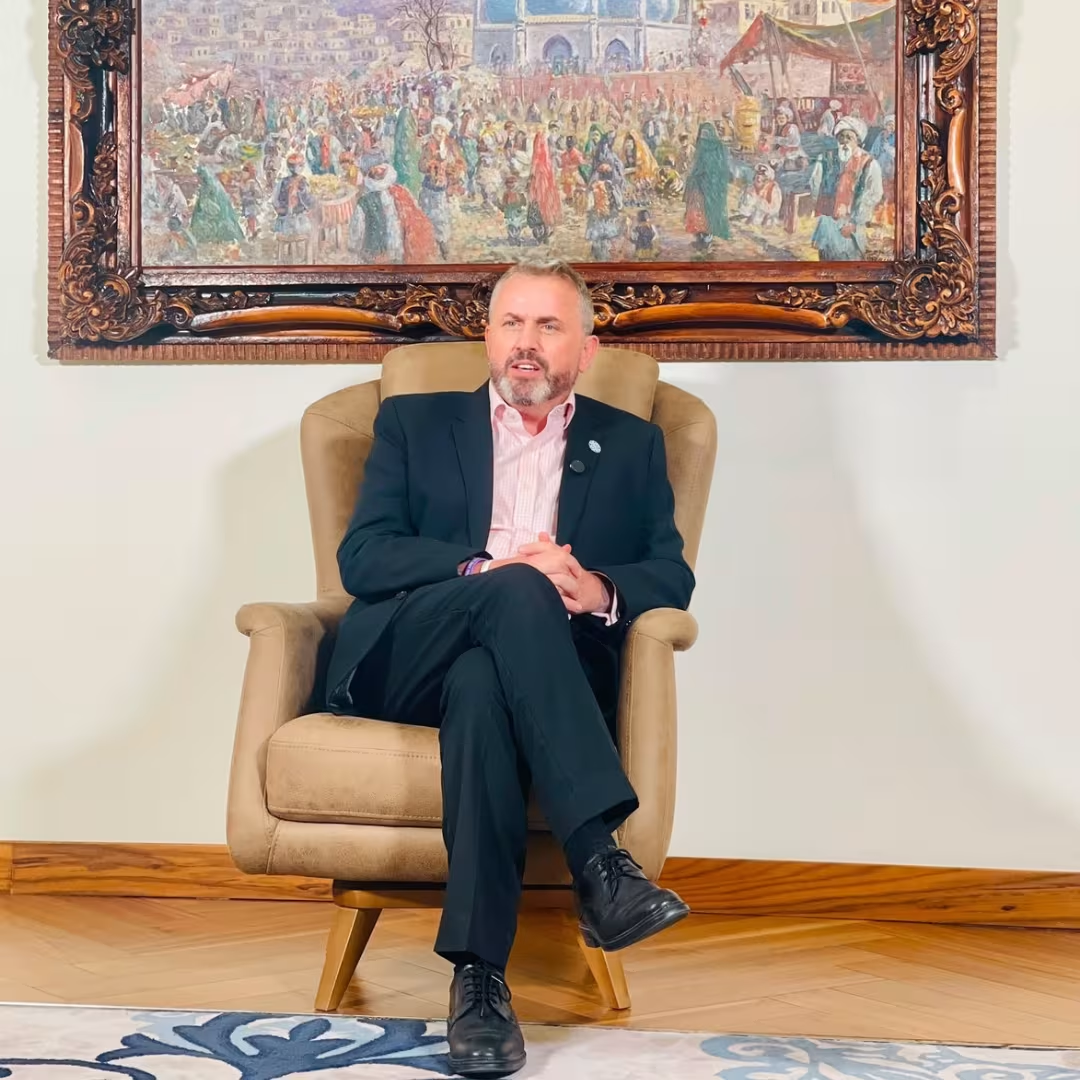
AIB has long described itself as more than a lender. It supports financial literacy so that people feel able to participate in the formal economy. It makes philanthropic contributions and responds to humanitarian crises. It sponsors major football and cricket tournaments, using sport to bring communities together. The bank frames these activities as part of everyday institutional life rather than as marketing extras, and that is consistent with the way Lockie speaks about his work. His approach emphasises communication, community engagement and a culture of innovation aligned with the needs of the local population.
For a foreign executive, service has an added dimension. Moving to Kabul is not a conventional career step. It involves living and working through uncertainty that most bankers would decline. It reflects a conviction that a bank can be useful to the people it serves, and that a leader should be present among them.
Turning Challenges into Progress
It would be dishonest to present this chapter as smooth. The difficulties are structural and they are serious. Afghanistan remains a largely cash based economy. Connectivity and electricity cannot be taken for granted, so every technology project must be designed around failure. Global de-risking has made international banks wary of exposure to challenging markets, and keeping correspondent relationships alive demands constant attention to compliance and communication. The country’s economic environment has been volatile, and the bank has had to manage currency movements and costs while keeping its profitability steady.
Then there is the human challenge. A leader from outside the country must earn trust within a staff, a regulator and a customer base that know their own reality far better than any visitor ever could. Lockie’s earlier years in Cairo and Kuwait, where adapting to cultural nuance was the central test of his leadership, are in many respects a long apprenticeship for exactly this moment.
The Ethos Behind the Executive
Look across the whole record and a pattern emerges. Lockie moved from retail branches to regional leadership, from a British bank to Egyptian and Kuwaiti institutions, from operating roles to advisory roles and then back to the top seat. At every step he gravitated toward places where the work was harder, the context less familiar and the opportunity to build something from scratch was greater.
His ideals and values point the same way. In what he writes and says, he returns constantly to integrity, discipline, respect and care, the principles that guide AIB, together with a belief that trust runs in both directions. He values emotional intelligence in a profession that often rewards only technical brilliance. He believes in showing up, whether to the classroom, the branch or a correspondent bank’s conference room.
Guarding the Legacy
A banker’s work is judged over long years rather than in single headlines, and Stewart Lockie’s tenure as CEO of Afghanistan International Bank is months old. The foundations, however, are already visible. A bank that has to remain trusted by the world, accessible to ordinary Afghans, aligned with Islamic values and open to innovation, all at once.
The boy from Isleworth who walked into a Barclays branch in 1988 could not have imagined that his career would end up at the head of the largest bank in Afghanistan. But the path he took, patient, curious, and always moving toward the hardest problems, explains how he got there. If he succeeds, the measure will not be a ranking or a trophy. It will be a farmer who can receive a payment on a card in a village with no signal, an importer whose payment clears in Dubai, and a family whose remittance arrives safely. Those are the bridges he has set out to build, and the work is only beginning.