
Strait of Hormuz Standoff — Iran and the US Near a Breaking Point
In a rapidly escalating geopolitical crisis, the Strait of Hormuz has become the focal point of a high-stakes standoff between Iran and the United States, pushing the region dangerously close to a breaking point. What was once a vital artery for global energy trade is now a contested zone of military pressure, economic warfare, and fragile diplomacy—raising fears of a broader international conflict.
Read Time : 7 minutes
Social Share :
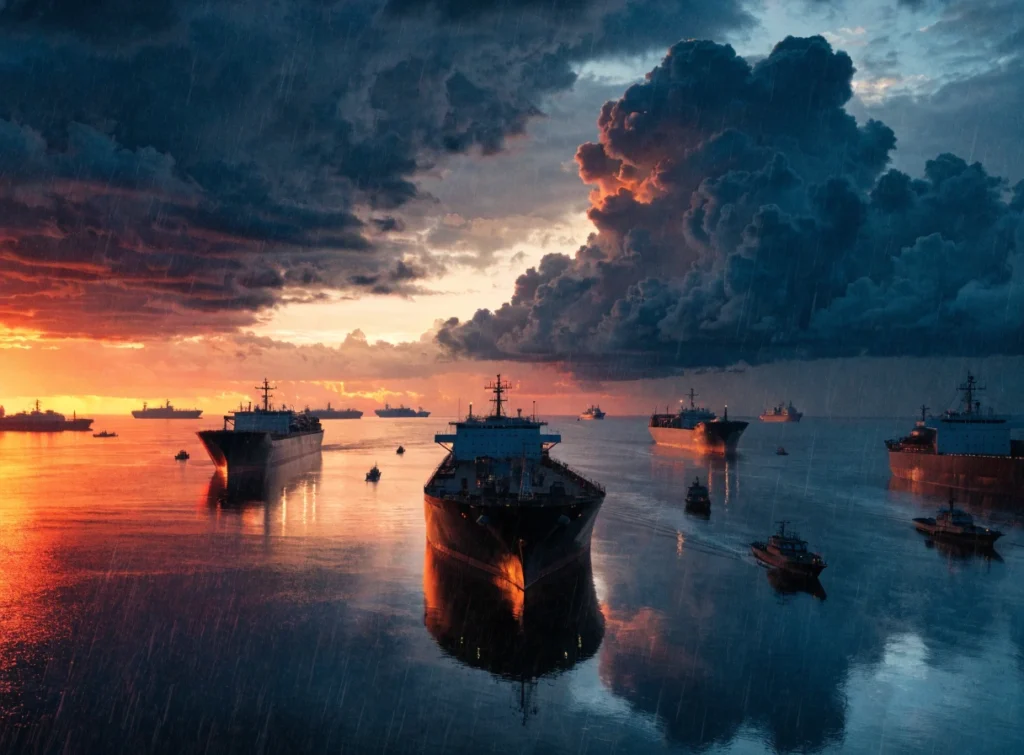
The World’s Most Critical Oil Chokepoint Under Pressure
The Strait of Hormuz is not just another shipping route—it handles nearly 20% of global oil and LNG supply, making it one of the most strategically important waterways on Earth.
Since the outbreak of the 2026 Iran conflict, the strait has seen severe disruptions:
- Shipping traffic collapsing, oil exports restricted, naval blockades imposed, vessels seized or turned back, global energy markets destabilized
Recent data shows daily ship movements have dropped drastically, in some cases falling from over 130 vessels per day to just a handful, signaling an unprecedented chokehold on global trade.
Dual Blockade: A Dangerous Deadlock
At the heart of the crisis lies a rare and volatile scenario—a dual blockade. The United States has imposed a naval blockade on Iranian ports, while Iran has retaliated by restricting or attacking vessels attempting to pass through the strait.
This mutual escalation has created a near-total disruption of maritime flow, with ships stranded, supply chains breaking, and oil prices surging globally.
Iran has also laid down strict conditions for reopening the strait, including lifting sanctions and easing military pressure—terms that Washington has so far resisted.
Diplomacy on the Brink
Despite rising tensions, there are faint signs of diplomatic movement. Iran has reportedly proposed a framework to reopen the strait and de-escalate the conflict, though negotiations remain fragile and uncertain.
At the same time, strong rhetoric continues from both sides. U.S. leadership has issued warnings urging Iran to back down, while Tehran maintains leverage by controlling access to the strait—turning energy supply into a geopolitical weapon.
Global Impact: Energy, Economy, and Humanitarian Risks
The consequences of this standoff extend far beyond the Middle East. Oil prices have surged sharply, shipping costs have increased, and global inflation risks are rising. Humanitarian agencies are also warning of disrupted aid deliveries due to blocked routes and rising fuel costs.
Countries heavily dependent on energy imports—especially in Asia—are feeling the pressure, while global markets remain volatile amid uncertainty.