Scaling Netflix — and Why It Still Keeps Me Up at Night
Recommendation engines sound clean on paper. In practice, you’re dealing with data that arrives in unpredictable bursts, latency that users notice even when it’s 200 milliseconds off, and a pipeline that has to be right for every single person watching at 11pm on a Friday. I made calls I’d make differently now. That’s how you learn what distributed systems actually demand.
Netflix Drive came out of COVID necessity. Artists couldn’t be in the same room, but content couldn’t stop. We built a cloud file system that had to feel local even when the files were sitting halfway across the world. The hybrid storage model worked. Getting people to trust it took longer than building it.
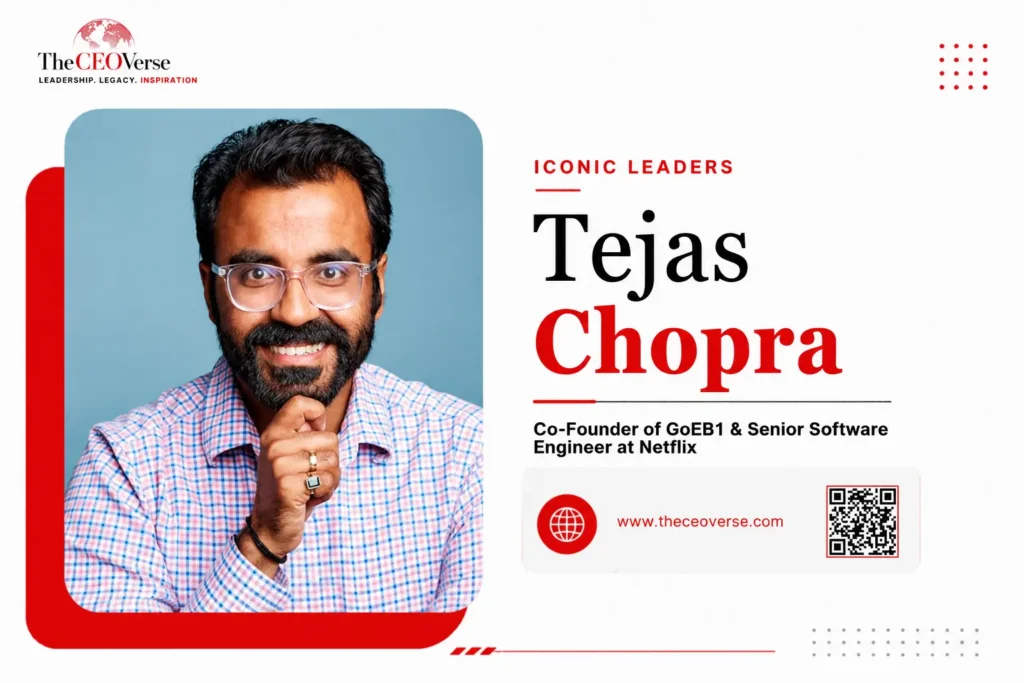
GoEB1 — The Problem I Lived Before I Built
My EB1A process took longer than it should have. Not because I wasn’t qualified — but because the path wasn’t obvious, the guidance was scattered, and most of the people who’d been through it weren’t easy to find.
GoEB1 came from that frustration. We built an AI platform that connects skilled immigrants with mentors who’ve actually been through the process, personalised content that’s relevant to their profile, and a community that makes the journey less isolating. The tech is not the hard part. Getting people to trust a platform with something this high-stakes — that took real work.
What I’ve Actually Learned About AI at Scale
Most companies that struggle with AI don’t have a model problem. They have a data problem they haven’t fully admitted yet.
I’ve seen it at Netflix, at Box, across teams that were smart and well-resourced. The pattern is almost always the same — the model gets blamed, but the real issue is upstream. Inconsistent data, poor labelling, pipelines built for yesterday’s scale.
Build data-first. Think about ethics before you’re under pressure to ship. Designing for scale before you need it feels expensive until the day you actually need it, and then it feels like the best decision you ever made.
AI and Sustainability — More Than a Conference Theme
I spoke about this at TEDx because I think the industry is not being honest enough about it.
Training large models consumes real energy. Running them at scale, across cloud infrastructure that’s already stretched — the carbon cost is not theoretical. Edge AI and federated learning matter to me not just technically, but because they’re part of building systems that don’t quietly cost more than they give back. Efficiency and transparency should be design requirements, not afterthoughts.
Teaching — the Part I Didn’t Expect to Take Seriously
I came into teaching thinking it would complement my engineering work. It ended up challenging it.
When you explain a system design decision to a room full of people who haven’t made it before, you realise how much of what you do runs on instinct built over years. Translating that into something teachable is harder than building the system. My co-authored book on scalable systems came from that process — trying to make the gap between theory and production smaller for the next generation of engineers.
Where AI Goes Next
Multi-modal AI is already changing what’s possible. The question I keep asking isn’t what the technology can do — it’s whether organisations are building the foundation to use it responsibly.
Hybrid cloud-edge infrastructure isn’t a future consideration. For anyone operating at meaningful scale, it’s already a present one. The teams investing in AI literacy across functions — not just in engineering — are the ones who’ll be able to move when it matters.