A political philosopher who became a legal scholar and institution builder, carrying the same questions about power, freedom, and oppression across every chapter of her career.
Ten Books After Academia Closed Its Door
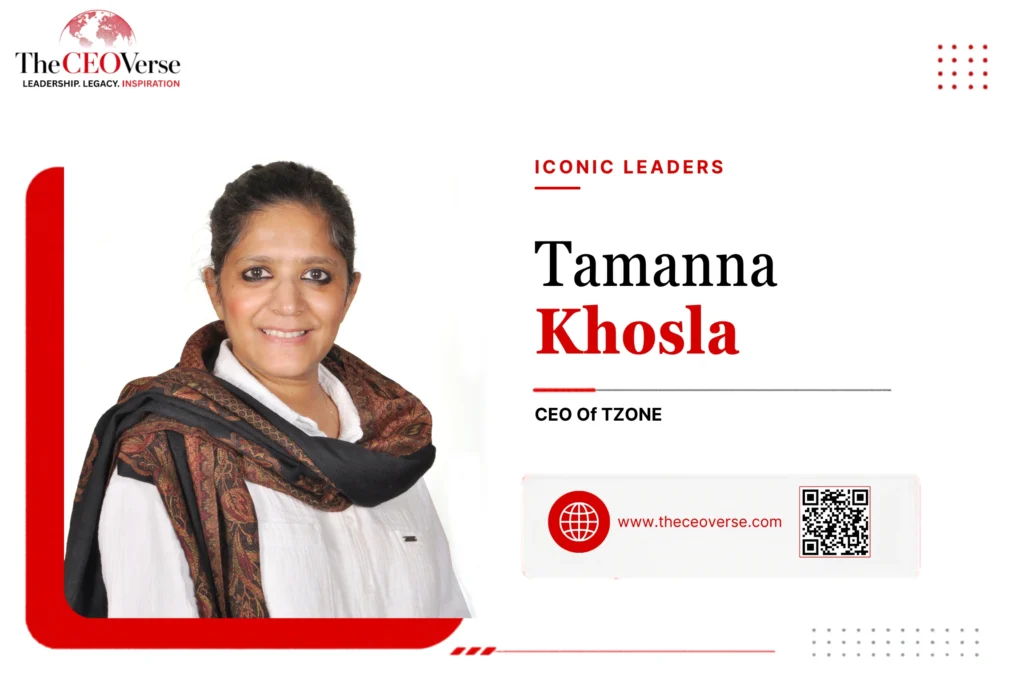
Dr. Tamanna Khosla’s academic journey was never particularly linear. Her earliest interests leaned toward science, but by her senior secondary years, political science and the humanities had taken over. At Lady Shri Ram College, her engagement with feminism and international relations began to take shape. Her master’s at Jawaharlal Nehru University deepened those interests, drawing her further into questions surrounding politics, oppression, and gender. By the time she reached her M.Phil and PhD, law and philosophy had become equally important parts of her intellectual world.
Her doctorate eventually took her to a teaching position at Delhi University. The appointment, however, ended abruptly. She says academic hostility led to her removal and that a group within the system subsequently made it difficult for her to secure another academic position. She wrote ten books, earned a law degree, and established herself beyond the university system as a public intellectual, legal scholar, and feminist thinker.
The Belief That Keeps Her Grounded
For Khosla, the most important guide in making difficult choices is not a professional framework or analytical model. It is faith. She describes her belief in a higher power and spiritualism as the enduring force that has remained dependable whenever she has had to determine which path to take.
What She Sees in People Others Often Miss
She identifies three influences that have consistently shaped her decisions: faith in goodness, trust in God, and an ability to read people accurately without ever making that obvious. The latter is perhaps the most understated of the three. It is not a skill that demands attention, but one that quietly influences how she interprets people, situations, and relationships around her.
Thinking Beyond the Problem in Front of Her
Khosla believes she often reaches a possible solution before others have fully articulated the problem itself. It is a confident assessment, but she does not attribute it simply to intuition. Instead, she points toward constant learning as the foundation. Anyone and anything can become a source of insight, people from different countries and generations, unexpected situations, and even organisms. Her approach is built around observing broadly and learning wherever knowledge appears.
An Institution Designed for Unconventional Minds
The institution she is now working toward reflects that same philosophy. Her proposed research organization is intended to bring together what she describes as “nerds and geniuses” from anywhere in the world. Its scope is deliberately expansive, covering contemporary global challenges as well as questions that extend toward extraterrestrial possibilities. The larger objective is to develop new philosophical and legal frameworks while examining oppression across race, class, gender, geography, and society.
Funding the Freedom to Think
Over the next five years, Khosla’s focus is largely on creating the financial foundation required to make that institution possible. She wants sufficient resources to recruit the people she believes are capable of building it alongside her. In her view, financial limitations should not prevent talented minds from doing meaningful work or deprive them of the resources necessary to pursue difficult questions.
It is therefore less a vision of expansion for its own sake and more a plan to remove a fundamental barrier. Secure the financial runway, bring the right people together, and allow them the freedom to concentrate on the work without constantly having to fight for the means to do it.
A Lifetime of Pushing Back
The resistance Khosla describes has been deeply personal. She speaks of severe oppression within her own family as well as within Indian society and academia, experiences she says continued for decades. She describes navigating that struggle as a woman largely without support from those around her. Through all of it, she identifies one source of help above all others: God.
Learn From Excellence, But Never Become Its Copy
Her advice to those seeking influence in this field is rooted in both humility and independence. She believes people should never envy those who are more intelligent or accomplished; they should study them, learn from them, and then develop their own path. Imitation, however, is different. Another person’s work belongs to them and should remain theirs.
She applies a similar principle to money. Financial resources matter, but they should not become the central reason for building something that is ultimately meant to advance freedom and egalitarianism. For Khosla, exceptional thinkers deserve respect, resources, and the liberty to pursue ideas without unnecessary restrictions, the culture she hopes the institution will carry forward.