The Antidote to Chaos: How Dr Caroline Fiddler Redefined Fertility Care from the Inside Out
How Dr Caroline Fiddler turned a patient’s frustration into CycleGuide, an app that puts calm, clarity and control back in the hands of people going through IVF
A Question Worth Asking: “There Has to Be a Better Way”
Some businesses begin with a market analysis. Others begin with a napkin. CycleGuide began with a scribbled instruction on a scrap of paper, jotted down in a hurry by a woman who happened to be a medical doctor.
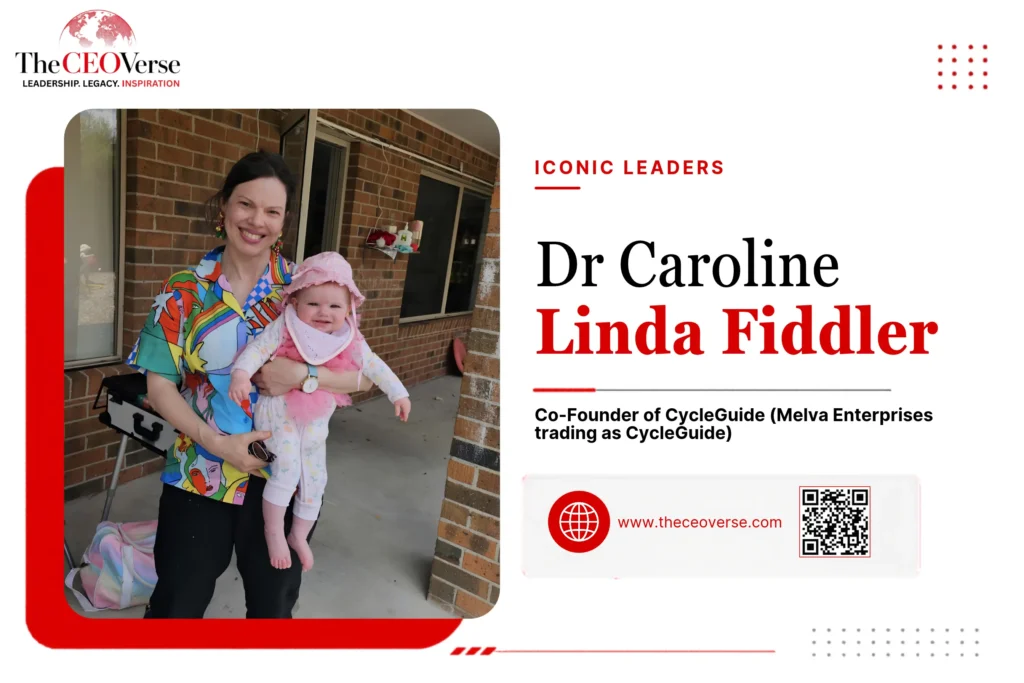
Dr Caroline Linda Fiddler is the founder and director of CycleGuide, the app trading under Melva Enterprises. She spent years on the clinical side of healthcare before she found herself on the other side of the consulting desk. As an IVF patient, she discovered something that no amount of medical training had prepared her for. The treatment was excellent, but the way it was communicated left the patient carrying an enormous load alone.
“There has to be a better way” is the sentence she keeps returning to. It is her mantra, and it is also a fair summary of how her company came to exist.
From School Science to the Hospital Floor
Her path began in a familiar place, a school science classroom. Caroline simply enjoyed the subject, and that enjoyment led her to medical school. What followed was a career that took her across different specialties, different healthcare settings and different states of Australia. Radiation Oncology was among her training posts, in both New South Wales and Western Australia.
That breadth of experience gave her an unusual vantage point. Moving between hospitals, she saw how differently each one ran, and how little those differences had to do with the quality of care. Some hospitals still relied on faxes to send and receive vital patient information. Pagers were used to reach colleagues and flag urgent situations. Patient records might be paper files in one building, one Electronic Medical Record system in the next, and an awkward combination of both in a third. Records varied between hospitals in the same area and again between states.
Her verdict is blunt. The situation, she says, is discohesive and clumsy, and incompatible systems do a disservice to patients and staff alike. It was an early lesson in how much friction the healthcare system quietly tolerates, and how often people simply assume that friction is the price of doing business.
The Patient’s Chair
Frustration with hospital systems was one thing. Sitting in the patient’s chair was another.
When Caroline began IVF, she encountered the reality from the inside. She changed fertility doctors, moving to a proactive specialist in a small, close knit clinic, and expected the experience to change with it. The care was good. But the treatment instructions she was handed looked much like the ones she had received before, heavily photocopied and generic. They did not do justice to the complexity of the treatment, or to the skill of the people delivering it.
There was more to it than the paperwork. Fertility treatment asks a great deal of the person at the centre of it. Medication has to be assembled, injected, inserted or swallowed at the right time, at the right temperature, in the right dose and with the right technique. Much of this happens at home and around a working day, which is a significant responsibility to carry when so much is at stake. Updated instructions often arrive by phone after a blood test or ultrasound, sometimes while the patient is at work or otherwise unable to write anything down properly. She once described where those instructions end up, that is on the closest piece of paper, a napkin, a post it note or the back of a hand, with no written confirmation to follow.
She also noticed how the clinical environment could wound in small ways. Small talk at reception, photographs of cute babies in frames and advertising material in waiting rooms were, in her words, hurtful and unnecessary. Patients hardly needed reminding what they were hoping for.
Her time as a carer for her father, who lives with dementia, added another dimension. Between the two experiences she gained insights she says she never learnt as a medical student or as a practising doctor. She had been trained to treat patients, and she was now learning what it feels like to be one.
Leaping into the Unknown
Most people who identify a problem in their own lives complain about it. Caroline decided to build something.
She did not pretend to know how. She began exploring app companies and chose Appetiser Apps, a Melbourne based development studio in Richmond, Victoria. She worked with a designer named Sharon to produce a prototype, then with developers to turn it into an interactive app. On Appetiser’s own account of the project, she worked as guide and lead on vital parts of the build, drawing on both her medical background and her personal experience.
Appetiser gave her one piece of advice that shaped everything else. Build a Minimum Viable Product. Rather than wait for clinics to commit to integration, CycleGuide would launch as a standalone app in which patients could enter their own treatment instructions, so it could start helping people sooner. Throughout development, the team kept one eye on the future, designing with the expectation that an interface for clinic integration would follow.
CycleGuide reached the market in January 2024, first in Australia and New Zealand.
The Chorus of Doubt
Not everyone in her life shared her confidence. Almost nobody did, at first. Her family was, rightly, concerned about the cost and the risk. Her accountant went from bemused to cautious to wary. Her GP offered a memorably dry assessment of her tech gamble. It could be worse, at least she had not joined a cult like one of his medical school colleagues, who left her family and friends and gave all her money away. Caroline calls it one of the funniest comments she has ever heard.
Her forays into design drew their own review. Trying her hand at social media graphics on Canva, she was told by one of her app project managers that the results were reminiscent of “post modern feminism in the 90s.” She laughed out loud, and soon afterwards she outsourced social media.
Underneath the humour she has a sharp reading of why criticism arrives so readily. People often dismiss an idea because they do not realise a problem exists, or because they assume everyone must simply endure clunky systems. From the staff’s side, paper instructions and phone calls probably seem adequate. Patients do as they are told, and success rates are probably comparable to those of similar clinics. The discomfort of the patient, in other words, is largely invisible from the other side of the desk.
Her response to the doubters is a principle she lives by. Have the courage of your convictions. She also has a wry observation about critics, that people can only critique your product because you built it. Very few of them could have imagined it before you did.
The Discipline of Simplicity
Building the app tested her in a different way. The great temptation in product design is to keep adding, and Caroline was offered plenty of chances to do so.
The most valuable guidance came early, from Jarrod MacFarlane, a project manager at Appetiser Apps, at the prototype stage. He asked whether she had ever wanted an app to be more complicated or to have more features. No, he pointed out. You just want it to do the basics really well. That reasoning steadied her at each crossroads that followed.
The first crossroads was structure. She was tempted to build separate pathways for egg collections, embryo transfers and Intrauterine Insemination (IUI). Some competing apps followed a rigid sequence from egg collection to embryo transfer to pregnancy test, which she found far too simplistic for many patients, herself included. She realised that patients may not even know the exact type of cycle at the outset, given how new the terminology is. She also saw that all the common fertility cycles share similar tasks and principles, just to varying degrees. So she made a single choice in the entire app. A drop down box in the Procedure task, which patients can complete once their cycle type becomes clearer, and which sits alongside the consent form they must sign anyway.
The second crossroads was medication. She began building a drop down list of fertility drugs with brand and generic names, as other apps do, and watched it balloon. How would it be kept current? How would it work across states and countries without an exhaustive global list? What if a patient tapped slightly wrong and selected the wrong drug? She asked herself whether the feature made treatment easier for the patient or harder. It was harder, so she replaced it with a free text box where patients can type a drug’s name or a nickname.
Her test for every decision was the same. Will this help the patient or make it more difficult, and is it necessary?
Inside the App
The result is a tool whose restraint is its defining feature. The main screen shows a whole month at a glance at the top, with the day’s task list beneath it. That layout is deliberate, because IVF cycles often run at least two weeks, and seeing the full month lets patients understand how each day fits within the cycle and the days around it. Each task is colour coded. Once Day 1 is entered, the following days are numbered in sequence. Tasks can be ticked off, offering reassurance that nothing has been missed, and reminders can be set for each one.
Even the look of the app reflects an understanding of patients’ lives. The design is a plain white background with none of the pink and blue themes that hint at babies and gender, no frivolous cartoon creatures and no growing embryos. The logo is neutral and green, so that anyone glancing at a phone over coffee will not know the app relates to IVF.
Medication, the most complex part of treatment, is handled with the greatest care. Patients can log a one off dose or a schedule of up to three times a day, and editing start and end dates is easy. That matters more than it sounds. Patients are typically told to keep taking a medication until advised otherwise, so the end date is never quite known until blood test and ultrasound results are interpreted. Caroline’s own evening injections of GonalF and Pergoveris, and her morning Orgalutran, shifted repeatedly as she approached the trigger injection and egg collection.
She also included a pre cycle checklist, admittedly not strictly necessary, but too useful to leave out. Menstruation can arrive unpredictably, even for patients timing their cycle with the oral contraceptive pill. Medications can often be bought only from select pharmacies with limited opening hours, and there is little margin for error. The checklist, based on her own experience across multiple cycles, covers points as basic as knowing the definition of Day 1.
Behind all of this sits a quietly powerful idea. Much of fertility treatment is beyond a patient’s control, including age and relationship status. But following instructions accurately is within it, and Caroline found real peace of mind in that. Whatever the outcome, patients can take comfort in knowing they did everything correctly.
The Milestones, and the Disappointments
The first moment of validation came in an unlikely place, a clinic waiting room. Caroline sheepishly showed one of her fertility nurses the app. The nurse swiped through the screens and said, “If I was going to develop an app, that is exactly how I would do it.” Caroline was left standing there, speechless and thrilled. When people who do this work every day recognise your design as right, you know you have done something correct.
The second milestone was integration with a fertility clinic in Sydney. After the clinic expressed strong interest, Caroline invested in development costs to build an interface with an integration company in Canberra. The company reported that the app was so simple that connecting it to existing clinic software was straightforward. The workflow was elegant. A nurse could click a button labelled “POST to CycleGuide,” confirm the instructions were correct with a second click, and the instructions would travel from the clinic’s Salesforce system straight to the patient’s phone, with no re entering. Receiving a screenshot of those steps in action was, she says, very gratifying.
Then came the twist. To her surprise, the clinic chose a portal instead and no longer pursued her app.
It was a hard lesson in the gap between enthusiasm and commitment. Several clinics have spoken warmly about CycleGuide, including one heading towards full integration, only to pull out at the last minute or stop answering emails altogether.
A Lap Around the Conference Hall
Perhaps the most instructive story from her journey took place at a fertility conference in Melbourne in 2024. Caroline took her paper treatment instructions and did a lap of the hall, approaching a friendly fertility doctor manning one of the stalls. He was in his mid fifties, with dark grey hair, and had worked in fertility for many years. She handed him some CycleGuide flyers and showed him the paper instructions.
He looked at them, leaned in a little closer and frowned. “I have never seen treatment instructions before,” he said.
She was stunned. She had always assumed that every medical professional in the field was at least broadly aware of the format, even if the nurses did the day to day work of managing instructions and liaising with patients. The moment clarified the size of her task. Convincing clinics that their instructions are inadequate first requires showing them the problem, and even a single supportive person inside a company is often countered by someone who lacks understanding of, or care for, patients and staff.
The High Cost of Conviction
Building a technology company is expensive, and Caroline funded much of hers personally. She re mortgaged her apartment to cover development costs and borrowed from family. The bills did not end at launch. App development and maintenance are costly, and so are social media, insurance and the legal terms and conditions, all of which recur.
She also had to adjust to a different kind of professional life. Doctors in training programs at public hospitals work within a structure, with rosters, supervision and a predictable path. Business offered none of that, and she has had to manage the shift from the relative safety of medicine to the uncertainty of entrepreneurship.
Her candour about this is refreshing. There were many times, she says, when she regretted starting. But she made a decision along the way that steadied her. It was better to have a go and fail, then save for years to get her home loan back on track, than to spend the rest of her life wondering whether she could have created an app.
Reaching Beyond Borders
In July 2026 the work received international acknowledgement. CycleGuide was shortlisted for the Fertility Care awards, held during the annual conference of the European Society of Human Reproduction and Embryology (ESHRE) in London. It was nominated in the Best Treatment Support and Coordination category.
She did not take the prize, but for Caroline the shortlisting carried its own meaning. She stood alongside IVF clinics and other founders, and it confirmed that she had identified a real problem and built a high quality tool to address it. She told Pulse+IT that the shortlisting provided external validation for the problem she had set out to solve, and the story was covered by the digital health publication in August 2026.
Across the Water
The next step was geographic. CycleGuide has now launched in the United Kingdom, a significant move beyond Australia and neighbouring New Zealand. Feedback and support from fertility related companies in the UK has been positive, and the team is now working to convert that goodwill into patient downloads and clinic partnerships.
The market it is entering is receptive. UK fertility services are under pressure, and specialists there have spoken publicly about patients feeling that IVF care has become increasingly impersonal. A tool built to give patients clarity between appointments arrives at a moment when that need is being widely felt.
The Traits Behind the Trajectory
Asked what shaped her path, Caroline names three qualities.
The first is conviction, meaning trust in her own instinct and judgement. Without it, the app would probably have been redesigned into something indistinguishable from its competitors. The second is perseverance. Carrying on despite setbacks, false leads and hopeful conversations that went nowhere. The third is empathy, with genuine concern for the patient experience and for the needs of staff.
That last quality is perhaps the least obvious in a founder’s toolkit, and it explains much of the product. Her instinct throughout was to think as a patient rather than as a doctor, asking how to make things as simple as possible. She built the app for patients first, but with clinicians in mind, because she believes an integrated version is ultimately the best one.
She is also still a user. She developed CycleGuide during her own IVF, and she continues to use it now as she undergoes treatment again in the hope of having a second child. Few founders test their product so personally.
The Next Five Years
Caroline’s vision is ambitious but coherent. She wants CycleGuide available globally, in both its standalone and integrated forms.
In the integrated model, clinics would send written instructions to patients’ phones at around the same moment a nurse calls with verbal instructions. That would improve accuracy and give peace of mind to everyone involved, while taking pressure off patients. It could also reduce medication errors and cut down on unnecessary follow up calls, which means fewer interruptions to a nurse’s day or a theatre list. In her vision, clinics would pay on behalf of their patients. White labelling would allow the app to carry a clinic’s own logo and branding, making it a seamless part of the clinic’s service.
Then there is oncology. Caroline trained as a junior doctor in Radiation Oncology, and she sees clear parallels. Cancer treatment is complex and distressing, and it relies partly on patients being organised and managing medication that can change. Patients face many appointments and procedures, from daily radiotherapy planning and treatment lasting several weeks to cyclical chemotherapy infusions and immunotherapy. An app that reduces the pressure of tracking everything could play a meaningful role there too.
Even so, she remains wary of feature creep. Simplicity, she has said, must stay central to the concept. Extras that do not help the patient or the clinician are not progress.
Advice from the Blissfully Ignorant
Her counsel to aspiring founders is disarmingly honest. Have a go, if you can afford to. She admits that had she known how hard it would be to develop an app, promote it and convince people that it solves a real problem, she would never have started. Luckily, she says, she was blissfully ignorant. She is glad she followed her convictions and kept going.
She adds a practical warning about advice. Try to stay true to your original idea and do not be swayed too easily. People feel obliged to offer suggestions, so ask yourself whether leaving a suggestion out, at least from the initial product, is really a deal breaker. Often the answer is no. Some people also offer suggestions to give themselves a reason not to use the product.
A Founder’s Legacy in the Making
Dr Caroline Fiddler’s story is not the standard technology founder’s tale. It has no garage, no venture capital and no overnight success. It has a doctor who noticed something small and human, a patient scribbling instructions on a napkin, and refused to accept that this was simply how things had to be.
What she has built is a case for restraint in an industry that prizes features. CycleGuide is designed for the person holding the syringe, the nurse on the other end of the phone and the clinic manager who wants fewer interruptions. It has been recognised in London, launched in the United Kingdom and shaped by the questions of a patient who was also a physician. Her ambitions now extend to clinics worldwide and to the oncology ward.
The work is far from finished, and she would be the first to say so. But her guiding question, “there has to be a better way,” has already produced one.