From Railway Projects to Cross-Industry Leadership
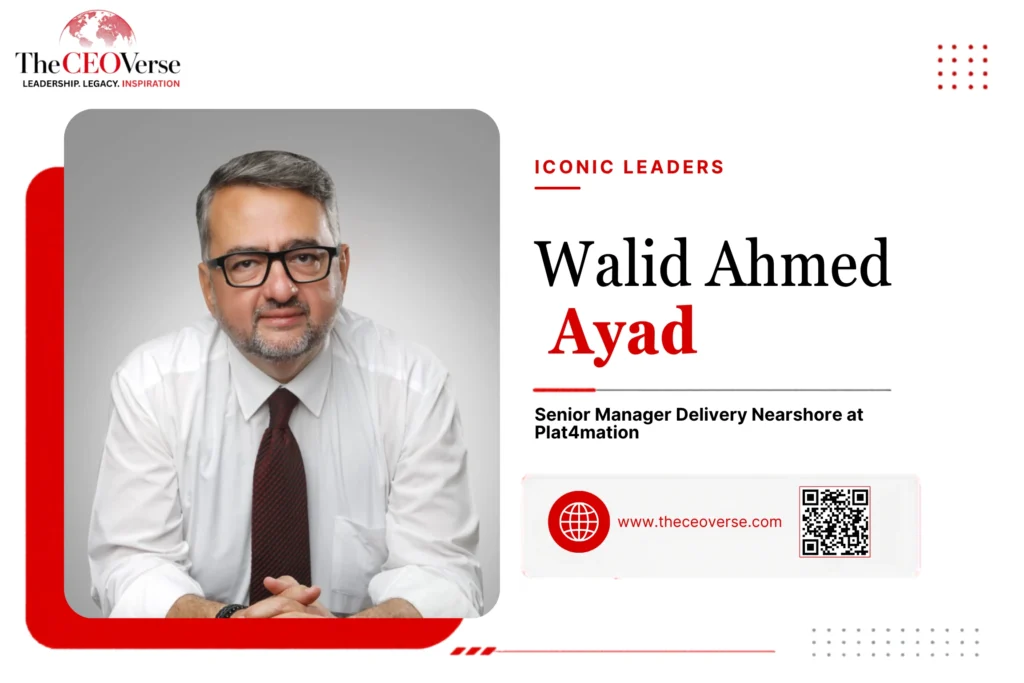
Walid Ahmed Ayad’s career did not begin with a plan for global reach. It started at a local IT company, an ordinary first step that offered little indication of where the next three decades would take him. His move to Siemens introduced him to the railway industry, a sector defined by precision and long timelines, before another significant transition arrived in 1998 at Lucent Technologies, where he took on his first role as a Project Manager.
That position established a pattern that would continue throughout his career. Ericsson followed, along with opportunities across other companies, industries, and countries. Telecom, railway, banking, IT, and consulting each presented different professional environments, requiring him to adjust his approach while maintaining the standards he held for himself.
Alongside those experiences, Ayad continued strengthening his professional foundation through courses, diplomas, and certifications. What distinguishes the journey is not one particular company or sector, but the perspective gained by moving between them. Every environment demanded a different understanding of leadership, yet he adapted without allowing those changes to compromise the principles that guided his work.
The Chapter That Tested More Than Professional Resilience
Between 2013 and 2017, Ayad stepped away from the structure of traditional employment and entered freelance work. The decision was influenced less by ambition and more by personal circumstances, and the period that followed became one of the hardest stretches of his life.
Financial and mental pressure made those four years particularly demanding. There was no polished version of the experience, only the reality of navigating uncertainty while trying to move forward. During that time, his wife, children, friends, and family members remained close, providing the support that helped him through circumstances that could not be solved through professional expertise alone.
The experience eventually became another source of strength. Ayad emerged from the period stronger than before, carrying a deeper understanding of resilience and a greater appreciation for the people who remain present when circumstances become difficult. That chapter may not have been the most visible part of his career, but it became an important part of the person behind it.
Frameworks Work Best When People Can Move With Them
There is no single methodology at the center of Ayad’s delivery approach. Instead, he combines Scrum, PMO governance, and Theory of Constraints as a flexible toolkit, adjusting how they are applied according to the environment. Whether the setting is telecom, IT, banking, or consulting, his focus is on creating systems that respond to context rather than forcing every team into the same structure.
Communication forms another important layer of that approach. In executive interviews and stakeholder conversations, Ayad frames achievements as transformation stories instead of simply presenting lists of completed tasks. That allows the impact behind the work to become more tangible, connecting outcomes with the change that produced them.
Scale is equally important. One-off improvements may create short-term results, but Ayad focuses on changes that can be replicated across teams and geographies. In his view, that ability to extend an improvement beyond its original setting is what separates effective project delivery from lasting organizational change.
When the Numbers Looked Right but the Transformation Did Not
One of the most formative experiences in Ayad’s career came through an early transformation project focused strongly on process efficiency and technical delivery. The frameworks were solid, the KPIs appeared strong, and by conventional measures, the project seemed positioned for success. Yet the expected outcome did not materialize because an important element had been underestimated: the resistance and anxiety people can experience when their routines, roles, or sense of control are disrupted.
Adoption slowed, morale dipped, and a project intended to become a showcase success instead became a gradual effort to rebuild credibility. The experience demonstrated that technical frameworks and performance indicators cannot address every dimension of transformation. People have to be able to move through the change as well.
That realization reshaped Ayad’s approach. He came to place greater emphasis on empathy and communication, carrying four principles forward from the experience. Change management begins with trust and listening because people need to feel heard rather than simply managed. Narratives can have greater impact than numbers because explaining why a change matters personally can reach people in ways a dashboard cannot. Pacing is strategic, since moving too quickly can break alignment while moving too slowly can drain momentum. Leadership also requires vulnerability, with the willingness to acknowledge mistakes and uncertainty creating credibility that an appearance of perfection cannot.
The People Who Believed Before the Results Arrived
Ayad’s professional journey has been shaped by people who contributed to it long before the results became visible. Mentors in delivery and operations encouraged him to think beyond frameworks and understand transformation as a human story. Their influence helped him connect strategic thinking with empathy and recognize that successful change involves much more than technical execution.
Colleagues across telecom, IT, banking, and consulting contributed something equally valuable through their trust. They supported him in leading initiatives even when the path ahead was not completely clear, giving him the space to experiment and refine the hybrid delivery models that became part of his approach.
Family provided a different but equally important foundation. His wife, daughter, and son have remained a grounding force throughout the journey, offering support through both setbacks and achievements. Their presence has reinforced his understanding that resilience is not only something demonstrated in professional situations. It is also built through personal relationships and the people who remain beside someone through changing circumstances.
Shared Ownership Turns Delivery Into Partnership
For Ayad, partnerships are not simply an additional feature of successful delivery. They are often where meaningful breakthroughs begin. Cross-functional teams that bring IT, business, and operations leaders together can approach challenges from multiple perspectives, creating opportunities to solve problems faster and more creatively than siloed groups can.
The strongest client relationships, in his view, are built around shared ownership. Rather than treating a project as something to commission and hand off, the most effective clients participate in the process and believe in the work alongside the delivery team. That involvement can make adoption smoother and help results remain stronger over time.
Mentorship networks have played a similar role in his own development. They have pushed him beyond the temptation to settle for what is merely good enough, encouraging him to refine and scale his frameworks across different industries. Outside the professional environment, his wife and daughter have also remained important sources of resilience, reinforcing the wider network of support behind his work.
Building a Career on Curiosity, Relationships, and Resilience
Technical expertise may open the first door, but Ayad believes relationships are what keep professionals moving forward. His advice to those beginning their careers therefore goes beyond developing technical skills. Knowledge creates opportunities, but trust and relationships determine how long those opportunities can continue.
Curiosity is another quality he encourages professionals to protect. Growth often takes place at the edge of what a person does not yet know, making continued learning essential even after someone becomes comfortable in their role. He also encourages people to take ownership of their professional narrative instead of simply listing accomplishments.
The distinction is important. Describing what was done tells only part of a professional story; explaining the difference that work created gives it greater meaning. For Ayad, that ability to communicate impact should sit alongside technical expertise. Above all, he believes resilience matters more than perfection. Everyone encounters setbacks, but the way a person responds to them ultimately says more than the setback itself.
Recognition Opens Doors, but Raises Bigger Questions
For Ayad, recognition represents more than a professional milestone. It serves as evidence that transformation is not simply something he understands in theory, but something he has experienced and practiced throughout his career. Professionally, that validation strengthens his executive voice and supports his ability to influence strategic conversations across sectors.
The recognition also creates room for broader possibilities. Mentoring others, contributing to industry conversations, and exploring new domains such as manufacturing and regional innovation become natural extensions of the platform. It can also attract partners who view the recognition as validation and become more open to co-creating ambitious work.
Its meaning at home is different. For his wife, daughter, and son, the milestone becomes part of a shared family story and a reminder that perseverance can eventually produce meaningful results. At the same time, Ayad sees recognition as humbling. It reminds him that professional ambition must remain balanced with humanity and that achievement should not become a reason to lose perspective.
Rather than treating the moment as an endpoint, he sees it as the beginning of another question: what bigger story can come next?
A Legacy Measured by the People Empowered Along the Way
Achievement, in Ayad’s view, is never entirely individual. Mentors, teams, colleagues, and family members all contribute to the milestones eventually associated with one person. Their belief, trust, and support form part of the foundation behind the outcome, even when recognition ultimately carries a single name.
Setbacks also have a meaningful place in that story. They are not simply interruptions to be forgotten once success arrives. Instead, they help shape the perspective that makes later achievements more significant.
That is why Ayad sees legacy as something human rather than numerical. Numbers can eventually fade, while the way people were treated can remain. Making others feel respected, inspired, and empowered becomes a more meaningful measure of impact than any single figure attached to a professional accomplishment.
Recognition therefore serves as a reminder rather than a destination. It encourages Ayad to keep his direction steady, aim higher, remain grounded, and continue connecting purpose with progress.
Every New Industry Became a Test of What Could Scale
The movement across telecom, IT, banking, consulting, and now manufacturing has been more than an exercise in professional adaptability. For Ayad, each transition has provided another opportunity to work within complexity and test whether transformation principles can remain effective when the surrounding environment changes.
That cross-industry experience has strengthened his belief that useful transformation practices should not remain locked within one sector. Different industries create different challenges, but the underlying principles can still be adapted when the approach remains flexible enough to respond to context.
His career has also developed his ability to translate technical impact into stories that people can understand. That capability matters when communicating with executives and stakeholders because achievements become more meaningful when people can see the change behind the numbers.
Family remains the anchor underneath this professional journey. His wife, daughter, and son have been part of the support that carried him through both challenging and successful periods, keeping professional ambition connected to the personal values that matter beyond the workplace.
Giving Technical Impact a Human Narrative
Ayad’s ability to frame technical achievements as transformation stories has become an important part of how he communicates his work. Numbers can demonstrate an outcome, but the story surrounding those numbers can reveal why the outcome mattered and what changed for the people involved.
This perspective also strengthens collaboration. When stakeholders understand the reason behind a transformation rather than only the mechanics of it, they can connect more closely with the broader objective. Communication consequently becomes part of the delivery process itself.
His exposure to multiple sectors has given him a wide range of experiences from which to draw, but the underlying principle remains consistent. Technical impact becomes more powerful when it can be translated into language that connects with people.
The same balance exists in his personal life. His family continues to provide the grounding that allows professional growth to coexist with the realities and responsibilities beyond work.
Looking Toward AI Through a Regional Lens
The next stage of Ayad’s journey continues to be shaped by curiosity. Having moved through telecom, IT, banking, consulting, and manufacturing, he remains interested in exploring new environments where his understanding of transformation can be tested and expanded.
One area currently drawing his attention is AI-driven voice intelligence in regional markets. It represents another opportunity to explore an emerging space while applying the same willingness to learn that has influenced his career across industries.
That forward-looking mindset is consistent with the path he has already taken. New sectors have introduced unfamiliar challenges, difficult periods have strengthened his resilience, and mentors, colleagues, and family have each contributed to the perspective he carries into the next chapter.
The journey therefore remains open. Rather than simply looking back at what has already been achieved, Ayad continues to ask where the next opportunity to learn, adapt, and create impact might emerge.
Transformation Is the Journey, Not the Finish Line
Across Ayad’s career, transformation has emerged as more than a professional discipline. It has become a way of understanding how frameworks, people, communication, and purpose must work together if change is expected to last.
His movement from a local IT company through railway, telecom, banking, IT, consulting, and manufacturing has continually expanded that perspective. The freelance years added resilience. The transformation project that struggled with adoption added empathy. Mentors and colleagues strengthened his approach, while his family provided the personal foundation that remained present through every stage.
The result is a leadership philosophy that does not separate delivery from the people experiencing it. Frameworks can provide structure, but people determine whether change is adopted. Strategy can establish direction, but relationships help turn that direction into action. Technical capability matters, but lasting impact also depends on trust, communication, and purpose.
For Ayad, the journey is therefore not defined only by projects completed, sectors entered, or milestones achieved. It is defined by the ability to bring different elements together and create impact that remains meaningful beyond the immediate result.
With AI-driven voice intelligence in regional markets emerging as an area of future interest, the story continues to evolve. The frameworks may change, industries may present new complexities, and the challenges may take different forms, but the central pursuit remains consistent: bringing frameworks, people, and purpose together to create transformation that lasts.